
/
Periodicals
/
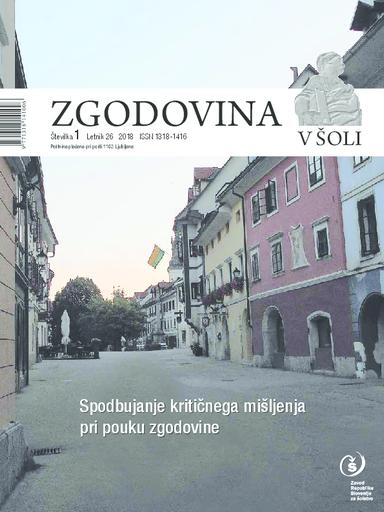
Zgodovina v šoli
Spodbujanje kritičnega mišljenja pri delu z zgodovinskimi viri
Encouraging critical thinking when working with historical sources
Author(s):Vilma Brodnik
Leto:2018
Publisher(s):Zavod RS za šolstvo
Source(s):Zgodovina v šoli, 2018, št. 1
Language(s):slovenščina
Type(s) of material:text
Keywords:didaktika zgodovine, kritično mišljenje, delo z viri, vseživljenjske veščine, učenje zgodovine, history didactics, critical thinking, working with sources, lifelong skills, learning about history
Rights:
This work by Vilma Brodnik is licensed under Creative Commons Attribution-NonCommercial-ShareAlike 4.0 International
Files (1)
Name:ZVS_st1_2018_NR.pdf
Size:3.96MB
Format:application/pdf
Permanent link:https://hdl.handle.net/11686/file25969
Description
.The article describes the special characteristics of developing and encouraging critical thinking skills in regards to the skills of working with historical sources defined in history syllabuses for primary and upper secondary schools. The discussion consisted of a critical thinking model, presented in the introductory article of the History in school issue by Rupnik Vec, and a model of skills for working with historical sources as designed by Brodnik and coworkers for the EUfolio and ATS2020 project. The article presents skills contained in both models. It defines the significance of historical sources for history, and presents ways of categorizing historical sources along with examples and orientation questions, which help students determine different types of historical sources. The main part contains an explanation of critical thinking elements, such as source finding and evaluation, which in working with historical sources is seen as searching, determining and application of trustworthy, useful, and reliable historical sources, the (co)development and application of criteria for source evaluation, and the citation of sources. Deciding on the relevance, reliability, and usefulness of the sources is based on distinguishing between facts and opinions, which in working with historical sources also incorporates analysis, critical judgment of historical sources and evidence, and their separation from opinions, conclusions and explanations, as well as the consideration of specific historical events from at least two different perspectives in order to achieve their more objective interpretations. The article contains examples of determining bias, prejudice and stereotypes in historical sources. Based on relevant historical facts and evidence, inductive and deductive reasoning is made by formulating syntheses, conclusions, explanations, viewpoints, and opinions about the historical event. The evaluation and decisionmaking skills refer to independent selection and decisionmaking with the help of relevant criteria, which are used to judge the consequences of adopted decisions, in history lessons seen as the capability of independent selection and decision-making, and formulating one’s own views of history, in which the values of the Western European civilization should be taken into consideration. All presented skills are given and supported with concrete examples of assignments and activities, which connect source working skills and critical thinking skills.
Metadata (10)
- identifierhttps://hdl.handle.net/11686/44839
- title
- Spodbujanje kritičnega mišljenja pri delu z zgodovinskimi viri
- Encouraging critical thinking when working with historical sources
- creator
- Vilma Brodnik
- subject
- didaktika zgodovine
- kritično mišljenje
- delo z viri
- vseživljenjske veščine
- učenje zgodovine
- history didactics
- critical thinking
- working with sources
- lifelong skills
- learning about history
- publisher
- Zavod RS za šolstvo
- date
- 2018
- 01. 01. 2018
- type
- besedilo
- language
- Slovenščina
- isPartOf
- rights
- license: ccByNcSa