
/
Dogodki
/
Konference
Engendering disability through oral histories of the specific era
Sensory disability and socialism
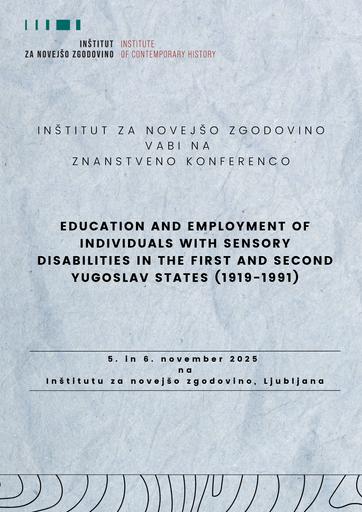

To delo avtorja Darja Zaviršek je ponujeno pod Creative Commons Priznanje avtorstva-Nekomercialno-Deljenje pod enakimi pogoji 4.0 Mednarodna
Datoteke (1)
Opis
There are few oral histories of people with sensory disabilities related to education and employment under socialism. Drawing on critical disability and gender studies, as well as crip theory and decoloniality, the presentation focuses on the oral histories of women and men with sensory impairments and their experiences with state institutions of education and employment. The socialist authorities in Yugoslavia (1945-1991) developed social protection on the ruins of the inherited, half-built system of residential institutions and boarding schools from the pre-war period. The imperative of universal education and work affected the lives of people with disabilities during socialism, so that most people with sensory impairments received primary education and vocational training, and some were enrolled in paid employment. There was a big difference between people who needed little support and those in need of intensive support. The concept of autonomy of persons with impairments was based on the classical rationalist understanding of autonomy, where the person's ability to reason, make rational choices and work was what counted. Despite educational and employment opportunities, most people with disabilities lived dehumanized lives and their need for support was pathologized. Just as among non-disabled people, who could not turn to each other without the state acting as a universal "mediator" and patriarch, the relational approach of autonomy did not exist in the public care institutions of people with disabilities. The relational approach understands the support and advocacy practiced by staff as core elements of the very autonomy of people with disabilities. Instead of it most people with sensory impairments experienced social invisibility, lack of opportunities, institutional routines, and pedagogized and rationalized violence. Their memories collected, written down, analyzed and reflected upon, showed the everyday life of a specific era.
Metapodatki (12)
- identifikatorhttps://hdl.handle.net/11686/71559
- naslov
- Engendering disability through oral histories of the specific era
- Sensory disability and socialism
- avtor
- Darja Zaviršek
- soavtor
- Jelena Seferović (mod.)
- predmet
- ustna zgodovina
- oviranost
- senzorno ovirani
- socializem
- Jugoslavija
- opis
- There are few oral histories of people with sensory disabilities related to education and employment under socialism. Drawing on critical disability and gender studies, as well as crip theory and decoloniality, the presentation focuses on the oral histories of women and men with sensory impairments and their experiences with state institutions of education and employment. The socialist authorities in Yugoslavia (1945-1991) developed social protection on the ruins of the inherited, half-built system of residential institutions and boarding schools from the pre-war period. The imperative of universal education and work affected the lives of people with disabilities during socialism, so that most people with sensory impairments received primary education and vocational training, and some were enrolled in paid employment. There was a big difference between people who needed little support and those in need of intensive support. The concept of autonomy of persons with impairments was based on the classical rationalist understanding of autonomy, where the person's ability to reason, make rational choices and work was what counted. Despite educational and employment opportunities, most people with disabilities lived dehumanized lives and their need for support was pathologized. Just as among non-disabled people, who could not turn to each other without the state acting as a universal "mediator" and patriarch, the relational approach of autonomy did not exist in the public care institutions of people with disabilities. The relational approach understands the support and advocacy practiced by staff as core elements of the very autonomy of people with disabilities. Instead of it most people with sensory impairments experienced social invisibility, lack of opportunities, institutional routines, and pedagogized and rationalized violence. Their memories collected, written down, analyzed and reflected upon, showed the everyday life of a specific era.
- založnik
- Inštitut za novejšo zgodovino
- datum
- 05. 11. 2025 - 06. 11. 2025
- tip
- video
- jezik
- Angleščina
- jeDelOd
- pravice
- licenca: ccByNcSa