
/
Dogodki
/
Konference
When environmental problems and aid cross the border
A dual track story of Japan and China
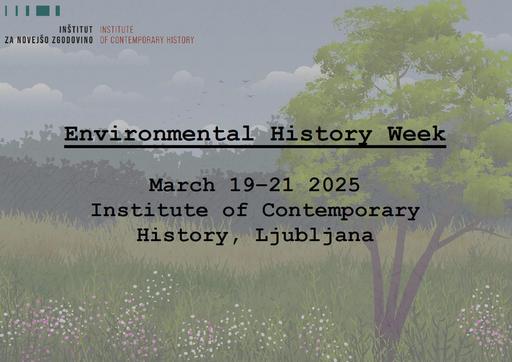
Opis
- Avtor ni dovolil objave videoposnetka
How did environmental problems be constituted as something that needs international action? How did Japan initiate environmental aid to China in the mid-1980s? While previous studies emphasize the international shift toward sustainable development and Japan’s ambition to lead through environmental diplomacy, the motivations behind state actions and the role of non-state actors tell a more complex story. This study traces the dual origins of Japan’s environmental aid, starting in the 1970s, and explores how these efforts converged under the banner of Official Development Assistance (ODA) in the 1990s. To revisit the emergence of environmental aid, this study examines a range of archives through the 1970s to 1990s, including government documents and publications by non-state actors. The study examines and bridges the two dimensions: At the state level, beginning in the 1970s, the Japanese government started to "green" its ODA in response to growing concerns over the environmental impacts of its aid and global normative shifts. On the other side, Japanese experts, business associations, and civil society organizations also started to engage in China’s environment, driven by a sense of war guilt, empathy as those who had suffered from severe pollution, and a sense of connection with Chinese culture. They lobbied the Japanese government for a greener ODA, built up environmental consciousness in China, and advised their Chinese counterparts to receive Japan’s ODA. Afterward, the Japanese government and its development agencies, in a lack of sufficient environmental expertise, transformed their systems to be more inclusive of local experts and citizen groups, alongside the significant increase of environmental aid in the late 1990s. By exploring the differing logics of state and non-state actors, this study contributes to the broader discussion on global environmental politics, such as how to navigate collective efforts to persist through political turbulence and contribute to the common good beyond mere national interests.
Jingyuan Wu is a PhD student at the Department of International Studies, Graduate School of Frontier Sciences, The University of Tokyo. She is a Fox International Fellow (2024-2025) at Yale University. She has a bachelor's degree in economics and a master's degree in international studies. She has also been honing her skill set and practical knowledge in the field of international cooperation by working for multiple non-profit organizations. She is also dedicated to academic community services as a secretary for the Asian Association for Environmental History to date.
Metapodatki (10)
- identifikatorhttps://hdl.handle.net/11686/71096
- naslov
- When environmental problems and aid cross the border
- A dual track story of Japan and China
- avtor
- Jingyuan Wu
- soavtor
- Sergej Škofljanec (snem., ton. mojst.)
- Robert Vurušič (snem., ton. mojst., film. mont.)
- opis
- Avtor ni dovolil objave videoposnetkaHow did environmental problems be constituted as something that needs international action? How did Japan initiate environmental aid to China in the mid-1980s? While previous studies emphasize the international shift toward sustainable development and Japan’s ambition to lead through environmental diplomacy, the motivations behind state actions and the role of non-state actors tell a more complex story. This study traces the dual origins of Japan’s environmental aid, starting in the 1970s, and explores how these efforts converged under the banner of Official Development Assistance (ODA) in the 1990s. To revisit the emergence of environmental aid, this study examines a range of archives through the 1970s to 1990s, including government documents and publications by non-state actors. The study examines and bridges the two dimensions: At the state level, beginning in the 1970s, the Japanese government started to "green" its ODA in response to growing concerns over the environmental impacts of its aid and global normative shifts. On the other side, Japanese experts, business associations, and civil society organizations also started to engage in China’s environment, driven by a sense of war guilt, empathy as those who had suffered from severe pollution, and a sense of connection with Chinese culture. They lobbied the Japanese government for a greener ODA, built up environmental consciousness in China, and advised their Chinese counterparts to receive Japan’s ODA. Afterward, the Japanese government and its development agencies, in a lack of sufficient environmental expertise, transformed their systems to be more inclusive of local experts and citizen groups, alongside the significant increase of environmental aid in the late 1990s. By exploring the differing logics of state and non-state actors, this study contributes to the broader discussion on global environmental politics, such as how to navigate collective efforts to persist through political turbulence and contribute to the common good beyond mere national interests.Jingyuan Wu is a PhD student at the Department of International Studies, Graduate School of Frontier Sciences, The University of Tokyo. She is a Fox International Fellow (2024-2025) at Yale University. She has a bachelor's degree in economics and a master's degree in international studies. She has also been honing her skill set and practical knowledge in the field of international cooperation by working for multiple non-profit organizations. She is also dedicated to academic community services as a secretary for the Asian Association for Environmental History to date.
- založnik
- Inštitut za novejšo zgodovino
- datum
- 19. 03. 2025 - 21. 03. 2025
- tip
- video
- jezik
- Angleščina
- jeDelOd