/
Periodicals
/
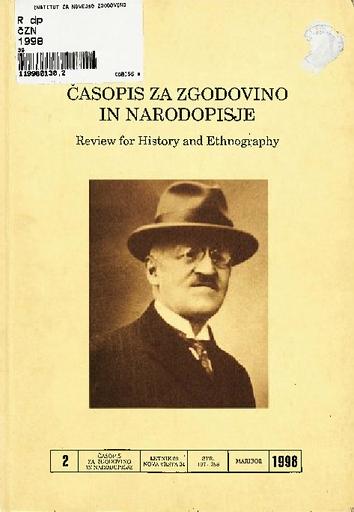
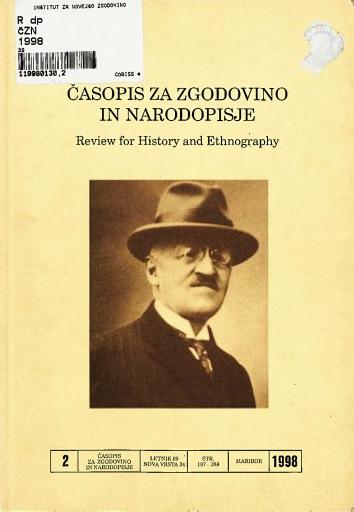
Časopis za zgodovino in narodopisje
The System of People's Democracy in Slovenia and Yugoslavia
Files (1)
Description
In this paper, the author deals with the system of people's democracy (the political order during the first post-World War II years) in Yugoslavia, where this system was carried into effect first and to the greatest extent. It was also introduced in other East European states. It underscored its people's character (the power of the masses). The system of people's democracy had its peculiarities: it differed from bourgeois democracies, though it - at least technically - retained some elements of classical parliamentary power. E.g., the multi-party system was constitutionally guaranteed, though in practice there was a mix of party monism and pluralism. When the showdown with the opposition was completed in East European states, when the power was seized by the communist parties and when the Sovietisation was carried out, the system of people's democracy became no longer necessary and the theoretical stand prevailed that there is only one, Soviet "road" to socialism. By 1948 Yugoslavia was already styled after the Soviet model. The dispute with the Inform-Bureau (Information Bureau of the Communist Parties] made it impossible that this change be also technically confirmed. Though Yugoslavia, after the dispute, adopted a different model (self-management) than the one in Eastern Europe, by the beginning of the fifties there was no more any need for duality in Yugoslavia either. The Constitutional Law from 1953 considered Yugoslavia to be a socialist state, though the term Socialist Federal Republic of Yugoslavia was adopted ten years later, in the Constitution from 1963.
Metadata (11)
- identifierhttps://hdl.handle.net/11686/8435
- title
- Sistem ljudske demokracije v Sloveniji in Jugoslaviji
- The System of People's Democracy in Slovenia and Yugoslavia
- creator
- Božo Repe
- contributor
- Darko Friš (ur.)
- subject
- Jugoslavija
- sistem ljudske demokracije
- politična ureditev
- Yugoslavia
- System of People's Democracy
- political regulation
- description
- In this paper, the author deals with the system of people's democracy (the political order during the first post-World War II years) in Yugoslavia, where this system was carried into effect first and to the greatest extent. It was also introduced in other East European states. It underscored its people's character (the power of the masses). The system of people's democracy had its peculiarities: it differed from bourgeois democracies, though it - at least technically - retained some elements of classical parliamentary power. E.g., the multi-party system was constitutionally guaranteed, though in practice there was a mix of party monism and pluralism. When the showdown with the opposition was completed in East European states, when the power was seized by the communist parties and when the Sovietisation was carried out, the system of people's democracy became no longer necessary and the theoretical stand prevailed that there is only one, Soviet "road" to socialism. By 1948 Yugoslavia was already styled after the Soviet model. The dispute with the Inform-Bureau (Information Bureau of the Communist Parties] made it impossible that this change be also technically confirmed. Though Yugoslavia, after the dispute, adopted a different model (self-management) than the one in Eastern Europe, by the beginning of the fifties there was no more any need for duality in Yugoslavia either. The Constitutional Law from 1953 considered Yugoslavia to be a socialist state, though the term Socialist Federal Republic of Yugoslavia was adopted ten years later, in the Constitution from 1963.
- Pisec v prispevku obravnava sistem ljudske demokracije kot politične ureditve v prvih letih po drugi svetovni vojni) v Jugoslaviji, kjer se je sistem ljudske demokracije najprej in najbolj izrazno uveljavil, sicer pa je bil uveden tudi v drugih vzhodnoevropskih državah. Poudarek je bil na ljudskosti (oblasti množic). Sistem ljudske demokracije je bil specifičen: razločeval se od klasičnih meščanskih demokracij, čeprav je - vsaj formalno - še ohranjal nekatere prvine klasične parlamentarne oblasti. Večstrankarski sistem je bil npr. ustavno zagotovljen, v praksi pa je dejansko že šlo za mešanico partijskega monizma in večstrankarstva. Ko je bil obračun z opozicijo v vzhodnoevropskih državah končan, ko so oblast prevzele komunistične partije in je bila izvedena sovjetizacjja, je sistem ljudske demokracije postal nepotreben, uveljavila pa se je teorija, da obstaja samo ena, to je sovjetska pot v socializem. Do leta 1948 je bila Jugoslavija že urejena po sovjetskem vzoru. Vendar je spor z informbirojem preprečil, da bi spremembo tudi formalno potrdili. Čeprav je Jugoslavija po sporu šla po drugačni poti kot vzhodnoevropske države (uvedba samoupravljanja), v začetku petdesetih let potrebe po dvojnosti sistema tudi v njej ni bilo več. Ustavni zakon iz leta 1953 je o Jugoslaviji že govoril kot o socialistični državi, formalno pa si je ime Socialistična federativna republika Jugoslavija nadela deset let kasneje, s sprejetjem ustave leta 1963.
- publisher
- Izdajata Univerza v Mariboru in Zgodovinsko društvo Maribor
- date
- 1998
- type
- besedilo
- language
- Slovenščina
- isPartOf