/
Periodicals
/
Zgodovinski časopis
Slovene and Albanian National Questions during the First World War: Similarities and Differences
Author(s):Uroš Lipušček
Co-author(s):Peter Štih (ur.)
Leto:2008
Publisher(s):Zveza zgodovinskih društev Slovenije, Ljubljana
Source(s):Zgodovinski časopis, 2008, št. 3-4
Language(s):slovenščina
Type(s) of material:text
Keywords:prva svetovna vojna, slovenski lingvisti, kulturni klišeji in stereotipi, neodvisnost Albanije, neodvisnost Slovenije, Avstro-Ogrska, otomanski imperij, londonski pakt, srbske in italijanske teritorialne ambicije, pariška mirovna konferenca, Woodrow Wilson, First World War, Slovene linguists, cultural clichés and stereotypes, Albanian independence, Slovene independence, Austria-Hungary, Ottoman Empire, the Treaty of London, Serbian and Italian territorial ambitions, Paris Peace Conference, Woodrow Wilson
Files (1)
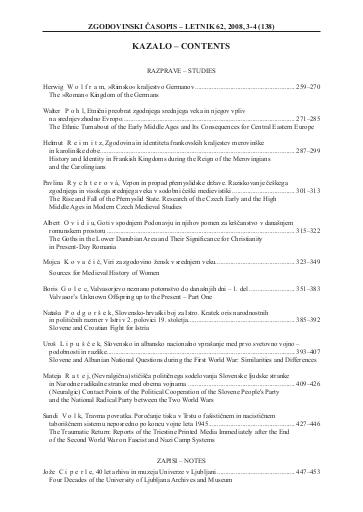
Name:ZC_2008_3-4.pdf
Size:12.36MB
Format:application/pdf
Permanent link:https://hdl.handle.net/11686/file2566
Description
In the period before the First World War – and even later – contacts between Slovenes and Albanians were very infrequent. The first
significant contact took place when some of the leading Slovene linguists contributed their expertise to the development of a standardized
Albanian language at the end of the 19th and the beginning of the 20th centuries. During this period, major newspapers only
rarely reported on events taking place in Albania, and if they did, reports were occasionally imbued with cultural stereotypes. Since
each nation lived in a strategically highly important area on the margin of a large imperium, one in Austria-Hungary and the other in
the Ottoman Empire, their political leaders (unsuccessfully) tried to attain prior to the onset of the First World war solely autonomy,
or union of nations within one province (the vilajet or crown land), within each empire. Albanians were the first to develop a strong
concept of statehood and national independence. In this period, Slovenes strived for a merger with other South Slavic nations in an
independent state of their own, which was the only way to resist intense imperialist German (Austrian) and Italian aspirations. Due
to strategic reasons as well as ambitions of neighboring states, and as a result of the secret Treaty of London in 1915, both nations
were divided among neighboring nations after the war.
Metadata (11)
- identifierhttps://hdl.handle.net/11686/8054
- title
- Slovensko in albansko nacionalno vprašanje med prvo svetovno vojno – podobnosti in razlike
- Slovene and Albanian National Questions during the First World War: Similarities and Differences
- creator
- Uroš Lipušček
- contributor
- Peter Štih (ur.)
- subject
- prva svetovna vojna
- slovenski lingvisti
- kulturni klišeji in stereotipi
- neodvisnost Albanije
- neodvisnost Slovenije
- Avstro-Ogrska
- otomanski imperij
- londonski pakt
- srbske in italijanske teritorialne ambicije
- pariška mirovna konferenca
- Woodrow Wilson
- First World War
- Slovene linguists
- cultural clichés and stereotypes
- Albanian independence
- Slovene independence
- Austria-Hungary
- Ottoman Empire
- the Treaty of London
- Serbian and Italian territorial ambitions
- Paris Peace Conference
- Woodrow Wilson
- description
- In the period before the First World War – and even later – contacts between Slovenes and Albanians were very infrequent. The first significant contact took place when some of the leading Slovene linguists contributed their expertise to the development of a standardized Albanian language at the end of the 19th and the beginning of the 20th centuries. During this period, major newspapers only rarely reported on events taking place in Albania, and if they did, reports were occasionally imbued with cultural stereotypes. Since each nation lived in a strategically highly important area on the margin of a large imperium, one in Austria-Hungary and the other in the Ottoman Empire, their political leaders (unsuccessfully) tried to attain prior to the onset of the First World war solely autonomy, or union of nations within one province (the vilajet or crown land), within each empire. Albanians were the first to develop a strong concept of statehood and national independence. In this period, Slovenes strived for a merger with other South Slavic nations in an independent state of their own, which was the only way to resist intense imperialist German (Austrian) and Italian aspirations. Due to strategic reasons as well as ambitions of neighboring states, and as a result of the secret Treaty of London in 1915, both nations were divided among neighboring nations after the war.
- Stiki med Slovenci in Albanci so bili do prve svetovne vojne pa tudi kasneje zelo redki. Prvi pomemben stik je bil prispevek nekaterih vodilnih slovenskih jezikoslovcev pri razvoju standardiziranega albanskega jezika ob koncu 19. in v začetku 20. stoletja. Vodilni slovenski časopisi so v tem času le redko poročali o dogajanju v Albaniji. Nekatera poročila so bila podvržena različnim kulturnim stereotipom. Ker sta oba naroda živela na strateško zelo pomembnem območju na robu dveh velikih imperijev (Avstro-Ogrske in otomanskega imperija), so si politični voditelji obeh narodov do začetka prve svetovne vojne (neuspešno) prizadevali doseči zgolj avtonomijo oziroma združitev obeh narodov v eno provinco (vilajet oziroma kronovino) znotraj obeh imperijev. Albanci so prvi razvili močno idejo državnosti in narodne neodvisnosti. Slovenci so si v tem času prizadevali za združitev z ostalimi južnoslovanskimi narodi v samostojno državo, kot edini način, da bi se lahko uprli močnim imperialističnim nemškim (avstrijskim) in italijanskim aspiracijam. Oba naroda sta bila zaradi strateških razlogov in ambicij sosednjih držav kot posledica tajnega londonskega pakta iz 1915. leta ob koncu vojne razdeljena med sosednje države.
- publisher
- Zveza zgodovinskih društev Slovenije
- date
- 2008
- type
- besedilo
- language
- Slovenščina
- isPartOf