
/
Periodicals
/
Zgodovina za vse
“He Adorns the City - Let the City Support Him!”
The formative Idrija period of photographer Josip Pelikan

This work by Jerneja Ferlež is licensed under Creative Commons Attribution-ShareAlike 4.0 International
Files (1)
Description
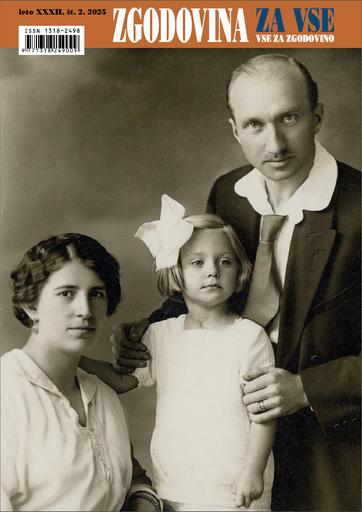
Photographer Josip Pelikan spent most of his career in Celje, where his legacy is well researched and documented and represents an important part of the city's heritage, but this text looks back to his less well-known quarter-century formative period in Idrija between 1894 and 1919. Through registers and other sources, it sheds light on the photographer's childhood and youth, as well as on the life of his ancestors, especially his mother in her birthplace Rožmítal pod Třemšínem in the Czech Republic. It describes the arrival of young Pelikan from Trbiž, where he was born, to Idrija, where he spent a quarter of a century, and the circumstances of his upbringing and development into a renowned professional photographer. It also focuses on the buildings in which he lived and worked, and the people he grew up with. The paper highlights the surviving photographs of Josip Pelikan, Anton Schmeiler and Barbara Kastner from Trbiž, Idrija and Brežice, and raises the question of the influence of buildings on personal and collective memory, or on the processes of heritage in general.
Metadata (12)
- identifierhttps://hdl.handle.net/11686/71989
- title
- »On krasi mesto – mesto naj podpira njega!«
- Formativno idrijsko obdobje fotografa Josipa Pelikana
- “He Adorns the City - Let the City Support Him!”
- The formative Idrija period of photographer Josip Pelikan
- creator
- Jerneja Ferlež
- contributor
- Borut Batagelj (ur.)
- Simon Zupan (prev.)
- Tina Bahovec (prev.)
- subject
- Josip Pelikan
- poklicni fotografi
- Idrija
- fotografski ateljeji
- kolektivni spomin
- professional photographers
- photographic studios
- collective memory
- description
- Fotograf Josip Pelikan je glavnino svoje poklicne poti preživel v Celju, kjer je njegova zapuščina dobro raziskana in predstavlja pomemben del mestne dediščine, to besedilo pa se ozira k njegovemu manj znanemu četrtstoletnemu formativnemu idrijskemu obdobju med letoma 1894 in 1919. Prek matičnih knjig in drugih virov osvetljuje fotografovo otroštvo in mladost ter življenje njegovih prednikov, zlasti matere v njenem rojstnem kraju Rožmítal pod Třemšínem na Češkem. Opiše prihod malega Pelikana iz Trbiža, kjer se je rodil, v Idrijo, kjer je preživel četrt stoletja, ter predstavi okoliščine njegovega odraščanja in razvoj v priznanega poklicnega fotografa. Pozornost usmeri tudi k zgradbam, v katerih je prebival in deloval, ter ljudem, s katerimi je odraščal. Izpostavi ohranjene fotografije Josipa Pelikana, Antona Schmeilerja in Barbare Kastner iz Trbiža, Idrije in Brežic ter odpre vprašanje vpliva zgradb na osebni in kolektivni spomin oz. na procese dediščinjenja nasploh.
- Photographer Josip Pelikan spent most of his career in Celje, where his legacy is well researched and documented and represents an important part of the city's heritage, but this text looks back to his less well-known quarter-century formative period in Idrija between 1894 and 1919. Through registers and other sources, it sheds light on the photographer's childhood and youth, as well as on the life of his ancestors, especially his mother in her birthplace Rožmítal pod Třemšínem in the Czech Republic. It describes the arrival of young Pelikan from Trbiž, where he was born, to Idrija, where he spent a quarter of a century, and the circumstances of his upbringing and development into a renowned professional photographer. It also focuses on the buildings in which he lived and worked, and the people he grew up with. The paper highlights the surviving photographs of Josip Pelikan, Anton Schmeiler and Barbara Kastner from Trbiž, Idrija and Brežice, and raises the question of the influence of buildings on personal and collective memory, or on the processes of heritage in general.
- publisher
- Zgodovinsko društvo Celje
- date
- 2025
- type
- besedilo
- language
- Slovenščina
- Nemščina
- Angleščina
- isPartOf
- rights
- license: ccBySa