
/
Periodicals
/
Zgodovina v šoli
Once There Was Gutenwerd

This work by Tomaž Nabergoj is licensed under Creative Commons Attribution-NonCommercial-NoDerivs 4.0 International
Files (1)
Description
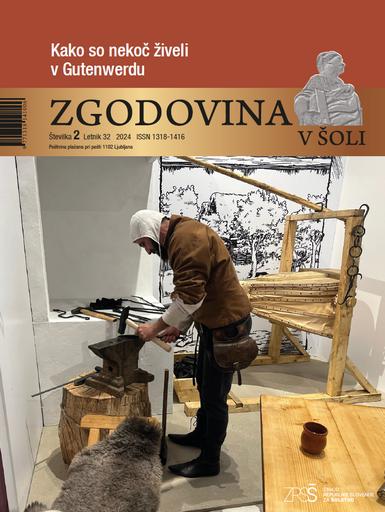
The medieval market town of Gutenwerd was located in a bend of the River Krka, in the plain of Šentjernejsko polje, and flourished between the 12th and the 15th century. It formed part of the Freising diocese in Bavaria, but was often enfeoffed to different lords such as the Counts of Andechs and Dukes of Babenberg. More than 100 documents from the mid-13th century to the year 1500 mention Gutenwerd, its toll station and ferry across the Krka, a judge and the seat of blood justice, a parish priest, the church of St Nicholas and individual inhabitants. In the first half of the 13th century, the town had a mint of silver Friesacher pfennigs, which shows its trading and connections along the important route between northern Italy and Hungary. Its inhabitants were merchants and craftsman, nobility and clergy, as well as urban farmers and gardeners. In 1473, it was devastated by the Ottoman Turks and never recovered. Its remains were overgrown, only the church of St Nicholas survived.
The deserted settlement was rediscovered by a team of archaeologists from the National Museum in Ljubljana, investigating at Otok pri Dobravi. Their excavation (1967–1984) unearthed the remains of timber and stone houses, the foundations of a Romanesque church and a cobbled road. In the church of St Nicholas, they found the foundations of its Romanesque and Gothic predecessors, as well as 44 graves from the late medieval and early modern periods. They excavated the remains of ironworks, tanning pits and fireplaces. Thousands of pottery sherds, different tools and objects made of clay, iron, copper, bronze, brass, stone, bone, antlers, glass and leather document the daily life in the Middle Ages better than any other archaeological site in Slovenia. As an exceptional example of cultural heritage, Gutenwerd holds great potential for further archaeological and other scientific research.
Metadata (12)
- identifierhttps://hdl.handle.net/11686/71939
- title
- Nekoč je bil Gutenwerd
- Once There Was Gutenwerd
- creator
- Tomaž Nabergoj
- contributor
- Vilma Brodnik (odg. ur.)
- Tine Logar (lekt.)
- Ensitra prevajanje, Brigita Vogrinec Škraba s. p. (prev.)
- subject
- Gutenwerd
- opuščena naselbina
- osmanski Turki
- arheologija
- srednji vek
- deserted settlement
- Ottoman Turks
- archeology
- Middle Ages
- description
- Srednjeveški trg Gutenwerd je od 12. do 15. stoletja obstajal v okljuku Krke na Šentjernejskem polju kot del posesti škofije iz Freisinga na Bavarskem, a pogosto v fevdu različnih gospodov, npr. grofov Andeških in vojvod Babenberžanov. Več kot 100 dokumentov od sredine 13. stoletja do leta 1500 omenja Gutenwerd: mitnico in brod prek Krke, sodnika in sedež krvnega sodstva, župnika in cerkev sv. Nikolaja, posamezne tržane. V prvi polovici 13. stoletja so v trgu kovali srebrne breške pfenige, dokaz trgovine in stikov Gutenwerda ob pomembni poti med severno Italijo in Ogrsko. V trgu so živeli trgovci in obrtniki, plemiči in duhovniki ter urbani kmetje in vrtnarji. Leta 1473 so Gutenwerd uničili osmanski Turki in je prenehal obstajati, ostanke sta zarasla trava in grmovje, ohranila se je le cerkev sv. Nikolaja. Lokacijo opuščene naselbine so na ledini Otok pri Dobravi našli arheologi Narodnega muzeja iz Ljubljane in z izkopavanji (1967–1984) odkrili ostanke lesenih in kamnitih hiš, temelje romanske cerkve in tlakovano cesto, v cerkvi sv. Nikolaja pa temelje romanske in gotske arhitekture ter 44 grobov iz poznega srednjega in zgodnjega novega veka. Izkopali so ostanke železarskih delavnic, strojarskih jam in kurišč. Tisoče odlomkov lončenih posod, raznovrstno orodje in predmeti za vsakdanjo rabo iz gline, železa, bakra, brona, medenine, kamna, kosti, rogovine, stekla in usnja dokumentirajo vsakdanje življenje v srednjem veku bolje kot katerokoli drugo arheološko najdišče v Sloveniji. Gutenwerd kot izjemen primer kulturne dediščine ima velik potencial za nadaljnje arheološke in druge, predvsem naravoslovne raziskave.
- The medieval market town of Gutenwerd was located in a bend of the River Krka, in the plain of Šentjernejsko polje, and flourished between the 12th and the 15th century. It formed part of the Freising diocese in Bavaria, but was often enfeoffed to different lords such as the Counts of Andechs and Dukes of Babenberg. More than 100 documents from the mid-13th century to the year 1500 mention Gutenwerd, its toll station and ferry across the Krka, a judge and the seat of blood justice, a parish priest, the church of St Nicholas and individual inhabitants. In the first half of the 13th century, the town had a mint of silver Friesacher pfennigs, which shows its trading and connections along the important route between northern Italy and Hungary. Its inhabitants were merchants and craftsman, nobility and clergy, as well as urban farmers and gardeners. In 1473, it was devastated by the Ottoman Turks and never recovered. Its remains were overgrown, only the church of St Nicholas survived. The deserted settlement was rediscovered by a team of archaeologists from the National Museum in Ljubljana, investigating at Otok pri Dobravi. Their excavation (1967–1984) unearthed the remains of timber and stone houses, the foundations of a Romanesque church and a cobbled road. In the church of St Nicholas, they found the foundations of its Romanesque and Gothic predecessors, as well as 44 graves from the late medieval and early modern periods. They excavated the remains of ironworks, tanning pits and fireplaces. Thousands of pottery sherds, different tools and objects made of clay, iron, copper, bronze, brass, stone, bone, antlers, glass and leather document the daily life in the Middle Ages better than any other archaeological site in Slovenia. As an exceptional example of cultural heritage, Gutenwerd holds great potential for further archaeological and other scientific research.
- publisher
- Zavod RS za šolstvo
- date
- 2024
- type
- besedilo
- language
- Slovenščina
- Angleščina
- isPartOf
- rights
- license: ccByNcNd