/
Periodicals
/
Prispevki za novejšo zgodovino
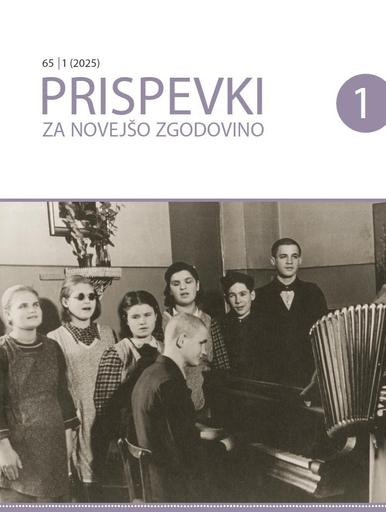
he Blind and Partially Sighted in Slovenia from the Occupation to the 1960s .
Author(s):Mojca Šorn
Co-author(s):Jure Gašparič (gl. ur.), Mojca Šorn (ur.), Andreja Jezernik (lekt.), Dubravka Mamić (lekt.)
Leto:2025
Publisher(s):Inštitut za novejšo zgodovino, Ljubljana
Language(s):slovenščina
Type(s) of material:text
Keywords:slepi in slabovidni, institucionalno skrbstvo, vzgoja in izobraževanje, štirideseta, petdeseta in šestdeseta leta 20. stoletja, Slovenija
Rights:
This work by Mojca Šorn is licensed under Creative Commons Attribution-NonCommercial-ShareAlike 4.0 International
Files (1)
Name:PRELOM_PNZ_01_2025_web.pdf
Size:5.25MB
Format:
Permanent link:https://hdl.handle.net/11686/file61713
Description
The article focuses on the institutional care and educational process for the blind and partially sighted in Slovenia during and after World War II. In the discussion based on archival materials, the author highlights the legislation that contributed to transforming the lives of the blind and partially sighted. In this regard, she notes that education and employment contributed to their integration into economic and social life, to their independent, self-responsible living, and to the elimination of the prejudices that society had held against them in the past.
Metadata (12)
- identifierhttps://hdl.handle.net/11686/71156
- title
- Slepi in slabovidni v Sloveniji od okupacije do šestdesetih let 20. stoletja
- he Blind and Partially Sighted in Slovenia from the Occupation to the 1960s .
- creator
- Mojca Šorn
- contributor
- Jure Gašparič (gl. ur.)
- Mojca Šorn (ur.)
- Andreja Jezernik (lekt.)
- Dubravka Mamić (lekt.)
- subject
- slepi in slabovidni
- institucionalno skrbstvo
- vzgoja in izobraževanje
- štirideseta
- petdeseta in šestdeseta leta 20. stoletja
- Slovenija
- description
- Članek obravnava institucionalno skrbstvo in vzgojno-izobraževalni proces za slepe in slabovidne v Sloveniji v obdobju druge svetovne vojne in v letih, ki so sledila. V razpravi, ki temelji na arhivskem gradivu, avtorica izpostavi akte, ki so pripomogli k preobratu v življenju slepih in slabovidnih oseb. Pri tem ugotavlja, da sta šolanje ter zaposlovanje doprinesla k njihovemu vključevanju v gospodarsko in družbeno življenje, samostojnemu, samoodgovornemu življenju, to pa k razbijanju predsodkov, ki jih je družba do njih gojila v letih poprej.
- The article focuses on the institutional care and educational process for the blind and partially sighted in Slovenia during and after World War II. In the discussion based on archival materials, the author highlights the legislation that contributed to transforming the lives of the blind and partially sighted. In this regard, she notes that education and employment contributed to their integration into economic and social life, to their independent, self-responsible living, and to the elimination of the prejudices that society had held against them in the past.
- publisher
- Inštitut za novejšo zgodovino
- date
- 2025
- type
- besedilo
- language
- Slovenščina
- isPartOf
- rights
- license: ccByNcSa