
/
Events
/
Conferences
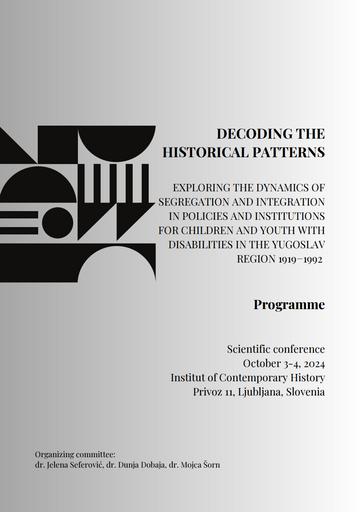
Higher education against darkness
Visually impaired university students in socialist Serbia 1945-1991

This work by Dragana Gundogan, Nataša Miličević is licensed under Creative Commons Attribution-NonCommercial-ShareAlike 4.0 International
Files (1)
Description
Higher education in the socialist Yugoslavia and Serbia was characterized by dynamic development, in terms of the increase of the number of universities, faculties, university students and university facilities. Among university students it was a significant number of visually impaired students. It is especially important that after their studies some of them had respectable positions in the cultural and scientific institutions. For example, we will mention two figures: Slobodan Vitanović, PhD long term head of Department of Romanistics on the Faculty of Philology in Belgrade and Jagoš Đuretić, who was director of the publishing company „Filip Višnjić“ for decades. According to the unreliable data, university students with visual impairments were proportionately the most educated group among all invalids. The aim of the paper is to present the process of integration of visually impaired university students at the university and subsequently in the society. It is realized through four research levels. Firstly, the most general level incorporated analysis of various social, economic and political factors which influenced the integration in higher education. Secondly, the individual level covered their personal support network such as family, peers etc. Thirdly, the relations of visually impaired university students with university students without visual impairments and teachers were explored. Fourthly, the learning methods, incentives and obstacles for studying were presented. Methodologically, we used the biographical method and we conducted interviews with the visually impaired students who studied in the investigated period. Additionally, we analyzed archival sources and specialized journals for visually impaired people and published memoirs with the visually impaired intellectuals.
Metadata (12)
- identifierhttps://hdl.handle.net/11686/71086
- title
- Higher education against darkness
- Visually impaired university students in socialist Serbia 1945-1991
- creator
- Dragana Gundogan
- Nataša Miličević
- contributor
- Jelena Seferović (mod.)
- subject
- Izobraževanje
- senzorične motnje
- slepi in slabovidni
- Srbija
- 1945-1991
- description
- Higher education in the socialist Yugoslavia and Serbia was characterized by dynamic development, in terms of the increase of the number of universities, faculties, university students and university facilities. Among university students it was a significant number of visually impaired students. It is especially important that after their studies some of them had respectable positions in the cultural and scientific institutions. For example, we will mention two figures: Slobodan Vitanović, PhD long term head of Department of Romanistics on the Faculty of Philology in Belgrade and Jagoš Đuretić, who was director of the publishing company „Filip Višnjić“ for decades. According to the unreliable data, university students with visual impairments were proportionately the most educated group among all invalids. The aim of the paper is to present the process of integration of visually impaired university students at the university and subsequently in the society. It is realized through four research levels. Firstly, the most general level incorporated analysis of various social, economic and political factors which influenced the integration in higher education. Secondly, the individual level covered their personal support network such as family, peers etc. Thirdly, the relations of visually impaired university students with university students without visual impairments and teachers were explored. Fourthly, the learning methods, incentives and obstacles for studying were presented. Methodologically, we used the biographical method and we conducted interviews with the visually impaired students who studied in the investigated period. Additionally, we analyzed archival sources and specialized journals for visually impaired people and published memoirs with the visually impaired intellectuals.
- publisher
- Inštitut za novejšo zgodovino
- date
- 04. 10. 2024
- type
- video
- language
- Angleščina
- isPartOf
- rights
- license: ccByNcSa