/
Periodicals
/
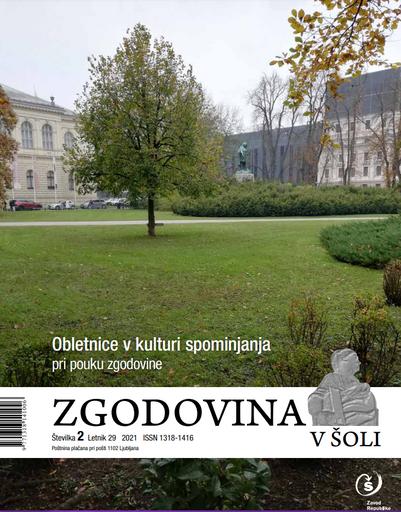
Zgodovina v šoli
Historical anniversaries in a culture of remembrance
Author(s):Vilma Brodnik
Co-author(s):Vilma Brodnik (odg. ur.), Tine Logar (lekt.)
Leto:2021
Publisher(s):Zavod RS za šolstvo, Ljubljana
Source(s):Zgodovina v šoli, 2021, št. 2
Language(s):slovenščina
Type(s) of material:text
Keywords:kultura spominjanja, zgodovinske obletnice, zgodovina, didaktika zgodovine, didaktični pristopi, culture of remembrance, historical anniversaries, history, history didactics, didactic approaches
Rights:
This work by Vilma Brodnik is licensed under Creative Commons Attribution-NonCommercial-ShareAlike 4.0 International
Files (1)
Name:zgodovina v soli-splet_2 2021.pdf
Size:5.26MB
Format:application/pdf
Permanent link:https://hdl.handle.net/11686/file36988
Description
The article shows how a culture of remembrance can be promoted by commemorating anniversaries during history lessons. It explains the theory behind the culture of remembrance with the key concepts such as: collective memory as a supraindividual pool of memories; memory creation; borrowed memory; contemporary witnesses that convey communicative memory, which then turns into cultural memory with the death of these witnesses. Cultural memory is being preserved at the institutional level with remembrance days (national holidays), monuments and memorials, education, cultural institutions (e.g. museums, archives), etc. The article also presents two fine examples of preserving cultural memory at the international level, i.e. the commemoration of the Carinthian plebiscite and the landscape of remembrance on the site of the Battles of the Soča. It focuses on promoting the culture of remembrance on the 30th anniversary of Slovenia’s attainment of independence and the remembrance days connected with Slovenia’s attainment of independence, which are being commemorated every year in the form of national holidays at the national and school level (commemoration of the Independence and Unity Day and of Statehood Day has been enacted). The article explains how to achieve a positive identification with the values of Slovenian independence and state. It presents teaching materials created on the 30th anniversary of Slovenia’s attainment of independence that are intended for remembrance lessons and celebrations, and for regular lessons discussing the attainment of independence. All materials have been published on the portal www.zbralismopogum.si. The timeline has been attached to this issue of the journal Zgodovina v šoli [History in School]; its digital version has been published on the portal www.zbralismopogum.si, together with other materials that make up a virtual three-part exhibition with introductory videos titled Plebiscit [Plebiscite], Osamosvojitev [Attainment of Independence], Vojna [War]. Exercises and activities for students intended for learning through the use of materials from the above-mentioned portal have been included in workbooks for primary and secondary schools (they are available on the portal). The article also presents modern didactic approaches to promoting the culture of remembrance, e.g. working with timelines; working with primary historical sources with emphasis on first-hand accounts and sources (which fall under primary historical sources); authentic learning with authentic exercises in the publication Zbrali smo pogum [We Summoned up the Courage, We Stepped Together], which is intended for discussing the plebiscite; museum educational work; historical fieldwork; project work; a remembrance lesson during distance education. The article also includes an analysis of history curricula in primary and grammar schools, and of the catalogue of knowledge standards for history in secondary technical and vocational education regarding the inclusion of learning objectives and contents, and of the target knowledge and expected achievements/results relating to the history of Slovenia’s attainment of independence.
Metadata (12)
- identifierhttps://hdl.handle.net/11686/57411
- title
- Zgodovinske obletnice v kulturi spominjanja. Del 1
- Historical anniversaries in a culture of remembrance
- creator
- Vilma Brodnik
- contributor
- Vilma Brodnik (odg. ur.)
- Tine Logar (lekt.)
- subject
- kultura spominjanja
- zgodovinske obletnice
- zgodovina
- didaktika zgodovine
- didaktični pristopi
- culture of remembrance
- historical anniversaries
- history
- history didactics
- didactic approaches
- description
- The article shows how a culture of remembrance can be promoted by commemorating anniversaries during history lessons. It explains the theory behind the culture of remembrance with the key concepts such as: collective memory as a supraindividual pool of memories; memory creation; borrowed memory; contemporary witnesses that convey communicative memory, which then turns into cultural memory with the death of these witnesses. Cultural memory is being preserved at the institutional level with remembrance days (national holidays), monuments and memorials, education, cultural institutions (e.g. museums, archives), etc. The article also presents two fine examples of preserving cultural memory at the international level, i.e. the commemoration of the Carinthian plebiscite and the landscape of remembrance on the site of the Battles of the Soča. It focuses on promoting the culture of remembrance on the 30th anniversary of Slovenia’s attainment of independence and the remembrance days connected with Slovenia’s attainment of independence, which are being commemorated every year in the form of national holidays at the national and school level (commemoration of the Independence and Unity Day and of Statehood Day has been enacted). The article explains how to achieve a positive identification with the values of Slovenian independence and state. It presents teaching materials created on the 30th anniversary of Slovenia’s attainment of independence that are intended for remembrance lessons and celebrations, and for regular lessons discussing the attainment of independence. All materials have been published on the portal www.zbralismopogum.si. The timeline has been attached to this issue of the journal Zgodovina v šoli [History in School]; its digital version has been published on the portal www.zbralismopogum.si, together with other materials that make up a virtual three-part exhibition with introductory videos titled Plebiscit [Plebiscite], Osamosvojitev [Attainment of Independence], Vojna [War]. Exercises and activities for students intended for learning through the use of materials from the above-mentioned portal have been included in workbooks for primary and secondary schools (they are available on the portal). The article also presents modern didactic approaches to promoting the culture of remembrance, e.g. working with timelines; working with primary historical sources with emphasis on first-hand accounts and sources (which fall under primary historical sources); authentic learning with authentic exercises in the publication Zbrali smo pogum [We Summoned up the Courage, We Stepped Together], which is intended for discussing the plebiscite; museum educational work; historical fieldwork; project work; a remembrance lesson during distance education. The article also includes an analysis of history curricula in primary and grammar schools, and of the catalogue of knowledge standards for history in secondary technical and vocational education regarding the inclusion of learning objectives and contents, and of the target knowledge and expected achievements/results relating to the history of Slovenia’s attainment of independence.
- publisher
- Zavod RS za šolstvo
- date
- 2021
- 02. 02. 2021
- type
- besedilo
- language
- Slovenščina
- isPartOf
- rights
- license: ccByNcSa