/
Periodicals
/
Zgodovinski časopis
Slovenes and the Yugoslav Community between 1918 and 1941
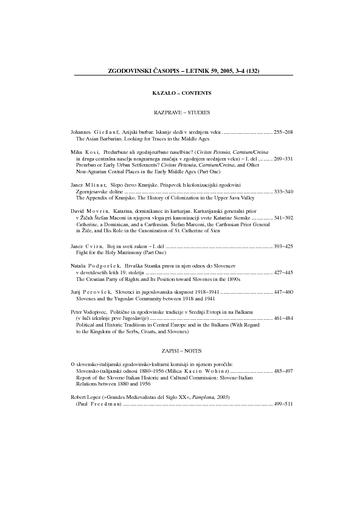
Author(s):Jurij Perovšek
Co-author(s):Peter Štih (odg. ur.)
Leto:2005
Publisher(s):Zveza zgodovinskih društev Slovenije, Ljubljana
Source(s):Zgodovinski časopis, 2005, št. 3-4
Language(s):slovenščina
Type(s) of material:text
Rights:
This work by Jurij Perovšek is licensed under Creative Commons Attribution-NonCommercial-ShareAlike 4.0 International
Files (1)
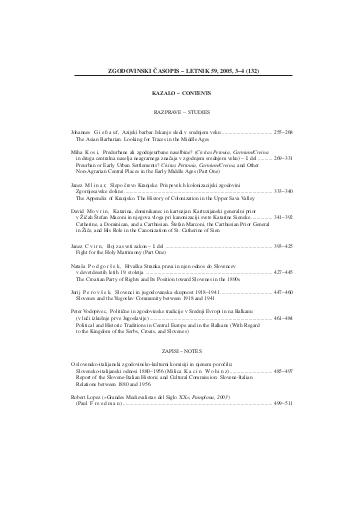
Name:ZC_3-4_-_2005.pdf
Size:6.12MB
Format:application/pdf
Permanent link:https://hdl.handle.net/11686/file54
Description
Analyzed is the response of Slovenes and Slovene politicians to the life in the centralized Kingdom of the
Serbs, Croats, and Slovenes. While the majority of Slovenes preferred the autonomistic and federalistic tendencies
advocated by the strongest Slovene political party, the Catholic Slovene People’s Party, some supported
the ideas of the Slovene liberal party in favor of centralism and unitaristic principles. The author stresses the
fact that even though operating in a highly centralized state, in the period between 1927 and 1929 and within
the then administrative and territorial units, the Slovene People’s Party managed to at least partly execute
autonomous decisions on issues of economic, social, cultural, and educational nature. A similar situation occurred
in the second half of the 1930s when the Slovene People’s Party held the majority within the Drava Province
Council appointed by the then Minister of the Interior.
Metadata (12)
- identifierhttps://hdl.handle.net/11686/5177
- title
- Slovenci in jugoslovanska skupnost 1918–1941
- Slovenes and the Yugoslav Community between 1918 and 1941
- creator
- Jurij Perovšek
- contributor
- Peter Štih (odg. ur.)
- subject
- Jugoslavija
- politična zgodovina
- Slovenci
- država SHS
- nacionalno vprašanje
- description
- Analyzed is the response of Slovenes and Slovene politicians to the life in the centralized Kingdom of the Serbs, Croats, and Slovenes. While the majority of Slovenes preferred the autonomistic and federalistic tendencies advocated by the strongest Slovene political party, the Catholic Slovene People’s Party, some supported the ideas of the Slovene liberal party in favor of centralism and unitaristic principles. The author stresses the fact that even though operating in a highly centralized state, in the period between 1927 and 1929 and within the then administrative and territorial units, the Slovene People’s Party managed to at least partly execute autonomous decisions on issues of economic, social, cultural, and educational nature. A similar situation occurred in the second half of the 1930s when the Slovene People’s Party held the majority within the Drava Province Council appointed by the then Minister of the Interior.
- V razpravi avtor obravnava odziv Slovencev in njihove politike na unitaristično in centralistično ureditev prve jugoslovanske države. Ugotavlja, da je večina slovenskega naroda podpirala avtonomistično-federalistične zahteve, ki jih je poosebljala najmočnejša slovenska politična stranka, katoliška Slovenska ljudska stranka, medtem ko je manjšina podpirala unitaristično-centralistično stališče, ki ga je zagovarjala glavnina liberalnega tabora. Avtor opozarja, da je kljub centralistični državni ureditvi SLS v letih 1927–1929 uspelo vsaj deloma uresničiti samoupravno odločanje na gospodarsko-socialnem in kulturno-prosvetnem področju v okviru t. i. oblastí (tedanjih upravno-ozemeljskih enot), podobno pa je bilo tudi v drugi polovici tridesetih let, ko je imela večino v od notranjega ministra imenovanem banskem svetu Dravske banovine.
- publisher
- Zveza zgodovinskih društev Slovenije
- date
- 2005
- type
- besedilo
- language
- Slovenščina
- isPartOf
- rights
- license: ccByNcSa