
/
Periodicals
/
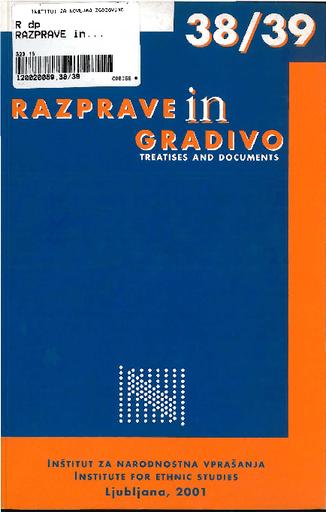
Razprave in gradivo
Civic and ethnic nationalism in relation to ethnic minorities
Author(s):Romana Bešter
Co-author(s):Boris Jesih (odg. ur.), Mitja Žagar (gl. ur.)
Leto:2001
Publisher(s):Inštitut za narodnostna vprašanja, Ljubljana
Source(s):Razprave in gradivo, 2001, št. 38-39
Language(s):slovenščina
Type(s) of material:text
Files (1)
Name:Razprave_in_gradiva-38-39.pdf
Size:35.89MB
Format:application/pdf
Permanent link:https://hdl.handle.net/11686/file463
Description
The article presents a study of two different theoretical models of nationalism - ethnic and civic - as well as the analysis of the advantages anddisadvantages of the individual models (above all in relation to ethnic minorities). Civic nationalism is essentially linked with the state and tends towards the shaping of a unified, culturally homogeneous group within the existing specific political boundaries. All citizens are at the same time members of the same (political) nation, having equal rights and enjoying equality before the law. Ethnic adherence is not predetermined but is a matter of choice. In ethnic nationalism, however, appurtenance to a nation is inherited and not chosen. Relatedness among members of an ethnic nation is based upon blood ties, upon common origin and specific ethnic characteristics, all of which canpractically not be obtained otherwise but by being born into a community. Theoretical definitions of ethnic and civic nationalism are illustrated by practical examples - the model of ethnic nationalism is presented on the case of Germany, the model of civic nationalism on that of France.
Metadata (11)
- identifierhttps://hdl.handle.net/11686/4853
- title
- Državljanski in etnični nacionalizem v odnosu do etničnih manjšin
- Civic and ethnic nationalism in relation to ethnic minorities
- creator
- Romana Bešter
- contributor
- Boris Jesih (odg. ur.)
- Mitja Žagar (gl. ur.)
- subject
- državljanski nacionalizem
- etnični nacionalizem
- državljanski nacionalizem
- civic nationalism
- ethnic nationalism
- theories
- description
- The article presents a study of two different theoretical models of nationalism - ethnic and civic - as well as the analysis of the advantages anddisadvantages of the individual models (above all in relation to ethnic minorities). Civic nationalism is essentially linked with the state and tends towards the shaping of a unified, culturally homogeneous group within the existing specific political boundaries. All citizens are at the same time members of the same (political) nation, having equal rights and enjoying equality before the law. Ethnic adherence is not predetermined but is a matter of choice. In ethnic nationalism, however, appurtenance to a nation is inherited and not chosen. Relatedness among members of an ethnic nation is based upon blood ties, upon common origin and specific ethnic characteristics, all of which canpractically not be obtained otherwise but by being born into a community. Theoretical definitions of ethnic and civic nationalism are illustrated by practical examples - the model of ethnic nationalism is presented on the case of Germany, the model of civic nationalism on that of France.
- Članek predstavlja študijo dveh različnih teoretičnih modelov nacionalizma - etničnega in državljanskega - ter analizo prednosti in slabosti posameznega modela (predvsem) v odnosu do etničnih manjšin. Državljanski nacionalizem je bistveno povezan z državo in teži k oblikovanju enotne, kulturno homogene skupine znotraj že obstoječih specifičnih političnih mej. Vsi državljani so hkrati tudi pripadniki iste (politične) nacije, imajo enake pravice in so enaki pred zakonom. Nacionalna pripadnost ni v naprej določena, temveč je stvar izbire. V etničnem nacionalizmu pa je pripadnost naciji (narodu) podedovana in ne izbrana. Povezanost med člani etnične nacije temelji na krvnih vezeh, na skupnem izvoru in posebnih etničnih značilnostih, česar praktično ni mogoče pridobiti drugače kot z rojstvom v skupnosti. Teoretične opredelitve etničnega in državljanskega nacionalizma so v članku dopolnjene s primeri iz prakse - model etničnega nacionalizma je prikazan na primeru Nemčije, model državljanskega nacionalizma pa na primeru Francije.
- publisher
- Inštitut za narodnostna vprašanja
- date
- 2001
- type
- besedilo
- language
- Slovenščina
- isPartOf