
/
Periodicals
/
Kronika: časopis za slovensko krajevno zgodovino
The Motive of Workman and Peasant (in the Light of Rank and Class Consciousness) in the Slovene Poetry of the National Liberation, 1941—1945
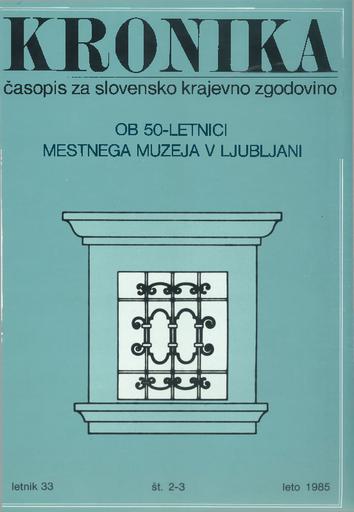
Author(s):Marija Stanonik
Co-author(s):Peter Vodopivec (gl. ur.), Marjan Drnovšek (odg. ur.), Marko Štuhec (teh. ur.), France Dobrovoljc (lekt.)
Leto:1985
Publisher(s):Zveza zgodovinskih društev Slovenije
Source(s):Kronika, 1985, št. 2-3
Language(s):slovenščina
Type(s) of material:text
Files (1)
Name:kronika_33_1985_2_3.pdf
Size:19.17MB
Format:application/pdf
Permanent link:https://hdl.handle.net/11686/file25683
Description
It proved sensible to classify the corresponding material into four sections: 1. The Life and work of both peasant and worker in the given conditions. 2. Solidarity between workers and peasants. 3. Work; the worker and the peasant as two declared cathegories of social allegiance. 4. The characterization of rank and class consciousness in connection with the history. The question of both peasant and worker has been intertwined with the texts of the Slovene National Liberation poetry mostly as a side motive; in professedly committed kinds of poetry, such as hymn and satire, it nevertheless frequently takes over the leading position. One notices less formal rigidity in the texts dealing with ethnological topics than those dealing with the history; in the case of the latter devotedness to declarativeness often prevails. The question of rank and class consciousness had been set up with all acuteness and hence the typical black and white presentation of both participants in the development of their process
Metadata (10)
- identifierhttps://hdl.handle.net/11686/42566
- title
- Motiv delavca in kmeta (v luči stanovske in razredne zavesti) v slovenskem NOB pesništvu 1941-1945
- The Motive of Workman and Peasant (in the Light of Rank and Class Consciousness) in the Slovene Poetry of the National Liberation, 1941—1945
- creator
- Marija Stanonik
- contributor
- Peter Vodopivec (gl. ur.)
- Marjan Drnovšek (odg. ur.)
- Marko Štuhec (teh. ur.)
- France Dobrovoljc (lekt.)
- subject
- pesništvo NOB
- motiv delavca
- motiv kmeta
- publisher
- Zveza zgodovinskih društev Slovenije
- date
- 1985
- 01. 01. 1985
- type
- besedilo
- language
- Slovenščina
- isPartOf