
/
Periodicals
/
Archives
Conventual Franciscans of Styrian-Carinthian Province from the 1st half of the 16th Century until Josephian Reforms
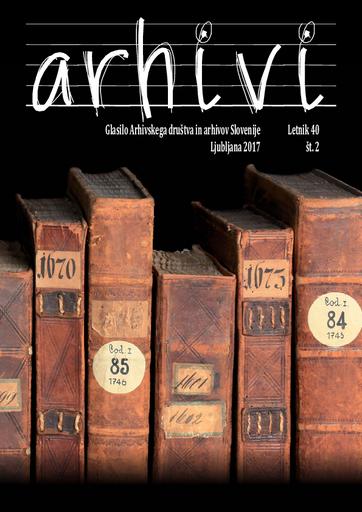
Author(s):Igor Salmič
Co-author(s):Gregor Jenuš (gl. in odg. ur.), Dunja Mušič (teh. ur.), Petra Markuš (prev.), Tanja Martelanc (foto.)
Leto:2017
Publisher(s):Arhivsko društvo Slovenije, Ljubljana
Source(s):Arhivi, 2017, št. 2
Language(s):slovenščina
Type(s) of material:text
Keywords:ČLANKI IN RAZPRAVE, minoriti, konventuali, observanti, štajersko-koroška provinca, Arsenius Platner, protestantizem, ARTICLES AND PAPERS, Minorites, conventuals, observants, Styrian Carinthian province, Arsenius Platner, Protestantism
Rights:
This work by Igor Salmič is licensed under Creative Commons Attribution-NonCommercial-ShareAlike 4.0 International
Files (1)
Name:ARHIVI_2017-2.pdf
Size:8.87MB
Format:application/pdf
Permanent link:https://hdl.handle.net/11686/file25397
Description
This contribution follows the evolution and happenings of Styrian-Carinthian province which was autonomous for almost 300 years, building on a little
known but very precious source Brevis Descriptio inclytae Provinciae Styriae et
Carinthiae Ordinis Fratrum Minorum Conventualium. Upon the presentation of
developments, we were attentive to a broader geographical space which significantly influenced functioning and mentality of Conventual Franciscans of Styrian-Carinthian province with its characteristics. Some periods were marked by
true flourishing as seen on the example of the 17th and the first half of the 18th
centuries. This is evident from architecture since in that period baroque transformation of monastic and church spaces started in many places. The circumstances of the birth of the province itself are especially surprising. If the Brevis
Descriptio is to be believed, the Styrian-Carinthian province gained autonomy
at the time when numerous other communities and provinces decayed owing to
the start of Protestant movement. The decline of the province at the end of the
18th century progressed in a similar manner to that of other monastic communities, the consequences of Josephian reforms being well known. Yet the picture
is not complete. Some historians also pay attention to other causes that helped
the situation deteriorate drastically. According to their view, those reasons need
to be searched for within the order itself. We could cite the thoughts of Gennaro Bove who identified individual possession of funds as the weakness of Minorites. This was the practice that came to be increasingly obvious due to the
broad interpretation in urban constitutions. Such behavior led many Minorite
friars to a private way of life repeatedly and thus accelerated the spiritual dilution of the order. Only at the end of the 19th century, the Covnentual order
once again formally introduced community life (vita communis perfecta) at the
recommendations of Pope Leon XIII and the engagement of minister general
Bonaventura Soldatić, thus gaining a new spiritual impetus. Some even speak of
the new birth as the provinces that first adopted this reform were opening new
outposts in Europe and around the world with the greatest zeal and spiritual
power in the first half of the 20th century
Metadata (12)
- identifierhttps://hdl.handle.net/11686/41535
- title
- Minoriti štajersko-koroške province od prve polovice 16. stoletja do jožefinskih reform
- Conventual Franciscans of Styrian-Carinthian Province from the 1st half of the 16th Century until Josephian Reforms
- creator
- Igor Salmič
- contributor
- Gregor Jenuš (gl. in odg. ur.)
- Dunja Mušič (teh. ur.)
- Petra Markuš (prev.)
- Tanja Martelanc (foto.)
- subject
- ČLANKI IN RAZPRAVE
- minoriti
- konventuali
- observanti
- štajersko-koroška provinca
- Arsenius Platner
- protestantizem
- ARTICLES AND PAPERS
- Minorites
- conventuals
- observants
- Styrian Carinthian province
- Arsenius Platner
- Protestantism
- description
- This contribution follows the evolution and happenings of Styrian-Carinthian province which was autonomous for almost 300 years, building on a little known but very precious source Brevis Descriptio inclytae Provinciae Styriae et Carinthiae Ordinis Fratrum Minorum Conventualium. Upon the presentation of developments, we were attentive to a broader geographical space which significantly influenced functioning and mentality of Conventual Franciscans of Styrian-Carinthian province with its characteristics. Some periods were marked by true flourishing as seen on the example of the 17th and the first half of the 18th centuries. This is evident from architecture since in that period baroque transformation of monastic and church spaces started in many places. The circumstances of the birth of the province itself are especially surprising. If the Brevis Descriptio is to be believed, the Styrian-Carinthian province gained autonomy at the time when numerous other communities and provinces decayed owing to the start of Protestant movement. The decline of the province at the end of the 18th century progressed in a similar manner to that of other monastic communities, the consequences of Josephian reforms being well known. Yet the picture is not complete. Some historians also pay attention to other causes that helped the situation deteriorate drastically. According to their view, those reasons need to be searched for within the order itself. We could cite the thoughts of Gennaro Bove who identified individual possession of funds as the weakness of Minorites. This was the practice that came to be increasingly obvious due to the broad interpretation in urban constitutions. Such behavior led many Minorite friars to a private way of life repeatedly and thus accelerated the spiritual dilution of the order. Only at the end of the 19th century, the Covnentual order once again formally introduced community life (vita communis perfecta) at the recommendations of Pope Leon XIII and the engagement of minister general Bonaventura Soldatić, thus gaining a new spiritual impetus. Some even speak of the new birth as the provinces that first adopted this reform were opening new outposts in Europe and around the world with the greatest zeal and spiritual power in the first half of the 20th century
- publisher
- Arhivsko društvo Slovenije
- date
- 2017
- 01. 01. 2017
- type
- besedilo
- language
- Slovenščina
- isPartOf
- rights
- license: ccByNcSa