
/
Periodicals
/
Archives
Central Europe Minor – Nuns at the Monasteries of Poor Clares in Carniola
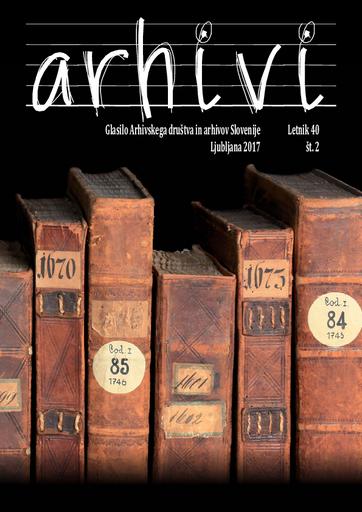
Author(s):Damjan Hančič, ČLANKI IN RAZPRAVE, klarise, redovnice, Kranjska, samostani, kulturni vpliv, ARTICLES AND PAPERS, Poor Clares, nuns, Carniola, monasteries, cultural influence
Co-author(s):Gregor Jenuš (gl. in odg. ur.), Dunja Mušič (teh. ur.), Petra Markuš (prev.), Tanja Martelanc (foto.)
Leto:2017
Publisher(s):Arhivsko društvo Slovenije, Ljubljana
Source(s):Arhivi, 2017, št. 2
Language(s):slovenščina
Type(s) of material:text
Rights:
This work by Damjan Hančič, ČLANKI IN RAZPRAVE, klarise, redovnice, Kranjska, samostani, kulturni vpliv, ARTICLES AND PAPERS, Poor Clares, nuns, Carniola, monasteries, cultural influence is licensed under Creative Commons Attribution-NonCommercial-ShareAlike 4.0 International
Files (1)
Name:ARHIVI_2017-2.pdf
Size:8.87MB
Format:application/pdf
Permanent link:https://hdl.handle.net/11686/file25397
Description
In the past, six Poor Clare monasteries were operating on Slovenian national territory: Mekinje pri Kamniku, 1300-1782; Koper, 1300-1806; Št. Vid ob
Glini na Koroškem, 1321-1554; Škofja Loka, 1358-1782; Gorizia, 1653-1782,
and Ljubljana, 1657-1782. Joining a monastery was in the past conditional
on several facts (traditional connections, personal contacts, private assets bequeathed by deceased nun-relative with lifelong amenities, and financial abilities of a family and their thirst for education). The article focuses on geographical origin of nuns who were active in the three Poor Clare monasteries in the
former Carniola: Mekinje, Škofja Loka, and Ljubljana. These monasteries housed
nuns from Carniola as well as newcomers from neighbouring lands or more faraway lands of central Europe. These newcomers contributed very significantly
and versatilely to the secular as well as the spiritual life of Poor Clare monasteries in Carniola, especially in the 17th and 18th centuries. The conclusion of the
article presents results of identifying the origin of the most important object,
preserved to the present day, which supposedly belonged to the Poor Clares and
is of particular importance to Slovenian art history and ethnology: the so-called
Christmas crib of Mekinje, clearly showing the influence of nuns who came from
German and Czech lands to Carniola. Poor Clares in Ljubljana and Škofja Loka
also worshipped the wax-coated infant Jesus of Prague which reflects the influence of the Czech nuns.
Metadata (11)
- identifierhttps://hdl.handle.net/11686/41534
- title
- Srednja Evropa v malem – redovnice v samostanih klaris na Kranjskem
- Central Europe Minor – Nuns at the Monasteries of Poor Clares in Carniola
- creator
- Damjan Hančič
- ČLANKI IN RAZPRAVE
- klarise
- redovnice
- Kranjska
- samostani
- kulturni vpliv
- ARTICLES AND PAPERS
- Poor Clares
- nuns
- Carniola
- monasteries
- cultural influence
- contributor
- Gregor Jenuš (gl. in odg. ur.)
- Dunja Mušič (teh. ur.)
- Petra Markuš (prev.)
- Tanja Martelanc (foto.)
- description
- In the past, six Poor Clare monasteries were operating on Slovenian national territory: Mekinje pri Kamniku, 1300-1782; Koper, 1300-1806; Št. Vid ob Glini na Koroškem, 1321-1554; Škofja Loka, 1358-1782; Gorizia, 1653-1782, and Ljubljana, 1657-1782. Joining a monastery was in the past conditional on several facts (traditional connections, personal contacts, private assets bequeathed by deceased nun-relative with lifelong amenities, and financial abilities of a family and their thirst for education). The article focuses on geographical origin of nuns who were active in the three Poor Clare monasteries in the former Carniola: Mekinje, Škofja Loka, and Ljubljana. These monasteries housed nuns from Carniola as well as newcomers from neighbouring lands or more faraway lands of central Europe. These newcomers contributed very significantly and versatilely to the secular as well as the spiritual life of Poor Clare monasteries in Carniola, especially in the 17th and 18th centuries. The conclusion of the article presents results of identifying the origin of the most important object, preserved to the present day, which supposedly belonged to the Poor Clares and is of particular importance to Slovenian art history and ethnology: the so-called Christmas crib of Mekinje, clearly showing the influence of nuns who came from German and Czech lands to Carniola. Poor Clares in Ljubljana and Škofja Loka also worshipped the wax-coated infant Jesus of Prague which reflects the influence of the Czech nuns.
- publisher
- Arhivsko društvo Slovenije
- date
- 2017
- 01. 01. 2017
- type
- besedilo
- language
- Slovenščina
- isPartOf
- rights
- license: ccByNcSa