
/
Periodicals
/
Archives
Intermediary between Geographical Spaces. A few Examples from the Ballei of Austria
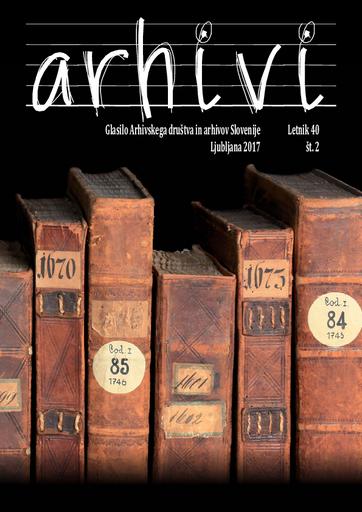
Author(s):Janez Mlinar
Co-author(s):Gregor Jenuš (gl. in odg. ur.), Dunja Mušič (teh. ur.), Petra Markuš (prev.), Tanja Martelanc (foto.)
Leto:2017
Publisher(s):Arhivsko društvo Slovenije, Ljubljana
Source(s):Arhivi, 2017, št. 2
Language(s):slovenščina
Type(s) of material:text
Keywords:ČLANKI IN RAZPRAVE, nemški viteški red, križniki, avstrijska balija, ARTICLES AND PAPERS, Teutonic Order, The Knights of the Cross, the Ballei of Austria
Rights:
This work by Janez Mlinar is licensed under Creative Commons Attribution-NonCommercial-ShareAlike 4.0 International
Files (1)
Name:ARHIVI_2017-2.pdf
Size:8.87MB
Format:application/pdf
Permanent link:https://hdl.handle.net/11686/file25397
Description
The contribution uses individual examples from the Ballei of Austria to illustrate the role of the internal organization of the order that allowed individual
church orders to act as an intermediary between various geographical areas in
the late Middle Ages. Teutonic Order undertook the task of connecting order
territory on the Baltic and in Prussia to the area of Eastern Alps. Internal development and governance structure of Teutonic Order was closely tied to political
circumstances in which the order functioned throughout its history. Individual
balleis – together with the Ballei of Austria – were established in response to
politically motivated organizational requirements of the order. Internal organization of the order followed the example of federal structure characteristic of
Cistercians. Individual governance levels (balleis, commandries) enjoyed a considerable autonomy that in crisis periods, in particular in the second half of the
15th century, led to almost arbitrary functioning of individual lower instances.
Such federal structure encouraged great mobility of individual members within
the order. Characteristic of Teutonic Order in the 13th and 14th centuries, in
particular, is the great fluctuation of members in commandries of the order’s,
however, members at the same time frequently crossed territorial boundaries
of individual branches of the order. Example of such mobility is the career of
Walter Unger from Kamnik who initially functioned in Prussia upon joining
the order after 1261, but returned to the Ballei of Austria after 1267 where he
assumed important administrative roles. Among other things, he was a commander in Velika Nedelja in 1288. The internal structure of Teutonic Order substantially contributed to the transfer of people and consequently ideas between
European north and the area of Eastern Alps.
Metadata (12)
- identifierhttps://hdl.handle.net/11686/41533
- title
- Most med severom in jugom. Nemški viteški red kot posrednik med geografskimi prostori. Nekaj primerov iz avstrijske balije
- Intermediary between Geographical Spaces. A few Examples from the Ballei of Austria
- creator
- Janez Mlinar
- contributor
- Gregor Jenuš (gl. in odg. ur.)
- Dunja Mušič (teh. ur.)
- Petra Markuš (prev.)
- Tanja Martelanc (foto.)
- subject
- ČLANKI IN RAZPRAVE
- nemški viteški red
- križniki
- avstrijska balija
- ARTICLES AND PAPERS
- Teutonic Order
- The Knights of the Cross
- the Ballei of Austria
- description
- The contribution uses individual examples from the Ballei of Austria to illustrate the role of the internal organization of the order that allowed individual church orders to act as an intermediary between various geographical areas in the late Middle Ages. Teutonic Order undertook the task of connecting order territory on the Baltic and in Prussia to the area of Eastern Alps. Internal development and governance structure of Teutonic Order was closely tied to political circumstances in which the order functioned throughout its history. Individual balleis – together with the Ballei of Austria – were established in response to politically motivated organizational requirements of the order. Internal organization of the order followed the example of federal structure characteristic of Cistercians. Individual governance levels (balleis, commandries) enjoyed a considerable autonomy that in crisis periods, in particular in the second half of the 15th century, led to almost arbitrary functioning of individual lower instances. Such federal structure encouraged great mobility of individual members within the order. Characteristic of Teutonic Order in the 13th and 14th centuries, in particular, is the great fluctuation of members in commandries of the order’s, however, members at the same time frequently crossed territorial boundaries of individual branches of the order. Example of such mobility is the career of Walter Unger from Kamnik who initially functioned in Prussia upon joining the order after 1261, but returned to the Ballei of Austria after 1267 where he assumed important administrative roles. Among other things, he was a commander in Velika Nedelja in 1288. The internal structure of Teutonic Order substantially contributed to the transfer of people and consequently ideas between European north and the area of Eastern Alps.
- publisher
- Arhivsko društvo Slovenije
- date
- 2017
- 01. 01. 2017
- type
- besedilo
- language
- Slovenščina
- isPartOf
- rights
- license: ccByNcSa