/
Periodicals
/
Archives
The Difference Between Personal File and Colleague File Based on Milan Dorič Example
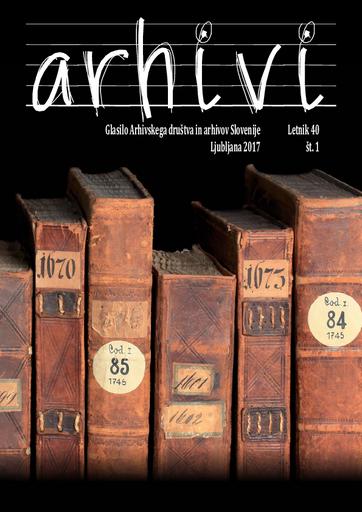
Author(s):Ljuba Dornik Šubelj
Co-author(s):Gregor Jenuš (gl. in odg. ur.), Dunja Mušič (teh. ur.), Petra Markuš (lekt.), Petra Markuš (prev.), Nina Gostenčnik, Sabina Lešnik (foto.)
Leto:2017
Publisher(s):Arhivsko društvo Slovenije, Ljubljana
Source(s):Arhivi, 2017, št. 1
Language(s):slovenščina
Type(s) of material:text
Keywords:ČLANKI IN RAZPRAVE, Milan Dorič, Krunoslav Draganović, Vladimir Sećen, Antikomunistična legija, Zvezni urad za varstvo ustavne ureditve ZRN, ARTICLES AND PAPERS, Milan Dorič, Krunoslav Draganović, Vladimir Sećen, Anti-Communist Legion, Federal Office for the Protection of the Constitution
Rights:
This work by Ljuba Dornik Šubelj is licensed under Creative Commons Attribution-NonCommercial-ShareAlike 4.0 International
Files (1)
Name:ARHIVI_2017-1.pdf
Size:4.49MB
Format:application/pdf
Permanent link:https://hdl.handle.net/11686/file25396
Description
The author examined the case of Milan Dorič and thereafter compared
the material in his personal file to that of the colleague file and faced them with
Dorič‘s statement. The fund of Republican Secretariat for Internal Affairs contains a large number of personal files. Not everyone who had personal file was
a colleagues of State Security Administration. Milan Dorič was one of the first
people who got a personal file – his file was created as early as in 1946 when he
was captured by Germans as a minor after the shorter period among partisans
and brought to prisons in Dravograd, Klagenfurt and Dachau from where he
was freed at the end of the war. Following his return, he was suspected of cooperation with Gestapo as his stepfather was an active member of Kulturbund
who as an informer during World War II denounced many opponents of German occupiers and escaped to Austria at the end of the war. Dorič was arrested by local functionaries who tortured him and forced confessions out of him
on the basis of which he was imprisoned in the Sterntal Concentration Camp.
From there he escaped and illegally went to his stepfather in Austria where he
worked as a courier with Milorad Glišič and British intelligence service which
supported the supporters of the former monarchy in preparation for elections.
When crossing border, he was arrested and sentenced to 15-year imprisonment
by military court. During his imprisonment, he started to cooperate with State
Security Administration under duress and thus informed on fellow prisoners
with whom he maintained contacts. After his pardon, which he was granted due
to the cooperation with State Security Administration, he escaped to Austria on
State Security Administration order and there he made contact with Austrian
police and British occupying authorities. hHe was imprisoned several times for
his participation in illegal border crossings in Austria, and he served the last
jail sentence in Yugoslavia on the Goli otok island when he escaped to avoid
recruitment. The real cooperation with monetary rewards was established between Dorič and State Security Administration in 1966 in which Dorič was not
operating in the role of occupier’s colleague as it is written in his personal file,
but he participated as a nationally conscious citizen. His cooperation with State
Security Administration was one of the longest as he actively participated since
1949 even from prison as a co-worker since 1966. Despite the fact he was imprisoned for 15 years (from 1946 to 1965 with shorter periods of freedom),
he provided Yugoslavia or its State Security Administration information on the
situation during extreme Croatian emigration. Due to his proficiency in German
language he worked in camps in Austria and Germany where he came into contact with Austrian and German security authorities as well as representatives of
occupying authorities in Austria before the proclamation of the republic, with
British and American intelligence service. He passed information on situation
during emigration, preparation for terrorist acts and plan related to Yugoslavia after Tito to the above-mentioned authorities and intelligence services. His
work, while often being dangerous as he worked for Yugoslav, German or Austrian and Americal intelligence service, was recognized and appropriately rewarded, however, his goal of achieving personal rehabilitation was not fulfilled.
Metadata (12)
- identifierhttps://hdl.handle.net/11686/41470
- title
- Razlika med osebnim dosjejem in dosjejem sodelavca na primeru Milana Doriča
- The Difference Between Personal File and Colleague File Based on Milan Dorič Example
- creator
- Ljuba Dornik Šubelj
- contributor
- Gregor Jenuš (gl. in odg. ur.)
- Dunja Mušič (teh. ur.)
- Petra Markuš (lekt.)
- Petra Markuš (prev.)
- Nina Gostenčnik, Sabina Lešnik (foto.)
- subject
- ČLANKI IN RAZPRAVE
- Milan Dorič
- Krunoslav Draganović
- Vladimir Sećen
- Antikomunistična legija
- Zvezni urad za varstvo ustavne ureditve ZRN
- ARTICLES AND PAPERS
- Milan Dorič
- Krunoslav Draganović
- Vladimir Sećen
- Anti-Communist Legion
- Federal Office for the Protection of the Constitution
- description
- The author examined the case of Milan Dorič and thereafter compared the material in his personal file to that of the colleague file and faced them with Dorič‘s statement. The fund of Republican Secretariat for Internal Affairs contains a large number of personal files. Not everyone who had personal file was a colleagues of State Security Administration. Milan Dorič was one of the first people who got a personal file – his file was created as early as in 1946 when he was captured by Germans as a minor after the shorter period among partisans and brought to prisons in Dravograd, Klagenfurt and Dachau from where he was freed at the end of the war. Following his return, he was suspected of cooperation with Gestapo as his stepfather was an active member of Kulturbund who as an informer during World War II denounced many opponents of German occupiers and escaped to Austria at the end of the war. Dorič was arrested by local functionaries who tortured him and forced confessions out of him on the basis of which he was imprisoned in the Sterntal Concentration Camp. From there he escaped and illegally went to his stepfather in Austria where he worked as a courier with Milorad Glišič and British intelligence service which supported the supporters of the former monarchy in preparation for elections. When crossing border, he was arrested and sentenced to 15-year imprisonment by military court. During his imprisonment, he started to cooperate with State Security Administration under duress and thus informed on fellow prisoners with whom he maintained contacts. After his pardon, which he was granted due to the cooperation with State Security Administration, he escaped to Austria on State Security Administration order and there he made contact with Austrian police and British occupying authorities. hHe was imprisoned several times for his participation in illegal border crossings in Austria, and he served the last jail sentence in Yugoslavia on the Goli otok island when he escaped to avoid recruitment. The real cooperation with monetary rewards was established between Dorič and State Security Administration in 1966 in which Dorič was not operating in the role of occupier’s colleague as it is written in his personal file, but he participated as a nationally conscious citizen. His cooperation with State Security Administration was one of the longest as he actively participated since 1949 even from prison as a co-worker since 1966. Despite the fact he was imprisoned for 15 years (from 1946 to 1965 with shorter periods of freedom), he provided Yugoslavia or its State Security Administration information on the situation during extreme Croatian emigration. Due to his proficiency in German language he worked in camps in Austria and Germany where he came into contact with Austrian and German security authorities as well as representatives of occupying authorities in Austria before the proclamation of the republic, with British and American intelligence service. He passed information on situation during emigration, preparation for terrorist acts and plan related to Yugoslavia after Tito to the above-mentioned authorities and intelligence services. His work, while often being dangerous as he worked for Yugoslav, German or Austrian and Americal intelligence service, was recognized and appropriately rewarded, however, his goal of achieving personal rehabilitation was not fulfilled.
- publisher
- Arhivsko društvo Slovenije
- date
- 2017
- 01. 01. 2017
- type
- besedilo
- language
- Slovenščina
- isPartOf
- rights
- license: ccByNcSa