
/
Events
/
Conferences
Salus revoluciae ultima lex
Author(s):Janko Prunk
Co-author(s):Damijan Guštin (čl. prog. odb.), Jurij Perovšek (čl. prog. odb.), Jure Gašparič (čl. prog. odb.), Filip Čuček (čl. prog. odb.), Mojca Šorn (čl. prog. odb.)
Leto:2017
Publisher(s):Inštitut za novejšo zgodovino, Ljubljana
Source(s):Misliti o revoluciji: 100 let pozneje
Language(s):slovenščina
Type(s) of material:moving image
Rights:
This work by Janko Prunk is licensed under Creative Commons Attribution-NonCommercial-NoDerivs 4.0 International
Files (2)
Name:vabilo.pdf
Size:1.03MB
Format:application/pdf
Permanent link:https://hdl.handle.net/11686/file23042
Description
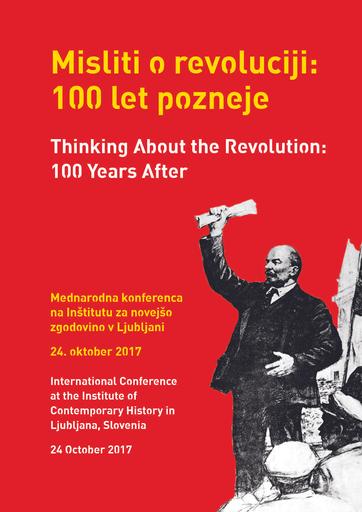
Russian Bolshevism was an ideological heir to the European revolutionary passion that took place at the second stage of the French Revolution, during the Jacobine Dictatorship between 1793 and 1794. However, the Bolsheviks implemented this in a poorly-developed Russian bourgeois society at the beginning of the 20th century. The Bolsheviks, originating from the underdeveloped Russian society incapable of any reforms, introduced typically Russian elements – the violent anarchistic theory and practice devoid of any democratic traditions – into Marxism, which had started to become increasingly reformist after the end of the 19th century and had begun to abandon its idea of a revolution, at least in practice. The Russian Bolsheviks and especially their leader Lenin altered the fundamental Marx's supposition that the socialist revolution would be carried out by the industrial proletariat once it was numerous enough and as soon as it achieved a class consciousness. The Bolshevik guideline was that a small, tight-knit centrally-organised political party could replace the proletariat in the realisation of a revolution. The Bolsheviks were outright fetishists for the Revolution. At their congress in London in 1903 they therefore included a horribly unfortunate thesis in their resolution, which had severe consequences for socialism: "Salus revolutiae, ultima lex". This thesis allowed for the restriction and violation of the basic bourgeois rights, freedom, as well as human lives, should the party leaders agree to it. Such a conclusion was formulated precisely by the cult figure of the Russian Marxism, highly esteemed in the West: Georgi Plekhanov. After the Bolshevik coup on October 1917, Plekhanov abandoned this standpoint, although Lenin continued to accept and implement it in his political practice without any reservations. One of the most learned and insightful experts in the Russian history, Richard Pipers, compared Lenin to Robespierre: "He saw politics as warfare. He only distinguished between good and bad citizens, and did not believe in any compromises between them: the only possible outcome was complete capitulation or even annihilation." On such ideological grounds, in 1917 the Bolsheviks took over the power. On 25 October 1917 they toppled Kerensky's provisional government and established the revolutionary government – the Council of People's Commissars – at the all-Russian Congress of Soviets in Petrograd. The Bolsheviks stylised this act as a workers' socialist revolution. Three weeks after the successful coup-d'état, between 12 and 20 November 1917, elections for the Constitutional Assembly (the Duma) took place. The Bolsheviks organised the elections in the attempt to ensure their own legitimacy, believing that they could afford to do this now that they possessed all the power of authority. However, only 183 Bolsheviks of the 715 Members of Assembly were elected. They faced the impending removal from power. Thus Lenin opted for a Macchiavelist measure of abolishing the Duma. Lenin's argument was that the Assembly was a good institution for bourgeois states, but that in Russia the power had already been assumed by the working class and its bodies – the soviets – which no longer needed any parliaments. Due to Lenin's actions, the democratically-elected members of the abolished Duma started organising a political struggle against the Bolsheviks, which escalated into a three-year civil war in the summer of 1918. Meanwhile, in March 1918, the Left Socialist Revolutionaries (also referred to as the SRs) exited the government due to Lenin's yielding to the demands of the Central Forces at the peace conference in Brest-Litovsk, and the Bolsheviks ruled on their own. The Bolshevik regime could be labelled, in short, as universal revolutionary voluntarism carried out by a single political Bolshevik party. All other parties were forbidden. The economy was completely nationalised and centralised. The new Bolshevik economic apparatus in the field was not qualified for this task, nor was it able to cope with it. Soon after the takeover of power, the Bolsheviks established a secret state police Cheka with broad powers. Censorship and a strong ideological propaganda were introduced. Their method of governing was a total "red terror", as it has been labelled by many historians. Perhaps the most lucid assessment was given by Pipes, who wrote that this was a system, unprecedented in the world and completely unlike any of the previous patterns. "The power was twofold: an extreme form of dictatorship carried out by a private group – "the Party" – behind a facade of the people's self-government, represented by the soviets. The use of the designation totalitarianism has gradually asserted itself for this system". Such a system provoked severe criticism and total rejection in the Western bourgeois society, as well as in the reformist socialist parties. It was also criticised by the most insightful socialist theorist in the West, the German socialist Rosa Luxemburg. From her leftist socialist revolutionary standpoint, she did give the Bolsheviks – Lenin and Trotsky – the historical merit of being the first in the world to have the courage to risk a revolution and take over the power, which was supposed to enable the workers to develop socialism. However, she also critically assessed Lenin's system which "employs decree, dictatorial force of the factory overseer, draconian penalties, rule by terror – all these things are but palliatives. The only right way to a rebirth of the society is the school of public life itself, the most unlimited, the broadest democracy and public opinion." She also emphasised that the revolution was but an introductory act in the construction of the socialist society, where the revolutionary power had to observe the wishes and initiatives of the people's masses. After the uprising of sailors and workers in Kronstadt had been stifled in March 1921, the Bolshevik regime only represented the bureaucratic elite of the Party, even though it attempted to present itself, by means of cunning and intense propaganda, as a government of workers in a state of workers. Many leftist revolutionary workers as well as leftist intellectuals organised in the Communist Parties fell for it, and kept believing in the workers' nature of the Soviet system as well as adhering to the Soviet Union politics. In 1953 the German historian Hans Rothfels was the first to write that the October Revolution could be seen as the beginning of "contemporary history". His younger colleague Hagen Schulze, on the other hand, referred to the October Revolution and the entry of the United States into World War I in the same year simply as "the two global revolutions". Both of these phenomena did indeed influence the historical development in Europe and the world for decades. In certain aspects, the Russian Revolution was a positive development, though generally speaking it was negative throughout the existence of the Bolshevik system of soviets – for as long as three quarters of a century. The United States of America, on the other hand, have exerted their influence for over a hundred years, and there are no indications that their influence might wane any time soon.
Metadata (11)
- identifierhttps://hdl.handle.net/11686/38138
- title
- Salus revoluciae ultima lex
- creator
- Janko Prunk
- contributor
- Damijan Guštin (čl. prog. odb.)
- Jurij Perovšek (čl. prog. odb.)
- Jure Gašparič (čl. prog. odb.)
- Filip Čuček (čl. prog. odb.)
- Mojca Šorn (čl. prog. odb.)
- description
- Ruski boljševizem je idejni dedič evropske revolucionarne strasti, ki se je razmahnila v drugi fazi francoske revolucije v času jakobinske diktature, v letih 1793–1794, ki pa so jo boljševiki cepili na slabo razvito rusko meščansko družbo na začetku 20. stoletja. Boljševiki, ki so izhajali iz nerazvite, reformno nesposobne ruske družbe, so v marksizem, ki se je od konca 19. stoletja že vse bolj usmerjal reformistično in vsaj v praksi opuščal svojo idejo o revoluciji, vnesli tipična ruska elementa – nasilno anarhistično teorijo in prakso, v katerih ni bilo demokratične tradicije. Ruski boljševiki, predvsem njihov voditelj Lenin, so spremenili osnovno Marxovo predstavo, da bo socialistično revolucijo izvedel industrijski proletariat, ko bo dovolj številen in se bo povzpel do razredne zavesti. Njihovo vodilo je bilo, da lahko majhna čvrsto centralistično organizirana stranka nadomesti proletariat v izvedbi revolucije. Boljševiki so prav fetišizirali revolucijo. Tako so na svojem kongresu v Londonu leta 1903 v resolucijo zapisali strašno nesrečno tezo, ki je imela hude posledice za socializem: "Salus revolutiae, ultima lex", ki je dovoljevala v prid revolucije omejiti in oškodovati temeljne meščanske pravice, svobodo in nedotakljivost človekove osebe, če strankini voditelji to sklenejo. Takšen sklep je formuliral prav kultna figura ruskega marksizma, ki so ga cenili na Zahodu, Gregorij Plehanov. Pozneje po boljševiškem puču oktobra 1917 je opustil takšno stališče, toda Lenin ga je brez pomislekov sprejemal in uporabljal v politični praksi. Eden najbolj poučenih in prodornih zgodovinarjev ruske zgodovine, Richard Pipers, je Lenina primerjal z Robespierrom: "V svojem mišljenju je politiko pojmoval kot vojskovanje. Razlikoval je samo dobre in slabe državljane, med katerimi ne more biti kompromisa, ampak le popolna kapitulacija ali celo uničenje." Na taki ideološki podlagi so boljševiki leta 1917 osvojili oblast. 25. oktobra 1917 so strmoglavili Kerenskijevo Začasno vlado in na vseruskem kongresu sovjetov v Petrogradu ustanovili revolucionarno vlado Svet ljudskih komisarjev. To dejanje so boljševiki stilizirali za delavsko socialistično revolucijo. Tri tedne po uspelem državnem udaru so bile od 12. do 20. novembra 1917 volitve v ustavodajno skupščino (dumo). Boljševiki so jih organizirali misleč, da si zdaj, ko imajo vse vzvode oblasti, to lahko privoščijo in si zagotovijo njeno legitimeteto. Na volitvah so od 715 članov skupščine dobili le 183 poslancev. Grozila jim je odstranitev z oblasti. Zato se je Lenin odločil za makiavelističen ukrep, razpustiti dumo. Navedel je argument, da je skupščina dober organ za meščanske države, v Rusiji pa je oblast že v rokah delavskega razreda in njegovih organov – sovjetov, ki parlamenta več ne potrebujejo. Zaradi tega Leninovega dejanja so se demokratično izvoljeni poslanci razpuščene dume začeli organizirati v politični boj z boljševiki; poleti 1918 je prerasel v državljansko vojno, ki je potekala tri leta. Medtem so marca 1918 zaradi Leninovega popuščanja pred zahtevami Centralnih sil na mirovni konferenci v Brest-Litovsku iz vlade izstopili levi eseri in boljševiki so zavladali sami. Kratka oznaka boljševističnega režima bi lahko bila vsestranski revolucionarni voluntarizem, ki ga je izvajala ena sama politična boljševiška stranka. Vse druge so prepovedali. Gospodarstvo so popolnoma podržavili in centralizirali. Nov boljševiški gospodarski aparat na terenu ni bil kvalificiran za to nalogo in ji ni bil kos. Boljševiki so kmalu po prevzemu oblasti ustanovili tajno državno policijo Čeko z velikimi pooblastili. Uvedeni sta bili cenzura in močna ideološka propaganda. Metoda vladanja je bil vsestranski "rdeči teror", kot njihov sistem označujejo mnogi zgodovinarji. Morda najbolj lucidno oceno je podal Pipes, ki je zapisal, da je bil to sistem, ki ga svet še ni poznal, in ni bil podoben nobenemu vzorcu do tedaj. "Šlo je za dvojno oblast: skrajno obliko diktature, ki jo je izvajala zasebna skupina – "partija" – za fasado ljudske samouprave, ki so jo predstavljali sovjeti. Za sistem je počasi prišla v uporabo oznaka totalitarizem". Tak sistem je izzval ostro kritiko in popolno odklonilnost meščanske družbe na Zahodu pa tudi reformističnih socialističnih strank. Kritizirala ga je tudi najbolj prodorna socialistična teoretičarka na Zahodu, nemška socialistka Rosa Luxemburg. S svojega levo socialističnega revolucionarnega stališča je sicer pripisala boljševikom – Leninu in Trockemu – zgodovinsko zaslugo, da sta si prva na svetu upala tvegati z revolucijo in osvojiti oblast, ki naj bi delavstvu omogočila graditev socializma. Nato pa je kritično ovrednotila Leninov sistem, ki "se poslužuje le dekretov, diktatorskih pooblastil tovarniških nadzornikov, drakonskih kazni, strahovlade, kar pa je samo blažilo napačnega koncepta. Edina pot za preporod družbe je šola javnega življenja, neomejena široka demokracija in javno mnenje." Poudarila je še, da je revolucija samo uvodno dejanje za začetek graditve socialistične družbe, kjer mora revolucionarna oblast prisluhniti željam in iniciativam ljudskih množic. Po zatrtem uporu mornarjev in delavcev v Kronstadtu marca 1921 je boljševiški režim predstavljal le strankarsko birokratsko elito, čeprav se je s spretno intenzivno propagando poskušal prikazovati kot delavska vlada v delavski državi. Tej propagandi so nasedali mnogi levičarski revolucionarni delavci pa tudi tako orientirani intelektualci, organizirani v komunističnih strankah, ki so dolga leta verjeli v delavsko naravo sovjetskega sistema in sledili politiki Sovjetske zveze. Oktobrsko revolucijo bi lahko ocenili za začetek "sodobne zgodovine", kot je leta 1953 prvi zapisal nemški zgodovinar Hans Rothfels. Njegov mlajši kolega Hagen Schulze pa je Oktobrsko revolucijo in vstop ZDA v prvo svetovno vojno istega leta imenoval kar "Dve svetovni revoluciji". Res sta obe dejanji desetletja dolgo vplivali na zgodovinski razvoj v Evropi in v svetu. Ruska revolucija v določenih aspekti pozitivno, v generalnem pogledu pa negativno ves čas obstoja boljševiškega sovjetskega sistema – celega tričetrt stoletja –, ZDA pa vplivajo že kar celih sto let, in nič ne kažejo, da bo njihov vpliv popustil.
- Russian Bolshevism was an ideological heir to the European revolutionary passion that took place at the second stage of the French Revolution, during the Jacobine Dictatorship between 1793 and 1794. However, the Bolsheviks implemented this in a poorly-developed Russian bourgeois society at the beginning of the 20th century. The Bolsheviks, originating from the underdeveloped Russian society incapable of any reforms, introduced typically Russian elements – the violent anarchistic theory and practice devoid of any democratic traditions – into Marxism, which had started to become increasingly reformist after the end of the 19th century and had begun to abandon its idea of a revolution, at least in practice. The Russian Bolsheviks and especially their leader Lenin altered the fundamental Marx's supposition that the socialist revolution would be carried out by the industrial proletariat once it was numerous enough and as soon as it achieved a class consciousness. The Bolshevik guideline was that a small, tight-knit centrally-organised political party could replace the proletariat in the realisation of a revolution. The Bolsheviks were outright fetishists for the Revolution. At their congress in London in 1903 they therefore included a horribly unfortunate thesis in their resolution, which had severe consequences for socialism: "Salus revolutiae, ultima lex". This thesis allowed for the restriction and violation of the basic bourgeois rights, freedom, as well as human lives, should the party leaders agree to it. Such a conclusion was formulated precisely by the cult figure of the Russian Marxism, highly esteemed in the West: Georgi Plekhanov. After the Bolshevik coup on October 1917, Plekhanov abandoned this standpoint, although Lenin continued to accept and implement it in his political practice without any reservations. One of the most learned and insightful experts in the Russian history, Richard Pipers, compared Lenin to Robespierre: "He saw politics as warfare. He only distinguished between good and bad citizens, and did not believe in any compromises between them: the only possible outcome was complete capitulation or even annihilation." On such ideological grounds, in 1917 the Bolsheviks took over the power. On 25 October 1917 they toppled Kerensky's provisional government and established the revolutionary government – the Council of People's Commissars – at the all-Russian Congress of Soviets in Petrograd. The Bolsheviks stylised this act as a workers' socialist revolution. Three weeks after the successful coup-d'état, between 12 and 20 November 1917, elections for the Constitutional Assembly (the Duma) took place. The Bolsheviks organised the elections in the attempt to ensure their own legitimacy, believing that they could afford to do this now that they possessed all the power of authority. However, only 183 Bolsheviks of the 715 Members of Assembly were elected. They faced the impending removal from power. Thus Lenin opted for a Macchiavelist measure of abolishing the Duma. Lenin's argument was that the Assembly was a good institution for bourgeois states, but that in Russia the power had already been assumed by the working class and its bodies – the soviets – which no longer needed any parliaments. Due to Lenin's actions, the democratically-elected members of the abolished Duma started organising a political struggle against the Bolsheviks, which escalated into a three-year civil war in the summer of 1918. Meanwhile, in March 1918, the Left Socialist Revolutionaries (also referred to as the SRs) exited the government due to Lenin's yielding to the demands of the Central Forces at the peace conference in Brest-Litovsk, and the Bolsheviks ruled on their own. The Bolshevik regime could be labelled, in short, as universal revolutionary voluntarism carried out by a single political Bolshevik party. All other parties were forbidden. The economy was completely nationalised and centralised. The new Bolshevik economic apparatus in the field was not qualified for this task, nor was it able to cope with it. Soon after the takeover of power, the Bolsheviks established a secret state police Cheka with broad powers. Censorship and a strong ideological propaganda were introduced. Their method of governing was a total "red terror", as it has been labelled by many historians. Perhaps the most lucid assessment was given by Pipes, who wrote that this was a system, unprecedented in the world and completely unlike any of the previous patterns. "The power was twofold: an extreme form of dictatorship carried out by a private group – "the Party" – behind a facade of the people's self-government, represented by the soviets. The use of the designation totalitarianism has gradually asserted itself for this system". Such a system provoked severe criticism and total rejection in the Western bourgeois society, as well as in the reformist socialist parties. It was also criticised by the most insightful socialist theorist in the West, the German socialist Rosa Luxemburg. From her leftist socialist revolutionary standpoint, she did give the Bolsheviks – Lenin and Trotsky – the historical merit of being the first in the world to have the courage to risk a revolution and take over the power, which was supposed to enable the workers to develop socialism. However, she also critically assessed Lenin's system which "employs decree, dictatorial force of the factory overseer, draconian penalties, rule by terror – all these things are but palliatives. The only right way to a rebirth of the society is the school of public life itself, the most unlimited, the broadest democracy and public opinion." She also emphasised that the revolution was but an introductory act in the construction of the socialist society, where the revolutionary power had to observe the wishes and initiatives of the people's masses. After the uprising of sailors and workers in Kronstadt had been stifled in March 1921, the Bolshevik regime only represented the bureaucratic elite of the Party, even though it attempted to present itself, by means of cunning and intense propaganda, as a government of workers in a state of workers. Many leftist revolutionary workers as well as leftist intellectuals organised in the Communist Parties fell for it, and kept believing in the workers' nature of the Soviet system as well as adhering to the Soviet Union politics. In 1953 the German historian Hans Rothfels was the first to write that the October Revolution could be seen as the beginning of "contemporary history". His younger colleague Hagen Schulze, on the other hand, referred to the October Revolution and the entry of the United States into World War I in the same year simply as "the two global revolutions". Both of these phenomena did indeed influence the historical development in Europe and the world for decades. In certain aspects, the Russian Revolution was a positive development, though generally speaking it was negative throughout the existence of the Bolshevik system of soviets – for as long as three quarters of a century. The United States of America, on the other hand, have exerted their influence for over a hundred years, and there are no indications that their influence might wane any time soon.
- publisher
- Inštitut za novejšo zgodovino
- date
- 2017
- 24. 10. 2017
- type
- video
- language
- Slovenščina
- isPartOf
- rights
- license: ccByNcNd