
/
Events
/
Conferences
On the Global Impact of the Russian Revolution
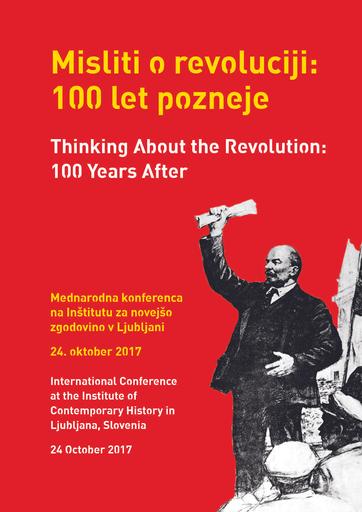
Author(s):Anton Bebler
Co-author(s):Damijan Guštin (čl. prog. odb.), Jurij Perovšek (čl. prog. odb.), Jure Gašparič (čl. prog. odb.), Filip Čuček (čl. prog. odb.), Mojca Šorn (čl. prog. odb.)
Leto:2017
Publisher(s):Inštitut za novejšo zgodovino, Ljubljana
Source(s):Misliti o revoluciji: 100 let pozneje
Language(s):angleščina
Type(s) of material:moving image
Rights:
This work by Anton Bebler is licensed under Creative Commons Attribution-NonCommercial-NoDerivs 4.0 International
Files (2)
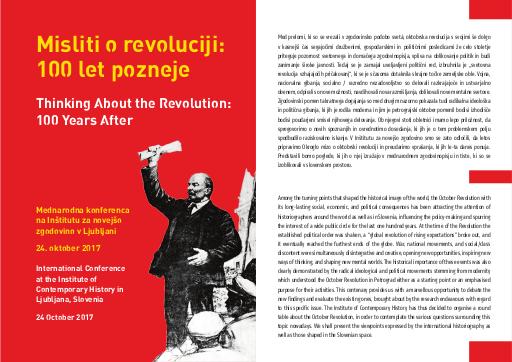
Name:vabilo.pdf
Size:1.03MB
Format:application/pdf
Permanent link:https://hdl.handle.net/11686/file23042
Description
The Russian Revolution, popularly called the October Revolution, in fact started in February-March 1917, with the abolition of one of the oldest European monarchies and the introduction of the dual rule by the "Provisional Government" and the "Soviets of Deputies of Workers and Soldiers." By mid-October, the Petrograd Soviet already controlled the capital. The arrest of most ministers of the already powerless Provisional Government in the Winter Palace by a group of sailors and a salve from the battleship "Aurora" on 26 October were only episodes, which were later elevated by the propaganda into symbols of the glorious revolution in the largest European state. The colossal upheaval ended by 1921, with the victories of the Bolsheviks in the civil and other wars. Within four years after these wars, other sorts of violence and epidemics caused several million deaths. The Russian Revolution shook the political order in Europe, which had already been destabilised by the ravages of World War I, soon to be followed by the breakdowns of three more empires (Austro-Hungarian, German, and Ottoman). Unlike other similar events, the Russian Revolution called for the complete abolition of the global capitalism and imperialism, as well as for its replacement by classless societies in a global federation of Soviet Republics as a step towards the abolition of the state. The most immediate international impact of the Russian Revolution has been expressed (1) by the geographic expansion of Soviet or Soviet-like political, economic and social systems to a number of other lands, which was accomplished mainly by the Russian Bolsheviks and later by the Soviet communists. The Russian Revolution had also exercised (2) a notable political and ideological influence on numerous other countries, expressed also with the establishment of numerous communist parties and with the expansion of anti-communism. The Soviet example served (3) as an inspiration for the local communists, who, in a number of countries, assumed authority predominantly or exclusively through their own efforts. During the seven decades since its victory in its country of origin, the Russian Revolution failed to abolish world capitalism. It has contributed, however, to a very profound geopolitical change in Europe and Asia. The total number of "socialist" states and the sum total of their territories and population have reached the acme soon after the fortieth anniversary of the Russian Revolution, which was celebrated in Moscow in November 1957. The Russian Revolution has also contributed to the decolonization in Asia and Africa. Moreover, the communist threat helped to reform the crude capitalist systems in the West in the direction of a more humane social state. In the last decade of the 20th century, all the communist regimes or countries dominated by the "real socialist" systems in Eastern Germany, Central Eastern and South Eastern Europe, Russia itself, all the other former republics of the Soviet Union (with a possible exception of Belarus), and in Mongolia experienced mostly non-violent counter-revolutions and were replaced by different systems, ranging from liberal multiparty parliamentarian democracies to various autocracies and repressive family dictatorships behind quasi-liberal constitutional facades. Soon after the seventieth anniversary of the Revolution, the number of "socialist" states was reduced by two thirds, to the present five – four in Asia and one in Latin America. Among the systems inspired directly or indirectly by the Russian Revolution, partly copied from the Soviets but developed indigenously, the People’s Republic of China has been economically and politically the most successful one. Several features borrowed from the Soviet system (the ruling Communist Party, an official Marxist – Leninist ideology, mass rituals, red flags, five-pointed stars, and other communist symbols) have been combined by the Chinese communists with market economy, a large share of private domestic and foreign capital, and with gross economic inequality. By the last decade of the 20th century the ideas and symbols of the Russian Revolution had become discredited in many countries, particularly in Europe, by the authoritarian communist regimes, most notably by the totalitarian Soviet Union. This is why the post-Soviet Russian regime stopped celebrating 7 November and removed it from the list of official holidays. The Russian Revolution has thus become a topic for historians, other social scientists, and artists.
Metadata (12)
- identifierhttps://hdl.handle.net/11686/38135
- title
- On the Global Impact of the Russian Revolution
- O globalnem odmevu ruske revolucije
- creator
- Anton Bebler
- contributor
- Damijan Guštin (čl. prog. odb.)
- Jurij Perovšek (čl. prog. odb.)
- Jure Gašparič (čl. prog. odb.)
- Filip Čuček (čl. prog. odb.)
- Mojca Šorn (čl. prog. odb.)
- subject
- oktobrska revolucija
- October revolution
- description
- Ruska revolucija, popularno imenovana Oktobrska revolucija, se je dejansko začela februarja – marca leta 1917 z ukinitvijo ene od najstarejših monarhij v Evropi in z uvedbo deljene vladavine začasnega odbora Dume ("Začasna vlada") in "Sovjetov odposlancev delavcev in vojakov. " Do sredine oktobra 1917 je Vojaškorevolucionarni odbor Petrograjskega sovjeta že nadzoroval rusko prestolnico. Aretacija večine ministrov nemočne Začasne vlade v Zimski palači v Petrogradu ponoči 26. oktobra in strel s slepim nabojem s križarke "Avrora" sta bila le epizoda, ki so ju propagandno napihnili v simbola slavne revolucije v največji evropski državi. Prevzem oblasti v Moskvi in drugod po državi pa je bil veliko težji, bolj nasilen in krvav. Ruska revolucija se je zaključila šele leta 1921 z zmagami ruskih "boljševikov" in Rdeče armade v krvavi državljanski in drugih vojnah. Te vojne, drugo nasilje, lakota in epidemije na ozemlju propadlega cesarstva so terjali v štirih letih nekaj milijonov smrtnih žrtev. Ruska revolucija je pretresla tedanjo politično ureditev v Evropi, ki jo je že pred tem hudo razmajala prva svetovna vojna, kar se je izrazilo tudi v propadu še treh velikih cesarstev – avstroogrskega, nemškega in otomanskega. Za razliko od drugih prevratov je Ruska revolucija pozivala k popolni odpravi svetovnega kapitalizma in imperializma ter k uvedbi brezrazrednih družb v svetovni federaciji sovjetskih republik kot koraka k odpravi države. Ruska revolucija je odmevala v svetu na več načinov. Njen najbolj neposredni mednarodni odtis se je v naslednjih treh desetletjih izrazil v: (1) nastanku političnih, ekonomskih in družbenih sistemov, podobnih sovjetskemu, ki so jih na druge dežele razširili predvsem ruski oz. sovjetski komunisti; (2) vplivu na politično sceno v več drugih državah, ki se je izražal v nastanku komunističnih partij in v protikomunistični reakciji; (3) vzpostavitvi nekaj avtohtonih komunističnih režimov, ki so vsaj delno posnemali sovjetski sistem. V sedmih desetletjih od zmage v svoji domovini Ruska revolucija ni odpravila ne svetovnega kapitalizma in ne same države, povzročila pa je velike geopolitične spremembe, predvsem v Evropi in Aziji. Strah pred komunizmom je posredno pomagal reformirati grobi kapitalizem na Zahodu v smeri bolj humane socialne države. Število "socialističnih" držav, seštevek njihovih ozemelj in prebivalstva so dosegli svoje vrhunce kmalu po 40. obletnici Ruske revolucije, ki so jo v novembru 1957 slovesno obeležili v Moskvi. Ruska revolucija je poleg tega prispevala k dekolonizaciji v Aziji in Afriki. Po sedmih desetletjih od zmage pa so bili v zadnjem desetletju 20. stoletja, večinoma po mirni poti, odpravljeni komunistični sistemi v sami Rusiji, vseh drugih nekdanjih republikah Sovjetske zveze (z morebitno izjemo Belorusije), vseh drugih vzhodnoevropskih državah (vključno z Vzhodno Nemčijo) ter Mongoliji. V primerjavi z vrhuncem okrog leta 1960 se je število "socialističnih" držav v svetu tako skrčilo za dve tretjini na sedanjih pet, od teh na štiri v Aziji in eno v Latinski Ameriki. Kot posnemovalci ruskih komunistov so se izkazali predvsem komunisti v Vzhodni Aziji. Svojevrstna, močno militarizirana imitacija sovjetskega sistema v Severni Koreji priteguje danes pozornost svetovne javnosti predvsem s svojim razkazovanjem jedrske in raketne oborožitve. Veliko bolj politično in gospodarsko uspešni kitajski komunisti so povezali politične poteze, povzete po sovjetskem sistemu (vladavino komunistične partije, uradno marksistično ideologijo, množične rituale, rdeče zastave, peterokrake zvezde in druge simbole), s tržno ekonomijo, veliko vlogo zasebnega domačega in tujega kapitala ter visoko ekonomsko neenakostjo. Za ruske in druge vzhodnoevropske režime pa je bilo usodno, da se niso odrekli protitržnim marksističnim dogmam in vztrajanju na avtoritarnem oblastem monopolu. Razpadu SZ, ČSSR in SFRJ sta botrovala tudi od zgoraj vsiljeni model fasadnega etnofederalizma in zgrešeno verovanje, da socializem odpravlja nacionalna protislovja. Še posebej v Evropi so dediščino in simbole Ruske revolucije politično diskreditirali avtoritarni vzhodnoevropski komunistični režimi in še posebej totalitarni režim v Sovjetski zvezi, katere gospodarstvo ni zdržalo tekme z razvitim Zahodom. To je bil temeljni razlog, zakaj so v Ruski federaciji odpravili praznovanje 7. novembra. Ruska revolucija je tako postala predvsem tema za zgodovinarje, druge družboslovce in umetnike.
- The Russian Revolution, popularly called the October Revolution, in fact started in February-March 1917, with the abolition of one of the oldest European monarchies and the introduction of the dual rule by the "Provisional Government" and the "Soviets of Deputies of Workers and Soldiers." By mid-October, the Petrograd Soviet already controlled the capital. The arrest of most ministers of the already powerless Provisional Government in the Winter Palace by a group of sailors and a salve from the battleship "Aurora" on 26 October were only episodes, which were later elevated by the propaganda into symbols of the glorious revolution in the largest European state. The colossal upheaval ended by 1921, with the victories of the Bolsheviks in the civil and other wars. Within four years after these wars, other sorts of violence and epidemics caused several million deaths. The Russian Revolution shook the political order in Europe, which had already been destabilised by the ravages of World War I, soon to be followed by the breakdowns of three more empires (Austro-Hungarian, German, and Ottoman). Unlike other similar events, the Russian Revolution called for the complete abolition of the global capitalism and imperialism, as well as for its replacement by classless societies in a global federation of Soviet Republics as a step towards the abolition of the state. The most immediate international impact of the Russian Revolution has been expressed (1) by the geographic expansion of Soviet or Soviet-like political, economic and social systems to a number of other lands, which was accomplished mainly by the Russian Bolsheviks and later by the Soviet communists. The Russian Revolution had also exercised (2) a notable political and ideological influence on numerous other countries, expressed also with the establishment of numerous communist parties and with the expansion of anti-communism. The Soviet example served (3) as an inspiration for the local communists, who, in a number of countries, assumed authority predominantly or exclusively through their own efforts. During the seven decades since its victory in its country of origin, the Russian Revolution failed to abolish world capitalism. It has contributed, however, to a very profound geopolitical change in Europe and Asia. The total number of "socialist" states and the sum total of their territories and population have reached the acme soon after the fortieth anniversary of the Russian Revolution, which was celebrated in Moscow in November 1957. The Russian Revolution has also contributed to the decolonization in Asia and Africa. Moreover, the communist threat helped to reform the crude capitalist systems in the West in the direction of a more humane social state. In the last decade of the 20th century, all the communist regimes or countries dominated by the "real socialist" systems in Eastern Germany, Central Eastern and South Eastern Europe, Russia itself, all the other former republics of the Soviet Union (with a possible exception of Belarus), and in Mongolia experienced mostly non-violent counter-revolutions and were replaced by different systems, ranging from liberal multiparty parliamentarian democracies to various autocracies and repressive family dictatorships behind quasi-liberal constitutional facades. Soon after the seventieth anniversary of the Revolution, the number of "socialist" states was reduced by two thirds, to the present five – four in Asia and one in Latin America. Among the systems inspired directly or indirectly by the Russian Revolution, partly copied from the Soviets but developed indigenously, the People’s Republic of China has been economically and politically the most successful one. Several features borrowed from the Soviet system (the ruling Communist Party, an official Marxist – Leninist ideology, mass rituals, red flags, five-pointed stars, and other communist symbols) have been combined by the Chinese communists with market economy, a large share of private domestic and foreign capital, and with gross economic inequality. By the last decade of the 20th century the ideas and symbols of the Russian Revolution had become discredited in many countries, particularly in Europe, by the authoritarian communist regimes, most notably by the totalitarian Soviet Union. This is why the post-Soviet Russian regime stopped celebrating 7 November and removed it from the list of official holidays. The Russian Revolution has thus become a topic for historians, other social scientists, and artists.
- publisher
- Inštitut za novejšo zgodovino
- date
- 2017
- 24. 10. 2017
- type
- video
- language
- Angleščina
- isPartOf
- rights
- license: ccByNcNd