/
Events
/
Conferences
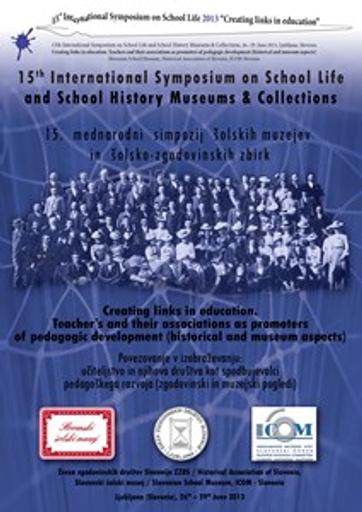
Professional teachers associations in multinational countries - Slovenian experiences during national and international orientation prior to and after WW1
Author(s):Branko Šuštar
Co-author(s):Baard Olav Skogrand (mod.)
Leto:2013
Publisher(s):Slovenski šolski muzej, Ljubljana, Zveza zgodovinskih društev Slovenije, Ljubljana, ICOM Slovenija, Celje, Inštitut za novejšo zgodovino, Ljubljana
Language(s):angleščina
Type(s) of material:moving image
Rights:
This work by Branko Šuštar is licensed under Creative Commons Attribution-NonCommercial-NoDerivs 4.0 International
Files (2)

Name:sustar - 2013-SYMP 2final.ppt
Size:23.87MB
Format:application/vnd.ms-powerpoint
Permanent link:https://hdl.handle.net/11686/file22756
Description
This contribution looks at the professional and regional associations of Slovenian teachers in the Habsburg monarchy and in four successor countries after WW1 (Kingdom of SCH / Yugoslavia, Italy, Austria, Hungary). What was the contribution of teachers’ associations from the 1860s onwards towards shaping the professional awareness of teachers, to general cultural development and to the Slovenian national movement? Differences in both ideological standpoints (Liberal, Catholic, to some extent Social-Democratic) and in linguistic/national orientations shaped the dynamic development of teachers’ societies and their journals (Učiteljski tovariš/Teacher commrade, Popotnik/Traveller, Slovenski učitelj/Slovenian Teacher, Laibacher Schulzeitung/School Newspaper of Ljubljana). The article also draws attention to what was written in these publications about foreign education systems as an exchange of pedagogical incentives, examples and warnings. In their diversity and political combativeness, educational newspapers were more polemical with Slovenians who held different ideological persuasions than with, for example, German oriented teachers’ organisations. This meant that teachers’ societies and their associations occasionally formed links at the regional or state level (in the Austrian half of the monarchy), and at other times along ideological and/or linguistic lines. Thus in 1889 Slovenian teachers’ associations combined into an organisation, the very name of which hinted at the inclination of the Southern Slavs to combine within the framework of the then state (Zaveza avstrijskih jugoslovanskih učiteljskih društev / The Federation of Austrian Yugoslav Teachers in Ljubljana). Leanings towards a pan-Slav association were thus alive even before World War One among the teachers’ societies of both Liberal (association Zaveza) and Catholic orientation (Slomšek society), even though the latter also felt affinity with German Catholic societies. The development in the new Yugoslav state after World War One of a Slovenian body of teachers was marked on the one hand by attitudes to “Slovenism” and “Yugoslavism” and on the other by the polarisation between Liberalism and political Catholicism. After 1926, Slovenian teachers were mostly organised in the Slovenian part of the joint Yugoslav teachers’ organisation (UJU/JUU) and were also more open to international links and cooperation, and to internationalism. The experience of the Slovenian educational system and of teachers in the other three neighbouring countries (Italy, Austria, Hungary), where after World War One as much as a third of Slovenians still lived as an unrecognised national community, was tragic and marked by the intolerance prevalent during the time between the World Wars.
Metadata (13)
- identifierhttps://hdl.handle.net/11686/37671
- title
- Professional teachers associations in multinational countries - Slovenian experiences during national and international orientation prior to and after WW1
- Poklicno povezovanje učiteljstva v večnacionalnih državah – slovenske izkušnje med nacionalno in internacionalno usmeritvijo pred in po 1. svetovni vojni
- creator
- Branko Šuštar
- contributor
- Baard Olav Skogrand (mod.)
- subject
- zgodovina
- šolstvo
- muzej
- history
- school system
- museum
- description
- V prispevku sledimo stanovskemu in regionalnemu povezovanju slovenskega učiteljstva v Habsburški monarhiji in po prvi svetovni vojni v štirih državah naslednicah (Kraljevina SHS/Jugoslavija, Italija, Avstrija, Madžarska). Kakšen je bil pomen povezovanja učiteljstva v učiteljska društva od 60. let 19. stoletja za oblikovanje stanovske (poklicne zavesti) učiteljstva, splošni kulturni razvoj in za slovensko narodnostno gibanje na Slovenskem? Različnost tako idejnih stališč (liberalne, katoliške, manj socialdemokratske) kot jezikovnih / narodnostnih usmeritev je oblikovala dinamičen razvoj učiteljskih društev in njihovih glasil (Učiteljski tovariš, Popotnik, Slovenski učitelj, Laibacher Schulzeitung). Šolsko časopisje je bilo v svoji različnosti in politični bojevitosti bolj polemično do drugače mislečih rojakov kot npr. do nemško usmerjenih učiteljskih organizacij. V tej različnosti pa so se učiteljska društva in njihove zveze tudi povezovale kdaj na regionalni ali državni osnovi (v avstrijski polovici v Avstro-Ogrski, drugič pa na idejni in/ali jezikovni sorodnosti. Že zaradi imena je zanimivo je oblikovanje Zaveze avstrijskega jugoslovanskega učiteljstva (v Ljubljani 1889). Zavzemanje za vseslovansko povezovanje je bilo živo že pred prvo svetovno vojno tako med učiteljskimi društvi liberalne (Zaveza) kot katoliške usmeritve (Slomškova zveza), ki pa so jim bili blizu tudi aktivnosti nemških katoliških učiteljskih društev. Razvoj slovenskega učiteljstva po prvi svetovni vojni je v okviru nove jugoslovanske države zaznamoval na eni strani odnos do slovenstva in jugoslovanstva, na drugi strani pa polarizacija med liberalizmom in političnim katolicizmom. Ob tem je bilo slovensko učiteljstvo po letu 1926 večinoma organizirano v slovenskem delu skupne jugoslovanske učiteljske organizacije (UJU/JUU, sekcija v Ljubljani) ter bolj odprto tudi za mednarodno povezovanje in sodelovanje kot za internacionalizem. Izkušnja slovenskega šolstva in učiteljstva v ostalih treh sosednih državah (Italija, Avstrija, Madžarska), kjer je po 1918 kar tretjina Slovencev živela kot nepriznana narodna skupnost, je bilo tragična in v znaku nestrpnosti, ki je zaznamovala čas med obema vojnama.
- This contribution looks at the professional and regional associations of Slovenian teachers in the Habsburg monarchy and in four successor countries after WW1 (Kingdom of SCH / Yugoslavia, Italy, Austria, Hungary). What was the contribution of teachers’ associations from the 1860s onwards towards shaping the professional awareness of teachers, to general cultural development and to the Slovenian national movement? Differences in both ideological standpoints (Liberal, Catholic, to some extent Social-Democratic) and in linguistic/national orientations shaped the dynamic development of teachers’ societies and their journals (Učiteljski tovariš/Teacher commrade, Popotnik/Traveller, Slovenski učitelj/Slovenian Teacher, Laibacher Schulzeitung/School Newspaper of Ljubljana). The article also draws attention to what was written in these publications about foreign education systems as an exchange of pedagogical incentives, examples and warnings. In their diversity and political combativeness, educational newspapers were more polemical with Slovenians who held different ideological persuasions than with, for example, German oriented teachers’ organisations. This meant that teachers’ societies and their associations occasionally formed links at the regional or state level (in the Austrian half of the monarchy), and at other times along ideological and/or linguistic lines. Thus in 1889 Slovenian teachers’ associations combined into an organisation, the very name of which hinted at the inclination of the Southern Slavs to combine within the framework of the then state (Zaveza avstrijskih jugoslovanskih učiteljskih društev / The Federation of Austrian Yugoslav Teachers in Ljubljana). Leanings towards a pan-Slav association were thus alive even before World War One among the teachers’ societies of both Liberal (association Zaveza) and Catholic orientation (Slomšek society), even though the latter also felt affinity with German Catholic societies. The development in the new Yugoslav state after World War One of a Slovenian body of teachers was marked on the one hand by attitudes to “Slovenism” and “Yugoslavism” and on the other by the polarisation between Liberalism and political Catholicism. After 1926, Slovenian teachers were mostly organised in the Slovenian part of the joint Yugoslav teachers’ organisation (UJU/JUU) and were also more open to international links and cooperation, and to internationalism. The experience of the Slovenian educational system and of teachers in the other three neighbouring countries (Italy, Austria, Hungary), where after World War One as much as a third of Slovenians still lived as an unrecognised national community, was tragic and marked by the intolerance prevalent during the time between the World Wars.
- publisher
- Slovenski šolski muzej
- Zveza zgodovinskih društev Slovenije
- ICOM Slovenija
- Inštitut za novejšo zgodovino
- date
- 2013
- 27. 06. 2013
- type
- video
- language
- Angleščina
- isPartOf
- rights
- license: ccByNcNd
- fileResource