/
Events
/
Conferences
"New Times and New Thinking", Education at the Institute for Physical Culture in Ljubljana
Author(s):Katarina Jurjavčič
Co-author(s):Ana Marija Lamut (mod.)
Leto:2016
Publisher(s):Zveza zgodovinskih društev Slovenije, Ljubljana, Inštitut za novejšo zgodovino, Ljubljana
Source(s):Šolanje za morje, šport in gore
Language(s):slovenščina
Type(s) of material:moving image
Keywords:povojno šolstvo, šport, telovadba, socializem, post-war educational system, sport, exercise, socialism
Rights:
This work by Katarina Jurjavčič is licensed under Creative Commons Attribution-NonCommercial-NoDerivs 4.0 International
Files (5)
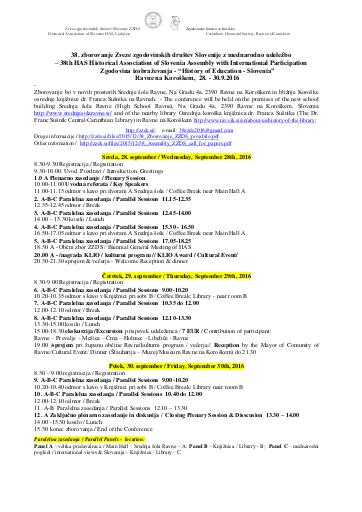
Name:program-38-zborovanja-ZZDS.pdf
Size:313.04KB
Format:application/pdf
Permanent link:https://hdl.handle.net/11686/file22602
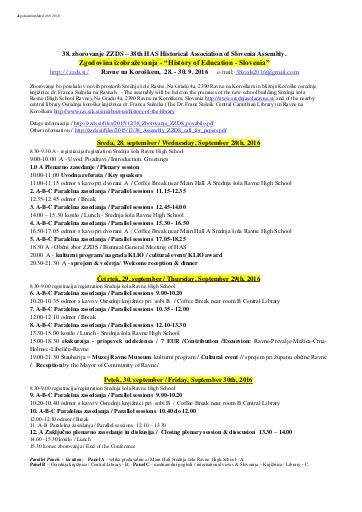
Name:program-38-zborovanja-ZZDS-SLO-ANG.pdf
Size:303.57KB
Format:application/pdf
Permanent link:https://hdl.handle.net/11686/file22603
Name:Knjiga-povzetkov–book-of-abstracts.pdf
Size:895.33KB
Format:application/pdf
Permanent link:https://hdl.handle.net/11686/file22604
Name:Plakat-38-zborovanja-ZZDS.pdf
Size:1.36MB
Format:application/pdf
Permanent link:https://hdl.handle.net/11686/file22605
Description
The school was in the eyes of the ideologists of the post-war regime and their pedagogical advisors one of the most important weapons in the fight for a "new society" and a "new man", and therefore it had to be redesigned with new people and contents. The pre-war gymnastic societies Sokol and Orel were replaced with Physical culture (from 1948 Physical education) association of Slovenia, which, in 1952, was transformed into Association for physical education Partizan. On the 27th June 1947 the journal Comrade (“Tovariš”) reported that the Institution for physical culture “will liberate the Slovenian physical culture from foreign influence and give it people and worldly character”. After one year of schooling the first generation of new gym teachers dispersed across Slovenian towns and started to shape the destiny of sport development at both local and national level. Through their personal stories and the preserved archive sources we enlighten the mechanisms for the establishment of higher education and its impact on the development or revival of sports life in the new socialist regime in general.
Metadata (12)
- identifierhttps://hdl.handle.net/11686/37464
- title
- »Novi časi in novo mišljenje«, šolanje na Zavodu za fizkulturo v Ljubljani
- "New Times and New Thinking", Education at the Institute for Physical Culture in Ljubljana
- creator
- Katarina Jurjavčič
- contributor
- Ana Marija Lamut (mod.)
- subject
- povojno šolstvo
- šport
- telovadba
- socializem
- post-war educational system
- sport
- exercise
- socialism
- description
- Šola je bila v očeh ideologov povojnega režima in njihovih pedagoških svetovalcev eno najpomembnejših orožij v boju za »novo družbo« in »novega človeka«, zato naj bi jo posebej temeljito očistili pretekle dediščine ter prenovili z novimi ljudmi in vsebinami. Predvojne Sokole in Orle je zamenjala Fizkulturna (od leta 1948 Telovadna) zveza Slovenije, ki se je leta 1952 preoblikovala v Zvezo za telesno vzgojo Partizan. Časopis Tovariš je 27. junija 1947 poročal o Zavodu za fizkulturo kot ustanovi, »ki bo osvobodila slovensko fizkulturo tujega vpliva, ki jo bo otrebila odvišne navlake ter ji dala ljudski in življenjski značaj«. Prva generacija novih učiteljev telovadbe in športa se je po enem letu, kolikor je trajalo šolanje, razkropila po slovenskih krajih in odločilno krojila usodo razvoja športa tako na lokalnem kot tudi državnem nivoju. Skozi njihove osebne zgodbe in ohranjene arhivske vire osvetljujemo mehanizme vzpostavitve visokega šolstva ter njen vpliv na razvoj ali obuditev športnega življenja v novi socialistični ureditvi nasploh.
- The school was in the eyes of the ideologists of the post-war regime and their pedagogical advisors one of the most important weapons in the fight for a "new society" and a "new man", and therefore it had to be redesigned with new people and contents. The pre-war gymnastic societies Sokol and Orel were replaced with Physical culture (from 1948 Physical education) association of Slovenia, which, in 1952, was transformed into Association for physical education Partizan. On the 27th June 1947 the journal Comrade (“Tovariš”) reported that the Institution for physical culture “will liberate the Slovenian physical culture from foreign influence and give it people and worldly character”. After one year of schooling the first generation of new gym teachers dispersed across Slovenian towns and started to shape the destiny of sport development at both local and national level. Through their personal stories and the preserved archive sources we enlighten the mechanisms for the establishment of higher education and its impact on the development or revival of sports life in the new socialist regime in general.
- publisher
- Zveza zgodovinskih društev Slovenije
- Inštitut za novejšo zgodovino
- date
- 2016
- 30. 09. 2016
- type
- video
- language
- Slovenščina
- isPartOf
- rights
- license: ccByNcNd