
/
Events
/
Conferences
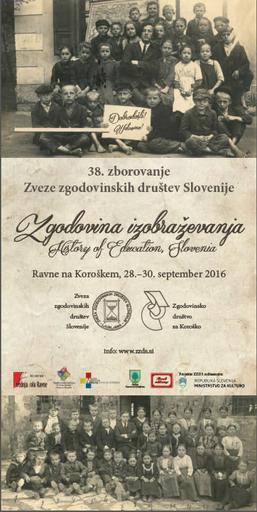
Prispevek cerkvenih ustanov pri izobraževanju otrok s težavami na začetku 20. stoletja
Contribution of Church Institutions to the Education of Children with Problems at the Beginning of the 20th Century
Author(s):Bogdan Kolar
Co-author(s):Marija Počivavšek (mod.)
Leto:2016
Publisher(s):Zveza zgodovinskih društev Slovenije, Ljubljana, Inštitut za novejšo zgodovino, Ljubljana
Source(s):Izobraževanje »posebnih« otrok
Language(s):slovenščina
Type(s) of material:moving image
Keywords:cerkev, Fran Milčinski,, vzgojni zavodi, salezijanci, Slovenija, church, Fran Milčinski, educational institutions, Salesians, Slovenia
Rights:
This work by Bogdan Kolar is licensed under Creative Commons Attribution-NonCommercial-NoDerivs 4.0 International
Files (5)
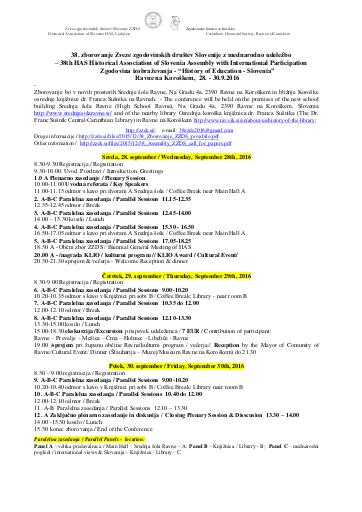
Name:program-38-zborovanja-ZZDS.pdf
Size:313.04KB
Format:application/pdf
Permanent link:https://hdl.handle.net/11686/file22602
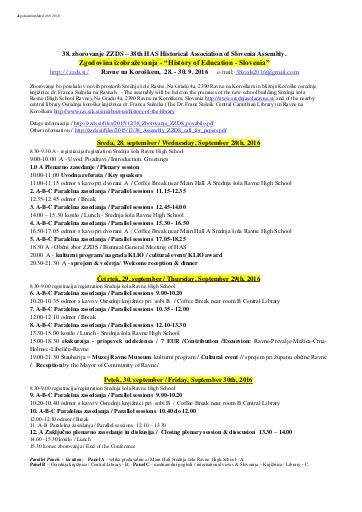
Name:program-38-zborovanja-ZZDS-SLO-ANG.pdf
Size:303.57KB
Format:application/pdf
Permanent link:https://hdl.handle.net/11686/file22603
Name:Knjiga-povzetkov–book-of-abstracts.pdf
Size:895.33KB
Format:application/pdf
Permanent link:https://hdl.handle.net/11686/file22604
Name:Plakat-38-zborovanja-ZZDS.pdf
Size:1.36MB
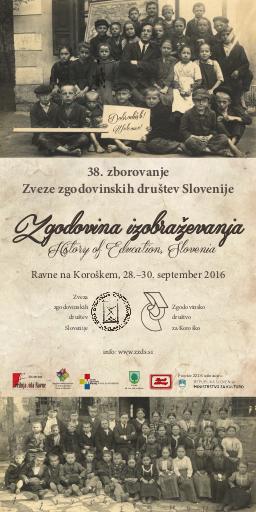
Format:application/pdf
Permanent link:https://hdl.handle.net/11686/file22605
Description
The article will explain what the Church and its institutions did for the education of children, who found themselves in trouble with their surroundings anddue to offenses weren’t allowed to attend regular educational institutions (mainly folk schools). The first four decades of the 20th century, from the end of the Austrian period until the time of Kingdom of Yugoslavia, will be included. Institutions, which were lead by a monastic community of Salesians (the reformatory in the manor Rakovnik near Ljubljana and the educational institution in Selo near Ljubljana) will be discussed extensively. The youth judge Fran Milčinski had an important role in the enforcement of more human conditions in working with difficult youth. Therefore, attention is also devoted to him and his contribution to a more systematic regularization of working with young people, who in the preceding period were simply sent to prisons and imprisoned together with real criminals. Thanks to F. Milčinski matters became more organized. The educational institution, which was taken over and led by the Salesians until the end of the Austrian period of Slovenian history had an important role in the introduction of new working methods.
Metadata (12)
- identifierhttps://hdl.handle.net/11686/37435
- title
- Prispevek cerkvenih ustanov pri izobraževanju otrok s težavami na začetku 20. stoletja
- Contribution of Church Institutions to the Education of Children with Problems at the Beginning of the 20th Century
- creator
- Bogdan Kolar
- contributor
- Marija Počivavšek (mod.)
- subject
- cerkev
- Fran Milčinski,
- vzgojni zavodi
- salezijanci
- Slovenija
- church
- Fran Milčinski
- educational institutions
- Salesians
- Slovenia
- description
- Prispevek ima namen predstaviti, kaj so Cerkev in njene ustanove naredile za izobraževanje otrok, ki so se znašli v težavah z okoljem in zaradi prekrškov niso smeli več obiskovati rednih izobraževalnih ustanov (predvsem ljudskih šol). Vključena bodo prva štiri desetletja 20. stoletja, to je konec avstrijskega obdobja in čas Kraljevine Jugoslavije. Obširneje bosta obravnavani ustanovi, ki ju je v omenjenem času vodila redovna skupnost salezijancev (to je poboljševalnica v graščini Rakovnik pri Ljubljani in nato Banovinski vzgojni zavod na Selu pri Ljubljani). Pri delu za uveljavljanje bolj človeških pogojev dela z mladimi v težavah jim je bil v pomembno oporo mladinski sodnik Fran Milčinski. Zato bo pozornost namenjena tudi njemu in njegovemu prispevku za bolj sistematično ureditev vprašanja dela z mladimi, ki so bili v predhodnem obdobju preprosto poslani v zapore in zaprti skupaj s pravimi kriminalci. Po zaslugi F. Milčinskega so se zadeve začele urejati. Pri uvajanju novih metod dela mu je služila vzgojna ustanova, ki so jo prevzeli salezijanci in jo vodili do konca avstrijskega obdobja slovenske zgodovine.
- The article will explain what the Church and its institutions did for the education of children, who found themselves in trouble with their surroundings anddue to offenses weren’t allowed to attend regular educational institutions (mainly folk schools). The first four decades of the 20th century, from the end of the Austrian period until the time of Kingdom of Yugoslavia, will be included. Institutions, which were lead by a monastic community of Salesians (the reformatory in the manor Rakovnik near Ljubljana and the educational institution in Selo near Ljubljana) will be discussed extensively. The youth judge Fran Milčinski had an important role in the enforcement of more human conditions in working with difficult youth. Therefore, attention is also devoted to him and his contribution to a more systematic regularization of working with young people, who in the preceding period were simply sent to prisons and imprisoned together with real criminals. Thanks to F. Milčinski matters became more organized. The educational institution, which was taken over and led by the Salesians until the end of the Austrian period of Slovenian history had an important role in the introduction of new working methods.
- publisher
- Zveza zgodovinskih društev Slovenije
- Inštitut za novejšo zgodovino
- date
- 2016
- 29. 09. 2016
- type
- video
- language
- Slovenščina
- isPartOf
- rights
- license: ccByNcNd