
/
Events
/
Conferences
Teachers and Ethnological Heritage. Selected Examples of the Work of Teachers in Bela Krajina
Author(s):Marjetka Balkovec Debevec
Co-author(s):Robert Devetak (mod.)
Leto:2016
Publisher(s):Zveza zgodovinskih društev Slovenije, Ljubljana, Inštitut za novejšo zgodovino, Ljubljana
Language(s):slovenščina
Type(s) of material:moving image
Keywords:učitelji, etnološka dediščina, narodopisje, Bela krajina, šolstvo, teachers, ethnological heritage, ethnography, Bela Krajina, educational system
Rights:
This work by Marjetka Balkovec Debevec is licensed under Creative Commons Attribution-NonCommercial-NoDerivs 4.0 International
Files (5)
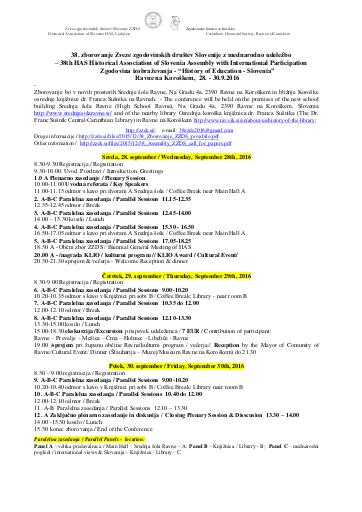
Name:program-38-zborovanja-ZZDS.pdf
Size:313.04KB
Format:application/pdf
Permanent link:https://hdl.handle.net/11686/file22602
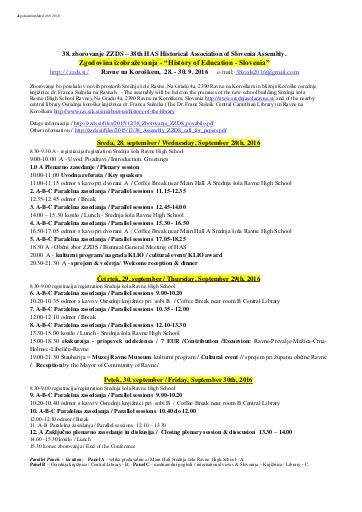
Name:program-38-zborovanja-ZZDS-SLO-ANG.pdf
Size:303.57KB
Format:application/pdf
Permanent link:https://hdl.handle.net/11686/file22603
Name:Knjiga-povzetkov–book-of-abstracts.pdf
Size:895.33KB
Format:application/pdf
Permanent link:https://hdl.handle.net/11686/file22604
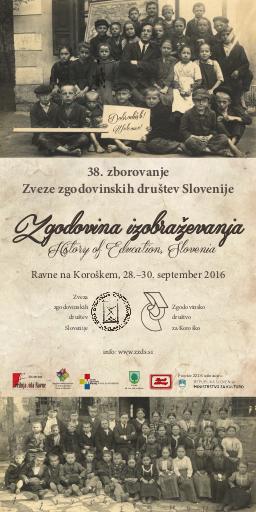
Name:Plakat-38-zborovanja-ZZDS.pdf
Size:1.36MB
Format:application/pdf
Permanent link:https://hdl.handle.net/11686/file22605
Description
In addition to their regular school work the width of teachers’ working field at the end of the 19th and in first decades of the 20th century included a variety of activity in the broader social, cultural and economic field. Teachers appointed to positions with decrees in areas and places previously unknown to them, quickly noticed peculiarities in the way of people’s lives, their customs and habits, their interesting traditional products. Life in Bela Krajina was marked by its border location and historical currents, which influenced the individual ethnological appearance. Individual teachers, who worked in this area, were so attracted by these peculiarities and characteristics, that they became actively engaged in taking notes, collecting and preserving the ethnological heritage of Bela Krajina. The article presents a few selected teachers, who were teaching in schools in Bela Krajina before World War II and who devoted themselves to the care of ethnographical material preservation. Among them were: Bernard Tomšič, Ivan Štrukelj, Leopoldina Bavdek, Božo Račič, Albin Čebular, Lojze Zupanc, Drago Vončina. Also priests were engaged in the pre-war school work, among them Jurij Kobe and Ivan Šašelj. The work of teachers is of great significance to the preservation of Bela Krajina's ethnological heritage.
Metadata (12)
- identifierhttps://hdl.handle.net/11686/37419
- title
- Učitelji in etnološka dediščina. Izbrani primeri delovanja učiteljev v Beli Krajini
- Teachers and Ethnological Heritage. Selected Examples of the Work of Teachers in Bela Krajina
- creator
- Marjetka Balkovec Debevec
- contributor
- Robert Devetak (mod.)
- subject
- učitelji
- etnološka dediščina
- narodopisje
- Bela krajina
- šolstvo
- teachers
- ethnological heritage
- ethnography
- Bela Krajina
- educational system
- description
- Širina delovnega polja učiteljev je ob koncu 19. stoletja in v prvih desetletjih 20. stoletja poleg rednega šolskega dela zajemala raznovrstno delovanje na širšem družbenem, kulturnem, in gospodarskem področju. Učitelji in učiteljice, ki so bili z dekreti postavljeni na delovna mesta v območja in kraje, ki jih prej niso poznali, so hitro opazili posebnosti v načinu življenja ljudi, v njihovih šegah in navadah, v zanimivih tradicionalnih izdelkih. Življenje v Beli krajini je zaznamovala obmejna geografska lega in zgodovinski tokovi, ki so vplivali na samosvojo etnološko podobo. Posamezne učitelje, ki so delovali na tem območju, so te posebnosti in značilnosti tako pritegnile, da so se začeli aktivno ukvarjati z zapisovanjem, zbiranjem in ohranjanjem etnološke dediščine Bele krajine. Prispevek predstavlja delovanje nekaj izbranih učiteljev in učiteljic, ki so pred drugo svetovno vojno poučevali na šolah v Beli krajini in se posvečali skrbi za ohranjanje narodopisnega gradiva. Med njimi so bili: Bernard Tomšič, Ivan Štrukelj, Leopoldina Bavdek, Božo Račič, Albin Čebular, Lojze Zupanc, Drago Vončina. V predvojno šolsko delo so bili vključeni tudi duhovniki, pri tem velja omeniti Jurija Kobeta in Ivana Šašlja. Delo učiteljev in učiteljic ima velik pomen pri tem, da se je etnološka dediščina Bele krajine ohranila.
- In addition to their regular school work the width of teachers’ working field at the end of the 19th and in first decades of the 20th century included a variety of activity in the broader social, cultural and economic field. Teachers appointed to positions with decrees in areas and places previously unknown to them, quickly noticed peculiarities in the way of people’s lives, their customs and habits, their interesting traditional products. Life in Bela Krajina was marked by its border location and historical currents, which influenced the individual ethnological appearance. Individual teachers, who worked in this area, were so attracted by these peculiarities and characteristics, that they became actively engaged in taking notes, collecting and preserving the ethnological heritage of Bela Krajina. The article presents a few selected teachers, who were teaching in schools in Bela Krajina before World War II and who devoted themselves to the care of ethnographical material preservation. Among them were: Bernard Tomšič, Ivan Štrukelj, Leopoldina Bavdek, Božo Račič, Albin Čebular, Lojze Zupanc, Drago Vončina. Also priests were engaged in the pre-war school work, among them Jurij Kobe and Ivan Šašelj. The work of teachers is of great significance to the preservation of Bela Krajina's ethnological heritage.
- publisher
- Zveza zgodovinskih društev Slovenije
- Inštitut za novejšo zgodovino
- date
- 2016
- 28. 09. 2016
- type
- video
- language
- Slovenščina
- isPartOf
- rights
- license: ccByNcNd