/
Events
/
Conferences
Pouk zgodovine o vojnah skozi oči otrok
Author(s):Vilma Brodnik
Leto:2016
Publisher(s):Zveza zgodovinskih društev Slovenije, Ljubljana, Inštitut za novejšo zgodovino, Ljubljana
Source(s):Vojne, vojaško šolstvo in tekmovanja
Language(s):slovenščina
Type(s) of material:moving image
Keywords:pouk zgodovine, viri prve roke, genocidi, holokavst, človekove pravice, history lessons, first-hand sources, genocide, Holocaust, human rights
Rights:
This work by Vilma Brodnik is licensed under Creative Commons Attribution-NonCommercial-NoDerivs 4.0 International
Files (5)
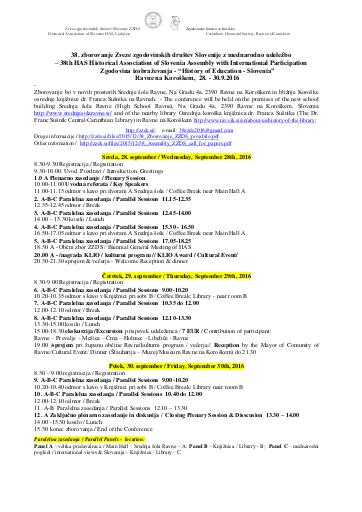
Name:program-38-zborovanja-ZZDS.pdf
Size:313.04KB
Format:application/pdf
Permanent link:https://hdl.handle.net/11686/file22602
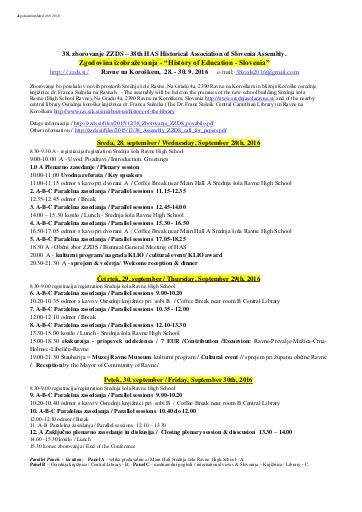
Name:program-38-zborovanja-ZZDS-SLO-ANG.pdf
Size:303.57KB
Format:application/pdf
Permanent link:https://hdl.handle.net/11686/file22603
Name:Knjiga-povzetkov–book-of-abstracts.pdf
Size:895.33KB
Format:application/pdf
Permanent link:https://hdl.handle.net/11686/file22604
Name:Plakat-38-zborovanja-ZZDS.pdf
Size:1.36MB
Format:application/pdf
Permanent link:https://hdl.handle.net/11686/file22605
Description
One of the discussed topics in history lessons in primary and secondary schools are war topics, which are full of violence, suffering, cruelty, wickedness, evilness and carelessness. Therefore, the history lessons have an important and responsible task in how to discuss war topics. The discussion of military operations, diplomatic actions and statistical display of war consequences can be dull and impersonal. The integration of didactic material with scenes of torture and suffering can shock and cause stress or trauma in students, perhaps it may even trigger inappropriate remarks or history aversion. Therefore, various forms of testimonies, personal life stories or case studies are suitable for history lessons about war violence and the suffering of people. Testimonies can be expressed as a record, film display, song, photo story of a preserved photography, short stories, stories or novels with historical background, essays and children drawings, war victims, diaries, etc. The teacher’s responsibility is to choose the kind of testimonies that will cause empathy, compassion and respect for the war victims. Students must note that these testimonies are firsthand sources, and not scientific history, which was written on the basis of different available historical sources. Students should be made aware that they should not be careless observers, but should respond to violence, injustice and violations of human rights.
Metadata (11)
- identifierhttps://hdl.handle.net/11686/37373
- title
- Pouk zgodovine o vojnah skozi oči otrok
- History Lessons on War Through Children’s Eyes
- creator
- Vilma Brodnik
- subject
- pouk zgodovine
- viri prve roke
- genocidi
- holokavst
- človekove pravice
- history lessons
- first-hand sources
- genocide
- Holocaust
- human rights
- description
- Pri pouku zgodovine v osnovnih in srednjih šolah se obravnava tudi teme o vojnah, polnih nasilja, trpljenja, okrutnosti, hudobije, zla in brezbrižnosti. Zato je pomembna in odgovorna naloga pouka zgodovine, kako obravnavati vojno tematiko. Obravnava vojaških operacij, diplomatskih akcij ter statističnih prikazov posledic vojn je lahko suhoparna in brezosebna. Vključevanje didaktičnih gradiv s prizori mučenja in trpljenja lahko šokirajo in pri učencih povzročijo stres ali travme, morda sprožijo neprimerne opazke in odpor do pouka zgodovine. Zato so različne oblike pričevanj, osebnih življenjskih zgodb ali študijskih primerov primerne za pouk zgodovine o vojnem nasilju in trpljenju ljudi. Pričevanja so lahko izražena v zapisu ali filmskem prikazu osebne življenjske zgodbe, v pesmi, v foto zgodbi ohranjene fotografije, v črticah, povestih ali romanih z zgodovinskim ozadjem, v spisih in risbah otrok, žrtvah vojnega nasilja, v dnevnikih ipd. Odgovorna naloga učitelja je, da izbere takšna pričevanja, da bo v učencih vzbudil empatijo, sočutje in spoštovanje žrtev vojnega nasilja. Učence je treba opozoriti, da so takšna pričevanja viri prve roke in ne znanstvena zgodovina, ki je napisana na temelju raznolikih dostopnih zgodovinskih virov. Učence je treba ozavestiti, naj ne bodo brezbrižni opazovalci, ampak da se je treba na nasilje, krivice in kršenje človekovih pravic odzvati.
- One of the discussed topics in history lessons in primary and secondary schools are war topics, which are full of violence, suffering, cruelty, wickedness, evilness and carelessness. Therefore, the history lessons have an important and responsible task in how to discuss war topics. The discussion of military operations, diplomatic actions and statistical display of war consequences can be dull and impersonal. The integration of didactic material with scenes of torture and suffering can shock and cause stress or trauma in students, perhaps it may even trigger inappropriate remarks or history aversion. Therefore, various forms of testimonies, personal life stories or case studies are suitable for history lessons about war violence and the suffering of people. Testimonies can be expressed as a record, film display, song, photo story of a preserved photography, short stories, stories or novels with historical background, essays and children drawings, war victims, diaries, etc. The teacher’s responsibility is to choose the kind of testimonies that will cause empathy, compassion and respect for the war victims. Students must note that these testimonies are firsthand sources, and not scientific history, which was written on the basis of different available historical sources. Students should be made aware that they should not be careless observers, but should respond to violence, injustice and violations of human rights.
- publisher
- Zveza zgodovinskih društev Slovenije
- Inštitut za novejšo zgodovino
- date
- 2016
- 28. 09. 2016
- type
- video
- language
- Slovenščina
- isPartOf
- rights
- license: ccByNcNd