/
Events
/
Conferences
Plenary session - Keynote lecture
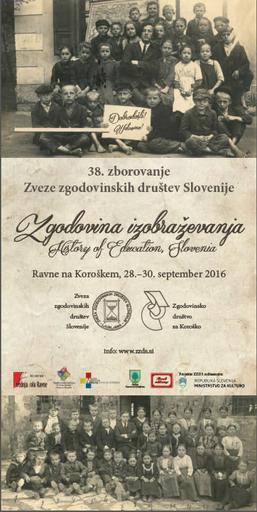
Education from oral tradition to high school in Koroška region. Outline of the development of education between Peca and Pohorje
Author(s):Karla Oder
Leto:2016
Publisher(s):Zveza zgodovinskih društev Slovenije, Ljubljana, Inštitut za novejšo zgodovino, Ljubljana
Language(s):slovenščina, angleščina
Type(s) of material:moving image
Keywords:zgodovina izobraževanja, osnovne šole, meščanske šole, Gimnazija Ravne, štipendiranje, scholarships, Grammar school Ravne, burgher school, primary school, history of education
Rights:
This work by Karla Oder is licensed under Creative Commons Attribution-NonCommercial-NoDerivs 4.0 International
Files (5)
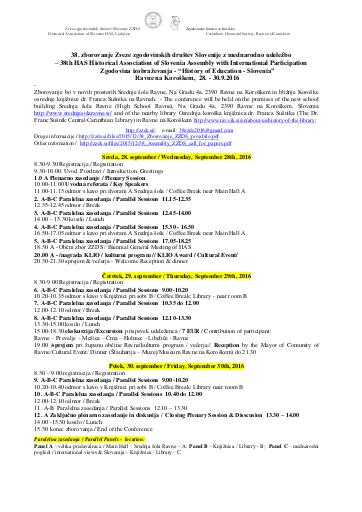
Name:program-38-zborovanja-ZZDS.pdf
Size:313.04KB
Format:application/pdf
Permanent link:https://hdl.handle.net/11686/file22602
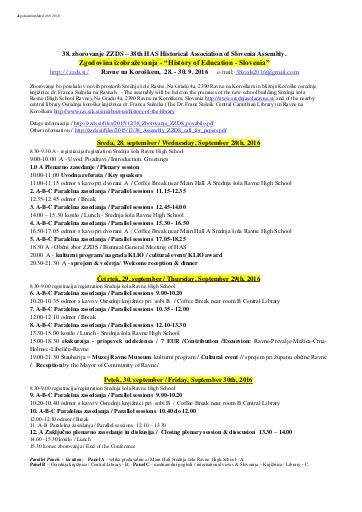
Name:program-38-zborovanja-ZZDS-SLO-ANG.pdf
Size:303.57KB
Format:application/pdf
Permanent link:https://hdl.handle.net/11686/file22603
Name:Knjiga-povzetkov–book-of-abstracts.pdf
Size:895.33KB
Format:application/pdf
Permanent link:https://hdl.handle.net/11686/file22604
Name:Plakat-38-zborovanja-ZZDS.pdf
Size:1.36MB
Format:application/pdf
Permanent link:https://hdl.handle.net/11686/file22605
Description
Until the 19th century in the area of three valleys, Meža, Mislinja and Drava, only few received formal education in parish, burgher and trivial schools. Knowledge about the Earth, weather, diseases in animals and humans, their treatment and healing herbs was passed on to younger generations by oral tradition. In Koroška region the first records of this knowledge arose in the 18th century. The oldest preserved written document about the use of Slovenian language in the Meža Valley is the Črna manuscript (“Črnjanski rokopis”) from the 17th century. A century younger Leše manuscript (“Leški rokopis”) is an example of ‘Bukovništvo’ in Koroška region. Literacy and printing strengthened the economic development and scientific research. The in 1851 established Slovenian publishing house Mohor’s Society (Mohorjeva družba) in Klagenfurt had an important educational role in Koroška region. The Reading badge (Bralna značka) developed into an all Slovenian movement of reading culture. It was first presented in Prevalje in 1961. The use of Slovenian language in primary schools in the 19th century was not self-evident. Under the influence of Germanisation the utraquist schools predominated, with the dominant German language. Additionally this was aided by the German Society Schulverein. After World War I German language was replaced with Serbian. Economic and political changes affected the organization of schools. Due to the geographical terrain numerous branch schools with a specific learning process are characteristic of the area. The introduction of compulsory education is closely linked to the development of industry, which needed more and more educated workers for creating more capital. Individuals gained expert knowledge at foreign colleges and universities, but most of them were trained workers. The gap was filled in after 1920, with the introduction of burgher schools, and in the period of socialism with vocational and grammar schools. Companies organized private education and supported the program of Aduld education institutes and faculties in Maribor and Ljubljana. An important part of education are scholarships, initially to support individuals, but in the period of state-socialism to support almost every student, which resulted in a general increase of education. Staying in a dormitory enabled also the education of the most faraway students. From the second half of the 19th century informal education took place in various and numerous associations, which have hosted a number of lectures. Teachers, doctors and other intellectuals involved themselves in the process of adult education, with lectures and exhibitions.
Metadata (11)
- identifierhttps://hdl.handle.net/11686/37353
- title
- Plenarno zasedanje - uvodni referat
- Izobraževanje od ustnega izročila do visoke šole v koroški regiji. Oris razvoja šolstva med Peco in Pohorjem
- Plenary session - Keynote lecture
- Education from oral tradition to high school in Koroška region. Outline of the development of education between Peca and Pohorje
- creator
- Karla Oder
- subject
- zgodovina izobraževanja
- osnovne šole
- meščanske šole
- Gimnazija Ravne
- štipendiranje
- scholarships
- Grammar school Ravne
- burgher school
- primary school
- history of education
- description
- Na območju treh dolin, Mežiške, Mislinjske in dela Dravske, so bili do 19. stoletja le redki deležni formalnega izobraževanja v župnijski, meščanski, trški šoli ali trivialki. Znanja in vedenja o zemlji, vremenu, boleznih pri živalih in ljudeh, njihovem zdravljenju in zdravilnih učinkih zelišč so na mlajše generacije prenašali z ustnim izročilom. Prvi zapisi teh znanj so na Koroškem nastali v 18. stoletju. Prvi ohranjen pisni dokument o rabi slovenskega jezika v Mežiški dolini je Črnjanski rokopis iz 17. stoletja, stoletje mlajši Leški rokopis je primer za Koroško značilne bukovniške dejavnosti. Pismenost in tisk sta krepila gospodarski razvoj in znanstvene raziskave. Na Koroškem je pomembno izobraževalno vlogo opravljala leta 1851 ustanovljena slovenska založba Mohorjeva družba v Celovcu. V vse slovensko gibanje bralne kulture se je razvila Bralna značka, prvič podeljena leta 1961 na Prevaljah. 51 Raba slovenskega jezika v osnovnih šolah v 19. stoletju ni bila samoumevna. Pod vplivom germanizacije so prevladale utrakvistične šole, s prevladujočim nemškim jezikom. K temu so dodatno pripomogla tudi nemška društva Schulverein. Nemščino je po prvi vojni zamenja srbščina. Gospodarske in politične spremembe so vplivale na organiziranost šol in zaradi geografskega terena so za območje značilne številne podružnične osnovne šole, s specifičnim učnim procesom. Uvedba obveznega šolstva je tesno povezana z razvojem industrije, ki je za ustvarjanje vedno večjega kapitala potrebovala vse več in bolj izobražene delavce. Posamezniki so strokovna znanja pridobili na tujih višjih šolah in univerzah, a večina je bila priučenih delavcev. Vrzel so nekoliko zapolnili po letu 1920 z uvedbo meščanskih šol, v obdobju socializma pa s poklicnimi šolami in gimnazijo. Podjetja so organizirala interno izobraževanje ter podpirala program Ljudske univerze in fakultet v Mariboru in Ljubljani. Pomemben institut izobraževanja je štipendiranje, sprva v podporo posameznikom, v obdobju socializma pa skoraj slehernemu dijaku in študentu, kar je vplivalo na splošen dvig izobrazbe. Bivanje v dijaškem domu je omogočilo izobraževanje tudi najbolj oddaljenim. Neformalno izobraževanje je od druge polovice 19. stoletja potekalo v okviru različnih in številnih društev, ki so prirejala številna predavanja. V proces izobraževanja odraslih so se s predavanji in razstavami vključili učitelji, zdravniki in drugi izobraženci.
- Until the 19th century in the area of three valleys, Meža, Mislinja and Drava, only few received formal education in parish, burgher and trivial schools. Knowledge about the Earth, weather, diseases in animals and humans, their treatment and healing herbs was passed on to younger generations by oral tradition. In Koroška region the first records of this knowledge arose in the 18th century. The oldest preserved written document about the use of Slovenian language in the Meža Valley is the Črna manuscript (“Črnjanski rokopis”) from the 17th century. A century younger Leše manuscript (“Leški rokopis”) is an example of ‘Bukovništvo’ in Koroška region. Literacy and printing strengthened the economic development and scientific research. The in 1851 established Slovenian publishing house Mohor’s Society (Mohorjeva družba) in Klagenfurt had an important educational role in Koroška region. The Reading badge (Bralna značka) developed into an all Slovenian movement of reading culture. It was first presented in Prevalje in 1961. The use of Slovenian language in primary schools in the 19th century was not self-evident. Under the influence of Germanisation the utraquist schools predominated, with the dominant German language. Additionally this was aided by the German Society Schulverein. After World War I German language was replaced with Serbian. Economic and political changes affected the organization of schools. Due to the geographical terrain numerous branch schools with a specific learning process are characteristic of the area. The introduction of compulsory education is closely linked to the development of industry, which needed more and more educated workers for creating more capital. Individuals gained expert knowledge at foreign colleges and universities, but most of them were trained workers. The gap was filled in after 1920, with the introduction of burgher schools, and in the period of socialism with vocational and grammar schools. Companies organized private education and supported the program of Aduld education institutes and faculties in Maribor and Ljubljana. An important part of education are scholarships, initially to support individuals, but in the period of state-socialism to support almost every student, which resulted in a general increase of education. Staying in a dormitory enabled also the education of the most faraway students. From the second half of the 19th century informal education took place in various and numerous associations, which have hosted a number of lectures. Teachers, doctors and other intellectuals involved themselves in the process of adult education, with lectures and exhibitions.
- publisher
- Zveza zgodovinskih društev Slovenije
- Inštitut za novejšo zgodovino
- date
- 2016
- 28. 09. 2016
- type
- video
- language
- Slovenščina
- Angleščina
- isPartOf
- rights
- license: ccByNcNd