/
Events
/
Conferences
Plenary session - Keynote lecture
School and education - the central institutions of the formation of Slovenian nation
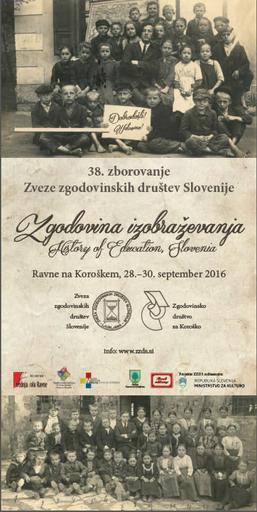
Author(s):Peter Vodopivec
Leto:2016
Publisher(s):Zveza zgodovinskih društev Slovenije, Ljubljana, Inštitut za novejšo zgodovino, Ljubljana
Language(s):slovenščina
Type(s) of material:moving image
Rights:
This work by Peter Vodopivec is licensed under Creative Commons Attribution-NonCommercial-NoDerivs 4.0 International
Files (5)
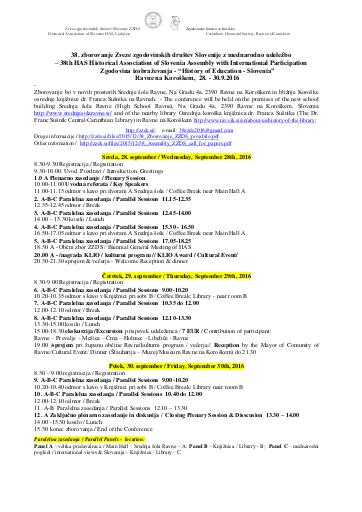
Name:program-38-zborovanja-ZZDS.pdf
Size:313.04KB
Format:application/pdf
Permanent link:https://hdl.handle.net/11686/file22602
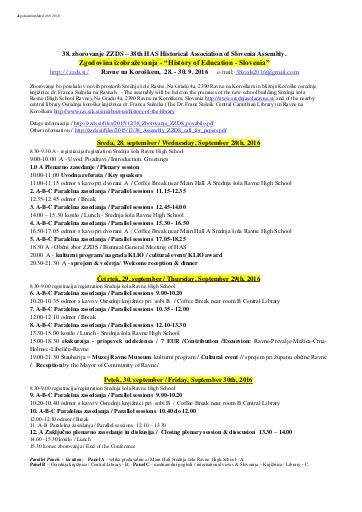
Name:program-38-zborovanja-ZZDS-SLO-ANG.pdf
Size:303.57KB
Format:application/pdf
Permanent link:https://hdl.handle.net/11686/file22603
Name:Knjiga-povzetkov–book-of-abstracts.pdf
Size:895.33KB
Format:application/pdf
Permanent link:https://hdl.handle.net/11686/file22604
Name:Plakat-38-zborovanja-ZZDS.pdf
Size:1.36MB
Format:application/pdf
Permanent link:https://hdl.handle.net/11686/file22605
Description
Slovenes evolved in the 19th century (in about a hundred years) from poor or in the vast majority illiterate people in one of the most literate nations in the Habsburg Monarchy, which was indisputably the merit of the Austrian primary educational system. Although the Austrian school system has for almost the whole century and in most Austrian provinces with Slavic populationaimed for a Germanization (or Italianisation and Magyarisation), it was by comparison with the French or the British much more socially, culturally and (with an increasing consideration of "provincial" languages) also nationally open. It decisively contributed to the modern social, cultural and national formation of all the Habsburg Nations, especially the nations that have not yet had nationally defined elites and have only with the modern-minded intellectuals gained active holders and creators of national consciousness and politics. The percentage of high school and university-educated citizenry was in the countries of the Slovenian population, as repeatedly pointed Vasilij Melik, due to lower social structures of less developed secondary education and the fact that on Slovenian with the exception of theological seminars there were no high schools until the fall of the monarchy rather lower than for Germans, Poles and guilds. But since the forties of the 19th century also with training in higher schools rapidly growing number of Slovenian intellectuals, who in the second half of the 19th century become messengers Slovenian national requirements, expansion and growth of literacy of the population are to foster knowledge "National (book) language "reading culture and the creation of national feelings of belonging.
Metadata (11)
- identifierhttps://hdl.handle.net/11686/37352
- title
- Plenarno zasedanje - uvodni referat
- Šola in šolstvo – osrednji ustanovi slovenskega narodnega oblikovanja
- Plenary session - Keynote lecture
- School and education - the central institutions of the formation of Slovenian nation
- creator
- Peter Vodopivec
- subject
- zgodovina izobraževanja
- history of education
- description
- Slovenci so se – kot je znano – v 19. stoletju (torej v približno sto letih) razvili iz slabo oz. v veliki večini nepismenega ljudstva v enega najbolj pismenih narodov v Habsburški monarhiji, kar je bila nesporno zasluga avstrijskega osnovnega šolstva. Čeprav je avstrijski šolski sistem skoraj vse stoletje in v večini avstrijskih dežel s slovanskim prebivalstvom težil h germanizaciji (oz. italijanizaciji in madžarizaciji), je bil v primerjavi s francoskim ali britanskim neprimerno bolj socialno, kulturno in (z vse večjim upoštevanjem »deželnih« jezikov) tudi nacionalno odprt. Tako je odločilno prispeval k modernemu socialnemu, kulturnemu in narodnostnemu oblikovanju vseh habsburških narodov, posebej pa seveda narodov, ki še niso imeli trdnejših narodno opredeljenih elit in so s sodobno mislečim izobraženstvom šele dobili aktivne nosilce in oblikovalce narodne zavesti in politike. Odstotek srednješolsko in univerzitetno izobraženega meščanstva je bil sicer v deželah s slovenskim prebivalstvom, kot je večkrat opozoril Vasilij Melik, zaradi slabše socialne strukture, slabše razvitega srednjega šolstva in dejstva, da na Slovenskem z izjemo bogoslovnih seminarjev ni bilo visokih šol vse do propada monarhije precej nižji kot pri Nemcih, Poljakih in Čehih. Toda od štiridesetih let 19. stoletja je prav s šolanjem na višjih in visokih šolah naglo raslo število slovenskih izobražencev, ki so v drugi polovici 19. stoletja postali glasniki slovenskih narodnih zahtev, širjenje in rast pismenosti prebivalstva pa sta pospeševala poznavanje »narodnega (knjižnega) jezika«, kulturo branja in oblikovanje narodnih občutij pripadnosti.
- Slovenes evolved in the 19th century (in about a hundred years) from poor or in the vast majority illiterate people in one of the most literate nations in the Habsburg Monarchy, which was indisputably the merit of the Austrian primary educational system. Although the Austrian school system has for almost the whole century and in most Austrian provinces with Slavic populationaimed for a Germanization (or Italianisation and Magyarisation), it was by comparison with the French or the British much more socially, culturally and (with an increasing consideration of "provincial" languages) also nationally open. It decisively contributed to the modern social, cultural and national formation of all the Habsburg Nations, especially the nations that have not yet had nationally defined elites and have only with the modern-minded intellectuals gained active holders and creators of national consciousness and politics. The percentage of high school and university-educated citizenry was in the countries of the Slovenian population, as repeatedly pointed Vasilij Melik, due to lower social structures of less developed secondary education and the fact that on Slovenian with the exception of theological seminars there were no high schools until the fall of the monarchy rather lower than for Germans, Poles and guilds. But since the forties of the 19th century also with training in higher schools rapidly growing number of Slovenian intellectuals, who in the second half of the 19th century become messengers Slovenian national requirements, expansion and growth of literacy of the population are to foster knowledge "National (book) language "reading culture and the creation of national feelings of belonging.
- publisher
- Zveza zgodovinskih društev Slovenije
- Inštitut za novejšo zgodovino
- date
- 2016
- 28. 09. 2016
- type
- video
- language
- Slovenščina
- isPartOf
- rights
- license: ccByNcNd