
/
Periodicals
/
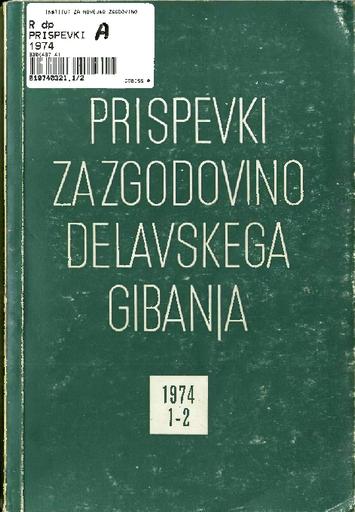
Prispevki za novejšo zgodovino
Actions against the High Cost of Living in Slovenia in 1940
Author(s):Alenka Nedog
Co-author(s):Tone Ferenc (odg. ur.)
Leto:1974
Publisher(s):Inštitut za zgodovino delavskega gibanja, Ljubljana
Language(s):slovenščina
Type(s) of material:text
Files (1)
Name:Prispevki_za_zgodovino_delavskega_gibanja_1974_1-2.pdf
Size:19.95MB
Format:application/pdf
Permanent link:https://hdl.handle.net/11686/file33
Description
Towards the end of 1939 Yugoslavia was forced to adopt war economy. This situation caused
a fast increase of unemployment and a higher cost of living. The Yugoslav Communist Party
too, joined in the struggle to improve the standard of living; it considered this struggle as an
essential part of the general labour movement Due to this fact there not only appeared a
tendency towards the unity of the working population irrespective of the party affiliation, the
leadership of the communists in the struggle of the entire workers' class was being strengthened
as well.
Metadata (11)
- identifierhttps://hdl.handle.net/11686/3223
- title
- Protidraginjske akcije v Sloveniji leta 1940
- Actions against the High Cost of Living in Slovenia in 1940
- creator
- Alenka Nedog
- contributor
- Tone Ferenc (odg. ur.)
- subject
- draginja
- protidraginjske akcije
- gospodarska zgodovina
- Slovenija
- 1939-1940
- Komunistična partija Jugoslavije
- vojno gospodarstvo
- brezposelnost
- description
- Towards the end of 1939 Yugoslavia was forced to adopt war economy. This situation caused a fast increase of unemployment and a higher cost of living. The Yugoslav Communist Party too, joined in the struggle to improve the standard of living; it considered this struggle as an essential part of the general labour movement Due to this fact there not only appeared a tendency towards the unity of the working population irrespective of the party affiliation, the leadership of the communists in the struggle of the entire workers' class was being strengthened as well.
- Konec leta 1939 je Jugoslavija prešla na vojno gospodarstvo, kar je povzročilo naglo večanje brezposelnosti in podražitev življenjskih potrebščin. V boj za izboljšanje življenjskih pogojev je posegla tudi KPJ, ki je gledala nanj kot na sestavni del splošnega boja delovnega ljudstva. S tem je nastajala ne samo težnja po enotnosti delovnega ljudstva ne glede na strankarsko pripadnost, ampak se je utrjevato tudi vodstvo komunistov v boju vsega delavskega razreda.
- publisher
- Inštitut za zgodovino delavskega gibanja
- date
- 1974
- type
- besedilo
- language
- Slovenščina
- isPartOf