
/
Periodicals
/
Prispevki za novejšo zgodovino
Political Programmes of the Slovene Counter-Revolution 1941-1945
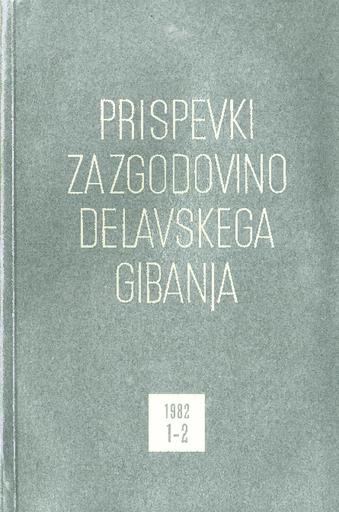
Author(s):Boris Mlakar
Co-author(s):Milica Kacin-Wohinz (odg. ur.)
Leto:1982
Publisher(s):Inštitut za zgodovino delavskega gibanja, Ljubljana
Language(s):slovenščina
Type(s) of material:text
Keywords:druga svetovna vojna, kolaboracija, politični programi, general Leon Rupnik, katoliški tabor, liberalni tabor, Straža, srednja Evropa, Nemčija
Rights:
This work by Boris Mlakar is licensed under Creative Commons Attribution-NonCommercial-NoDerivs 4.0 International
Files (1)

Name:Prispevki_za_zgodovino_delavskega_gibanja_1982_1-2.pdf
Size:15.79MB
Format:application/pdf
Permanent link:https://hdl.handle.net/11686/file39
Description
On the basis of archive sources the author briefly presents the programmes of the leadership of Slovene counter-revolutionary groups, which openly or only indirectly collaborated with the occupying forces although they mostly expected the western allies to win. the clericals as well as the liberals supported the restoration of the monarchy in Yugoslavia but based on a federal principle. Some dissident groups, especially the clerical "Straža", were against a Yugoslav state supporting the establishment of a central European state without, however, including the Germans, with a catholic and corporative basis. Collaborators under their leader general Rupnik hoped for a formation of an autonomous Slovenia within a framework of Greater Germany.
Metadata (12)
- identifierhttps://hdl.handle.net/11686/2699
- title
- O političnih programih slovenske kontrarevolucije 1941-1945
- Political Programmes of the Slovene Counter-Revolution 1941-1945
- creator
- Boris Mlakar
- contributor
- Milica Kacin-Wohinz (odg. ur.)
- subject
- druga svetovna vojna
- kolaboracija
- politični programi
- general Leon Rupnik
- katoliški tabor
- liberalni tabor
- Straža
- srednja Evropa
- Nemčija
- description
- On the basis of archive sources the author briefly presents the programmes of the leadership of Slovene counter-revolutionary groups, which openly or only indirectly collaborated with the occupying forces although they mostly expected the western allies to win. the clericals as well as the liberals supported the restoration of the monarchy in Yugoslavia but based on a federal principle. Some dissident groups, especially the clerical "Straža", were against a Yugoslav state supporting the establishment of a central European state without, however, including the Germans, with a catholic and corporative basis. Collaborators under their leader general Rupnik hoped for a formation of an autonomous Slovenia within a framework of Greater Germany.
- Avtor na podlagi arhivskih virov na kratko prikazuje načrte vodstva slovenskih protirevolucionarnih skupin, ki so ilegalno ali le posredno sodelovale z okupatorjem, a ob tem pretežno pričakovale zmago zahodnih zaveznikov. Tako klerikalci kot liberalci so bili za obnovitev kraljevine Jugoslavije, vendar federativno urejene. Nekatere disidentske skupine, predvsem klerikalna »Straža«, so bile proti Jugoslaviji ter so zahtevale ustvaritev srednjeevropske države, vendar brez Nemcev, v kateri bi prevladoval katolicizem, država pa bi bila urejena v smislu korporativizma. Kolaboracionisti na čelu z generalom Rupnikom so upali na formiranje avtonomne Slovenije v okviru velike Nemčije.
- publisher
- Inštitut za zgodovino delavskega gibanja
- date
- 1982
- type
- besedilo
- language
- Slovenščina
- isPartOf
- rights
- license: ccByNcNd