
/
Periodicals
/
Zgodovina za vse
“Groceries, Liqueurs, Raspberry Syrup, Spirits: en gros & en detail”
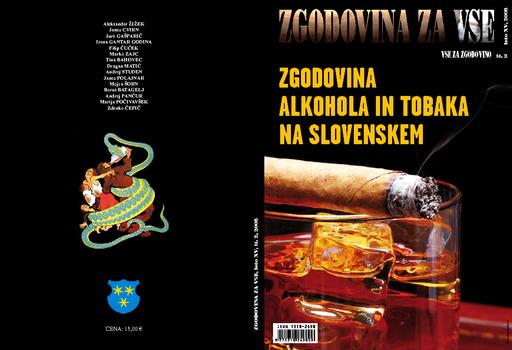
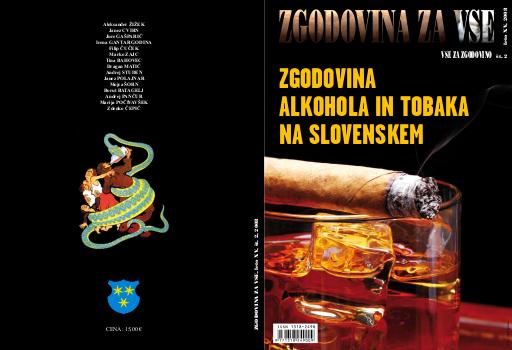
Alcohol and Tobacco Trade before the Second World War
Author(s):Marija Počivavšek
Co-author(s):Andrej Studen (ur.)
Leto:2008
Publisher(s):Zgodovinsko društvo, Celje
Source(s):Zgodovina za vse, 2008, št. 2
Language(s):slovenščina
Type(s) of material:text
Keywords:trgovina, zgodovina trgovine, 20. stoletje, alkoholne pijače, trošarina, tobak, monopol, trade, history of trade, 20th century, alcoholic drinks, excise duty, tobacco, monopoly
Rights:
This work by Marija Počivavšek is licensed under Creative Commons Attribution-NonCommercial-NoDerivs 4.0 International
Files (1)
Name:2008_2_Zgodovina za vse.pdf
Size:10.25MB
Format:application/pdf
Permanent link:https://hdl.handle.net/11686/file711
Description
Handicraft regulations from as early as 1859 included trade
and trade in alcohol among the tax-exempt crafts, while selling
spirits was a licensed craft. With the amended handicraft regulations
of 1883, trade in alcohol likewise became a licensed craft.
The handicraft law of 1931 also required a mandatory training
certificate for trade crafts. Regulations regarding requirements
for the alcohol trade were often modified in that period - be it
with regard to closed or open bottles, wholesale or retail trade.
The most common type of trade between the world wars
was trade in mixed goods, both in the countryside and in town.
Among other articles, such stores also sold the kind of alcoholic
beverages that would also please today's customers: wine,
liqueur, brandy, cognac, rum, plum brandy, gin, grape skin
brandy, wine lees spirit, maraschino, bilberry brandy, spirits
and beer. Retail in alcoholic drinks also took place in kiosks,
with costermongers and in commission sale shops. The extent
of trade in wine, most of which was a combination of wholesale
and retail or wholesale alone, amounted to about 6%. On top of
the taxes, traders in alcoholic drinks had to pay an excise duty
in the newly-founded Yugoslavia; the alcoholic drinks taxed under
this state and provincial levy included spirits, wine, liqueur,
rum and beer.
The Austro-Hungarian state had a monopoly on the sale of
tobacco and tobacco products; consequently, the lease of kiosks
and tobacco quotas was carefully regulated. The state retained
a monopoly over production and sale of tobacco in Yugoslavia;
tobacco at this time represented an important export product.
Interestingly, the economic crisis was also reflected in the consumption
of tobacco products: the crisis led to a drastic fall in
the consumption of luxurious and medium quality cigarettes,
while the consumption of lower quality cigarettes increased
considerably; the total consumption of cigarettes increased considerably
with the economic crisis.
Metadata (12)
- identifierhttps://hdl.handle.net/11686/1810
- title
- »Špecerija, liker, malinov sok, žganje: en gros & en detail«
- Trgovanje z alkoholom in tobakom pred 2. svetovno vojno
- “Groceries, Liqueurs, Raspberry Syrup, Spirits: en gros & en detail”
- Alcohol and Tobacco Trade before the Second World War
- „Lebensmittel, Likor, Himbeersaft, Branntwein: en gros & en detail “
- Der Handel mit Alkohol und Tabak vor dem Zweiten Weltkrieg
- creator
- Marija Počivavšek
- contributor
- Andrej Studen (ur.)
- subject
- trgovina
- zgodovina trgovine
- 20. stoletje
- alkoholne pijače
- trošarina
- tobak
- monopol
- trade
- history of trade
- 20th century
- alcoholic drinks
- excise duty
- tobacco
- monopoly
- description
- Handicraft regulations from as early as 1859 included trade and trade in alcohol among the tax-exempt crafts, while selling spirits was a licensed craft. With the amended handicraft regulations of 1883, trade in alcohol likewise became a licensed craft. The handicraft law of 1931 also required a mandatory training certificate for trade crafts. Regulations regarding requirements for the alcohol trade were often modified in that period - be it with regard to closed or open bottles, wholesale or retail trade. The most common type of trade between the world wars was trade in mixed goods, both in the countryside and in town. Among other articles, such stores also sold the kind of alcoholic beverages that would also please today's customers: wine, liqueur, brandy, cognac, rum, plum brandy, gin, grape skin brandy, wine lees spirit, maraschino, bilberry brandy, spirits and beer. Retail in alcoholic drinks also took place in kiosks, with costermongers and in commission sale shops. The extent of trade in wine, most of which was a combination of wholesale and retail or wholesale alone, amounted to about 6%. On top of the taxes, traders in alcoholic drinks had to pay an excise duty in the newly-founded Yugoslavia; the alcoholic drinks taxed under this state and provincial levy included spirits, wine, liqueur, rum and beer. The Austro-Hungarian state had a monopoly on the sale of tobacco and tobacco products; consequently, the lease of kiosks and tobacco quotas was carefully regulated. The state retained a monopoly over production and sale of tobacco in Yugoslavia; tobacco at this time represented an important export product. Interestingly, the economic crisis was also reflected in the consumption of tobacco products: the crisis led to a drastic fall in the consumption of luxurious and medium quality cigarettes, while the consumption of lower quality cigarettes increased considerably; the total consumption of cigarettes increased considerably with the economic crisis.
- Že obrtni red iz leta 1859 je trgovanje, tudi z alkoholom, uvrstil med proste (svobodne) obrti, točenje žganih pijač pa med koncesionirane. Z dopolnitvijo obrtnega reda leta 1883 pa so za trgovanje z alkoholom predvideli koncesije, obrtni zakon iz leta 1931 pa je za trgovinske obrti zahteval še dokazilo o izobrazbi (usposobljenosti). Sicer pa so v tem obdobju kar pogosto spreminjali predpise o zahtevanih pogojih za trgovanje z alkoholnimi pijačami; šlo je bodisi za zaprte ali odprte steklenice, bodisi za trgovino na veliko ali malo. Med svetovnima vojnama je bila v Sloveniji, tako na podeželju kot tudi v mestih, najbolj zastopana trgovina z mešanim blagom. V tovrstnih trgovinah so se – poleg ostalih artiklov seveda – prodajale tudi alkoholne pijače, ki bi zadovoljile tudi marsikaterega današnjega potrošnika: vina, liker, brandy, konjak, rum, slivovka, brinjevec, tropinovec, droženka, višnjevec, borovničevec, žganje, pivo. Alkoholne pijače so na drobno prodajali tudi v kioskih, branjarijah in komisijskih trgovinah. Obseg vinske trgovine, v veliki meri je bila to trgovina na debelo in drobno ali pa le na debelo, je znašal okrog 6 %. Poleg taks, ki so jih plačevali trgovci z alkoholnimi pijačami, je le-te v novonastali jugoslovanski državi doletelo še plačevanje trošarin; od alkoholnih pijač so bili s to državno in oblastno/banovinsko davščino obdavčeni žganje, vino, liker, rum in pivo. Prodaja tobaka in tobačnih izdelkov je bila v Avstro-Ogrski državni monopol, posledično pa je bila natančno predpisana oddaja tobačnih zalog in trafik v zakup. Monopol države je proizvodnja tobaka in trgovina s tobakom bila tudi v Jugoslaviji; tobak je v tem času predstavljal tudi pomemben izvozni artikel. Zanimivo je, da se je gospodarska kriza odražala tudi na porabi tobačnih izdelkov: s krizo je drastično upadla poraba luksuznih in srednje kvalitetnih cigaret, močno pa narasla potrošnja cigaret slabše kvalitete; skupna poraba cigaret pa se je z gospodarsko krizo opazno povečala.
- Bereits die Handelsordnung aus dem Jahr 1859 stufte den Handel, auch mit Alkohol, als freies Gewerbe ein, den Ausschank von Spirituosen hingegen als konzessioniertes Gewerbe. Mit der Ergänzung der Handelsordnung 1883 wurden für den Handel mit Alkohol Konzessionen vorgesehen. Durch das Handelsgesetz 1931 wurde für handeltreibende Gewerbe auch noch ein Nachweis über die Ausbildung bzw. Befähigung verlangt. Ansonsten wurden in dieser Zeitspanne die Vorschriften über die Erfordernisse für den Handel mit alkoholischen Getränken recht häufig verändert; es ging um geschlossene oder offene Flaschen und um den Groß- bzw. Einzelhandel. In der Zwischenkriegszeit waren in Slowenien sowohl am Land als auch in der Stadt Gemischtwarengeschäfte am stärksten verbreitet. In diesen Geschäften wurden – neben anderen Artikeln – auch alkoholische Getränke verkauft, die so manchen heutigen Konsumenten zufriedenstellen würden: Weine, Likör, Brandy, Cognac, Rum, Slibowitz, Wacholderschnaps, Tresterschnaps, Schlempe, Weichsellikör, Heidelbeerschnaps, Branntwein, Bier. Alkoholische Getränke wurden im Einzelhandel, in Kiosken, Krämerläden und Kommissionsgeschäften verkauft. Der Umfang des Weinhandels – mehrheitlich handelte es sich um den Groß- und Einzelhandel oder nur um den Großhandel – betrug rund 6 %. Neben Taxen hatten die Alkoholhändler im neuen jugoslawischen Staat auch Verbrauchssteuern abzuführen, was folgende mit Staats- und Bezirks- bzw. Banschaftssteuern besteuerte alkoholische Getränke betraf: Branntwein, Wein, Likör, Rum und Bier. Der Verkauf von Tabak und Tabakwaren war in Österreich-Ungarn ein staatliches Monopol, folglich war die Abgabe von Tabakwaren und Trafiken zur Pacht genau reglementiert. Auch in Jugoslawien waren Tabakproduktion und -handel Monopol des Staates, für den der Tabak außerdem einen wichtigen Exportartikel darstellte. Interessanterweise äußerten sich Wirtschaftskrisen auch im Konsum von Tabakwaren: In einer Krise sank der Konsum von Luxusprodukten und Produkten mittlerer Qualität drastisch, während der Konsum von Zigaretten von geringerer Qualität stark zunahm. Insgesamt wuchs in Krisenzeiten der Konsum von Zigaretten merkbar.
- publisher
- Zgodovinsko društvo
- date
- 2008
- type
- besedilo
- language
- Slovenščina
- isPartOf
- rights
- license: ccByNcNd
Seznam literature v delu (3)
| Stran | Avtor | Naslov | Vir | Kraj | Založba | Leto |
|---|---|---|---|---|---|---|
| 176 | Čepič, Tatjana | Ljubljanska tobačna tovarna skozi čas | Opojnost tobaka | Ljubljana | 1991 | |
| 157 | Mikeln, Miloš | Mesto ob reki: zgodbe mladih let iz knežjega mesta Celja | Celje | Mohorjeva družba | 2008 | |
| 166 | Mikeln, Miloš | Veliki voz | Ljubljana | Knjižna zadruga | 1995 |