
/
Periodicals
/
Kronika: časopis za slovensko krajevno zgodovino
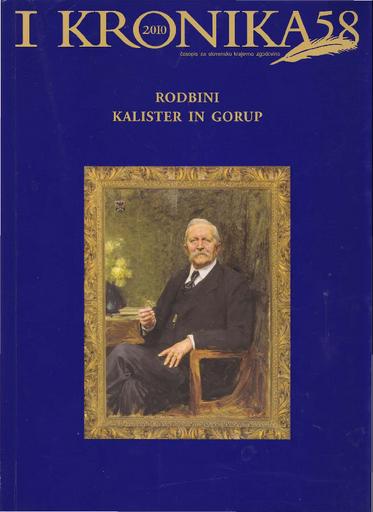
Josip Gorup and the Architecture of Ljubljana
Author(s):Gojko Zupan
Co-author(s):Miha Preinfalk (ur.), Manca Gašperšič (prev.), Angelika Hribar (prev.), Marjana Mirkovič (prev.), Nenad Labus (prev.), Jadranka Križman (prev.), Darka Tepina Podgoršek (lekt.), Sanja Zubčič (lekt.), Marija Cenda (lekt.)
Leto:2010
Publisher(s):Zveza zgodovinskih društev Slovenije
Source(s):Kronika, 2010, št. 1
Language(s):slovenščina
Type(s) of material:text
Keywords:Josip Gorup, Ljubljana, stavbarstvo, Gorupove hiše, Mestni dekliški licej, Mladika, Viljem Treo, Maks Fabiani, šolstvo, Josip Gorup, Ljubljana, architecture, Gorup's houses, City Girls' Lyceum, Mladika, Viljem Treo, Maks Fabiani, education
Rights:
This work by Gojko Zupan is licensed under Creative Commons Attribution-NonCommercial-NoDerivs 4.0 International
Files (1)
Name:Kronika-2010_1.pdf
Size:120.84MB
Format:application/pdf
Permanent link:https://hdl.handle.net/11686/file5106
Description
Buildings in Ljubljana that were constructed or co financed by Josip Gorup materialise the urban, building,
architectural and other ideas of the owner and his counsellors. They marked the end of the 19th and the beginning of
the 20th centuries in the architecture of the Austro-Hungarian Ljubljana. Particular attention is paid to Gorup 's
houses at the southern corner of the close-knit town centre that serve as the starting point of the central city axis,
which was rearranged after the earthquake in 1895. The paper re-examines the preliminary findings for the
conservation of the City Girls' Lyceum, which was designed by the architect Maks Fabiani and (co-)financed by
Josip Gorup. The lyceum was set up as the firs lay secondary schoolfor girls in Ljubljana, at a specially designated
location at the periphery of the ring. The facade of the former lyceum is adorned by a relieffeaturing the coats of
arms of Carniola and Ljubljana, and young Slav girls. It was characteristic of Gorup that he consistently, almost
tenaciously, pursued a set goal, even for twenty years or more, and patiently financed it. Twenty-eight years elapsed
from conceiving to completing Gorup's houses and a little lessfrom the first idea for the establishment of the Mladika
society in 1886 to the completion of the boarding school in 1912.
Metadata (12)
- identifierhttps://hdl.handle.net/11686/15488
- title
- Josip Gorup in stavbarstvo v Ljubljani
- Josip Gorup and the Architecture of Ljubljana
- creator
- Gojko Zupan
- contributor
- Miha Preinfalk (ur.)
- Manca Gašperšič (prev.)
- Angelika Hribar (prev.)
- Marjana Mirkovič (prev.)
- Nenad Labus (prev.)
- Jadranka Križman (prev.)
- Darka Tepina Podgoršek (lekt.)
- Sanja Zubčič (lekt.)
- Marija Cenda (lekt.)
- subject
- Josip Gorup
- Ljubljana
- stavbarstvo
- Gorupove hiše
- Mestni dekliški licej
- Mladika
- Viljem Treo
- Maks Fabiani
- šolstvo
- Josip Gorup
- Ljubljana
- architecture
- Gorup's houses
- City Girls' Lyceum
- Mladika
- Viljem Treo
- Maks Fabiani
- education
- description
- IZVLEČEK Stavbe, ki jih je dal v Ljubljani graditi Josip Gorup ali je s finančno podporo omogočil njihovo gradnjo, so materializirane urbanistične, stavbne, arhitekturne in druge ideje lastnika in njegovih svetovalcev. Zaznamovale so konec 19. in začetek 20. stoletja v stavbarstvu avstro-ogrske Ljubljane. Posebej so predstavljene Gorupove hiše na južnem vogalu strnjenega mestnega jedra, ki so izhodiščna točka osrednje mestne osi, urejene po potresu 1895. Na novo so obravnavane ugotovitve konservatorskih izhodišč za Mestni dekliški licej, ki ga je zasnoval arhitekt Maks Fabiani, (so)financiralpa Josip Gorup. Licej je bil postavljen kot prva laična srednja dekliška šola v mestu na posebej izbrani parceli ob robu ringa. Na pročelju nekdanjega liceja je vzidan relief z grbi Kranjske, Ljubljane in slovanske mladike. Gorupova značilnost je, da je vztrajno, skoraj trmasto, tudi dvajset let in več zasledoval določen cilj in idejo tudi finančno potrpežljivo podpiral. Od ideje do končanja Gorupovih hiš je preteklo 28 let, od prve ideje za društvo Mladika leta 1886 do dokončanja internata leta 1912 pa le malo manj.
- Buildings in Ljubljana that were constructed or co financed by Josip Gorup materialise the urban, building, architectural and other ideas of the owner and his counsellors. They marked the end of the 19th and the beginning of the 20th centuries in the architecture of the Austro-Hungarian Ljubljana. Particular attention is paid to Gorup 's houses at the southern corner of the close-knit town centre that serve as the starting point of the central city axis, which was rearranged after the earthquake in 1895. The paper re-examines the preliminary findings for the conservation of the City Girls' Lyceum, which was designed by the architect Maks Fabiani and (co-)financed by Josip Gorup. The lyceum was set up as the firs lay secondary schoolfor girls in Ljubljana, at a specially designated location at the periphery of the ring. The facade of the former lyceum is adorned by a relieffeaturing the coats of arms of Carniola and Ljubljana, and young Slav girls. It was characteristic of Gorup that he consistently, almost tenaciously, pursued a set goal, even for twenty years or more, and patiently financed it. Twenty-eight years elapsed from conceiving to completing Gorup's houses and a little lessfrom the first idea for the establishment of the Mladika society in 1886 to the completion of the boarding school in 1912.
- publisher
- Zveza zgodovinskih društev Slovenije
- date
- 2010
- type
- besedilo
- language
- Slovenščina
- isPartOf
- rights
- license: ccByNcNd