
/
Neobjavljeno
/
Umaknjene publikacije
Pravni položaj in življenjske usode otrok revežev in revščini izpostavljenih otrok na koncu 18. in v začetku 19. stoletja
Legal Status and Destines of Children of Poors and Children Exposed to Powerty at the end of 18th and in the Beginning of 19th Century
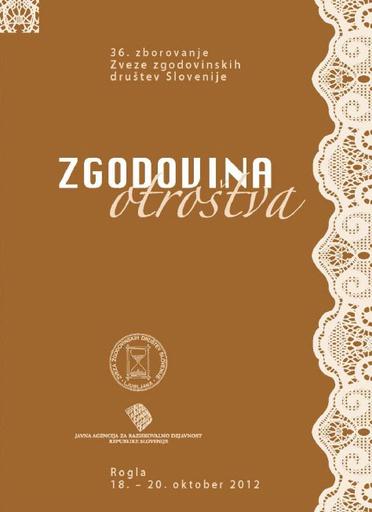
Author(s):Dragica Čeč
Co-author(s):Uwe Krebs (mod.), Marta Verginella (mod.)
Leto:2012
Publisher(s):Zveza zgodovinskih društev Slovenije, Ljubljana, Inštitut za novejšo zgodovino, Ljubljana
Source(s):11. Preliminarna predavanja II
Language(s):slovenščina
Type(s) of material:moving image
Keywords:pravna zaščita otrok, kazenski zakon 1803, obči državljanski zakonik, rejništvo, najdenčki, legal protection of children, Criminal Law 1803, General Civil Code, foster care, foundlings
Rights:
This work by Dragica Čeč is licensed under Creative Commons Attribution-NonCommercial-NoDerivs 4.0 International
Files (1)
Description
Paper is focusing on two aspects of researching destinies of children from the “economic bottom”, those who
did not own any property and who were dependent on the collective and individual emotions. Such sentiment
was also connected with a sense of social responsability and reciprocity of individuala. Two aspects of attitudes
to children are analysed. First aspect is a legal aspect, which sets a general position of children but also limits
of social solidarity, which is in this age group particulary emphasized. Then there is a reconstruction of life
destinies of poor children – foundlings in different life periods. It is about the position of those with whom
we could easily prove only black and on Slovenian territory certanly the most well-established theory in the
field of attitudes and relationships to childhood and children, whose life destinies also reflect different colors.
Metadata (12)
- identifierhttps://hdl.handle.net/11686/15440
- title
- Pravni položaj in življenjske usode otrok revežev in revščini izpostavljenih otrok na koncu 18. in v začetku 19. stoletja
- Legal Status and Destines of Children of Poors and Children Exposed to Powerty at the end of 18th and in the Beginning of 19th Century
- creator
- Dragica Čeč
- contributor
- Uwe Krebs (mod.)
- Marta Verginella (mod.)
- subject
- pravna zaščita otrok
- kazenski zakon 1803
- obči državljanski zakonik
- rejništvo
- najdenčki
- legal protection of children
- Criminal Law 1803
- General Civil Code
- foster care
- foundlings
- description
- Prispevek se osredotoča na dva aspekta preučevanja življenjskih usod otrok »z ekonomskega dna«, tistih, ki niso posedovali nobenega premoženja in so bili odvisni od kolektivnega in individualnega čustvovanja. Tovrstno čustvovanje je bilo povezano tudi z občutkom družbene odgovornosti in recipročnosti posameznikov. Analizirana sta dva vidika odnosa do otrok. Najprej pravni, ki določa splošni položaj otrok, a tudi meje družbene solidarnosti, ki je v tej starostni skupini posebej poudarjena. Sledi rekonstrukcija življenjskih usod skupine revnih otrok – najdenčkov v različnih življenjskih obdobjih. Gre torej za položaj tistih, s katerimi bi najprej in najbolj zlahka dokazovali zgolj črno in v slovenskem prostoru zagotovo najbolj uveljavljeno teorijo na polju odnosov do otroštva in otrok, a katerih življenjske usode kažejo tudi drugačne nianse.
- Paper is focusing on two aspects of researching destinies of children from the “economic bottom”, those who did not own any property and who were dependent on the collective and individual emotions. Such sentiment was also connected with a sense of social responsability and reciprocity of individuala. Two aspects of attitudes to children are analysed. First aspect is a legal aspect, which sets a general position of children but also limits of social solidarity, which is in this age group particulary emphasized. Then there is a reconstruction of life destinies of poor children – foundlings in different life periods. It is about the position of those with whom we could easily prove only black and on Slovenian territory certanly the most well-established theory in the field of attitudes and relationships to childhood and children, whose life destinies also reflect different colors.
- publisher
- Zveza zgodovinskih društev Slovenije
- Inštitut za novejšo zgodovino
- date
- 2012
- 19. 10. 2012
- type
- video
- language
- Slovenščina
- isPartOf
- rights
- license: ccByNcNd