
/
Periodicals
/
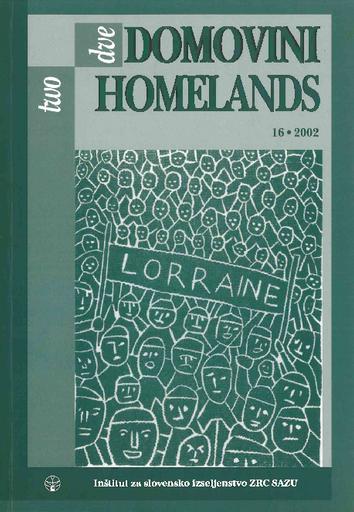
Dve domovini / Two Homelands
The Standpoint of the Communist Party of Slovenia towards the Political Emigration up to 1991
Author(s):Marjan Drnovšek
Co-author(s):Marjan Drnovšek (ur.)
Leto:2002
Publisher(s):Inštitut za slovensko izseljenstvo in migracije ZRC SAZU, Ljubljana
Source(s):Dve domovini, 2002, št. 16
Language(s):angleščina
Type(s) of material:text
Keywords:komunistične partije, politična emigracija, odnosi, communist parties, political emigration, relations
Rights:
This work by Marjan Drnovšek is licensed under Creative Commons Attribution-NonCommercial-NoDerivs 4.0 International
Files (1)
Name:Dve_domovini_16.pdf
Size:19.78MB
Format:application/pdf
Permanent link:https://hdl.handle.net/11686/file5086
Description
The after 1945 Slovenian political emigration were as part of the Yugoslav emigration subjected to a negative relation of the state and its political structures. Despite a different social development in Yugoslavia - in comparison with other states on the east side of the iron curtain - and despite a greater openness into the world from the sixties on an ideological construct was all the time firmly grounded in the policy of the communist party and the state on the federal (Yugoslavia) and republic (Slovenia)level. The construct rejected the world of capitalism and people of different opinions, including emigrants. The citizens were not allowed to have contacts with political emigrants. Such contacts were liable to legal punishment. With the use of repressive methods the state more or less successfully hindered the flow of information and ideas, which brought different views about the political, social and state regulation of Yugoslavia and Slovenia.
Metadata (12)
- identifierhttps://hdl.handle.net/11686/15068
- title
- The Standpoint of the Communist Party of Slovenia towards the Political Emigration up to 1991
- Odnos Zveze komunistov Slovenije do politične emigracije pred letom 1991
- creator
- Marjan Drnovšek
- contributor
- Marjan Drnovšek (ur.)
- subject
- komunistične partije
- politična emigracija
- odnosi
- communist parties
- political emigration
- relations
- description
- The after 1945 Slovenian political emigration were as part of the Yugoslav emigration subjected to a negative relation of the state and its political structures. Despite a different social development in Yugoslavia - in comparison with other states on the east side of the iron curtain - and despite a greater openness into the world from the sixties on an ideological construct was all the time firmly grounded in the policy of the communist party and the state on the federal (Yugoslavia) and republic (Slovenia)level. The construct rejected the world of capitalism and people of different opinions, including emigrants. The citizens were not allowed to have contacts with political emigrants. Such contacts were liable to legal punishment. With the use of repressive methods the state more or less successfully hindered the flow of information and ideas, which brought different views about the political, social and state regulation of Yugoslavia and Slovenia.
- Slovenska politična emigracija je bila v času od 1945 do 1991 bolj ali manj v centru zanimanja tako represivnih organov, npr. policije, kot tudi partijskih organov. Spremljanje njene aktivnosti in preprečevanje njenega vpliva v Sloveniji in m ed ekonomskimi izseljenci v svetu so bile tudi naloge vrhov Partije in številnih družbenopolitičnih organizacij in društev, ki so jih izvrševali po njenih direktivah. Odnos slovenske Partije do politične emigracije pozna dvoje, prvič, čas »trdega« razmerja do nje nekako do začetka šestdesetih let, ki mu sledi bolj »prilagodljiv« odnos, in drugič, zoževanje politične emigracije od sprva vseh, ki so na tak ali drugačen način zapustili Jugoslavijo (npr. v 50-ih letih), na vedno bolj ozki intelektualni ter politično dejavni krog ljudi (jedra), proti kateremu ni popustila do padca komunizma. Jugoslovanski oz. slovenski pravni okvir je omogočal to dejavnost, zlasti na področju preprečevanja dotoka informacij o njenem delovanju v tujini. Kljub temu so bili stiki, marsikdo je bil zaradi tega preganjan ali prisiljen živeti in delovati v osami. Dobro ohranjen arhivski material nam omogoča vpogled v zakulisje načrtovanja in delovanja Partije do slovenske politične emigracije.
- publisher
- Inštitut za slovensko izseljenstvo in migracije ZRC SAZU
- date
- 2002
- type
- besedilo
- language
- Angleščina
- isPartOf
- rights
- license: ccByNcNd