
/
Periodicals
/
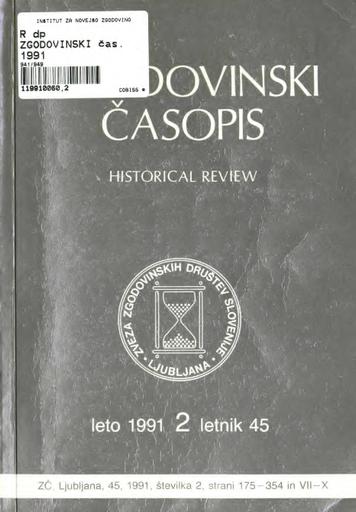
Zgodovinski časopis
Migrations in the Yugoslav Countries from the 15th till the 18th Century and their Significance for Further National Development
Author(s):Bogo Grafenauer
Co-author(s):Vasilij Melik (odg. ur.)
Leto:1991
Publisher(s):Zveza zgodovinskih društev Slovenije, Ljubljana
Source(s):Zgodovinski časopis, 1991, št. 2
Language(s):slovenščina
Type(s) of material:text
Rights:
This work by Bogo Grafenauer is licensed under Creative Commons Attribution-NonCommercial-NoDerivs 4.0 International
Files (1)
Name:ZGODOVINSKI_CASOPIS_LETO_1991_LETNIK_45_STEVILKA_2.pdf
Size:9.82MB
Format:application/pdf
Permanent link:https://hdl.handle.net/11686/file139
Description
The first part of the treatise defines the concept of a »migration« and its types in the history of the Slovenes from their settlement at the end of the 6th century until today. Thereby the migrations typology survey in the world history has been used, especially in the Slovene neighbourhood on the Balkan Peninsula, which in some periods influenced the migrations on the Slovene ground. The second part of the treatise gives a survey of the main periods of the Medieval agrarian colonisation in Slovenia and its lasting historical results (diminishing of the Slovene territory for two thirds to about 24.000 km2 somewhere in 1500, however, also formation of very distinct ethnic boundaries towards the German territory in the North and towards the Roman territory from the Gulf of Trieste up to the Alps in the West).
Metadata (12)
- identifierhttps://hdl.handle.net/11686/14282
- title
- Migracije v jugoslovanskih deželah od 15. do 18. stoletja in njihov pomen za nadaljnji narodnostni razvoj
- Migrations in the Yugoslav Countries from the 15th till the 18th Century and their Significance for Further National Development
- creator
- Bogo Grafenauer
- contributor
- Vasilij Melik (odg. ur.)
- subject
- migracije
- selitve
- Jugoslavija
- description
- The first part of the treatise defines the concept of a »migration« and its types in the history of the Slovenes from their settlement at the end of the 6th century until today. Thereby the migrations typology survey in the world history has been used, especially in the Slovene neighbourhood on the Balkan Peninsula, which in some periods influenced the migrations on the Slovene ground. The second part of the treatise gives a survey of the main periods of the Medieval agrarian colonisation in Slovenia and its lasting historical results (diminishing of the Slovene territory for two thirds to about 24.000 km2 somewhere in 1500, however, also formation of very distinct ethnic boundaries towards the German territory in the North and towards the Roman territory from the Gulf of Trieste up to the Alps in the West).
- V prvem delu razprave je opredeljen pojem »migracije« in njeni tipi v zgodovini Slovencev od naselitve konec 6. stoletja do današnjega časa. Ob tem je uporabljen pregled tipologije migracij v svetovni zgodovini, še posebej pa v slovenskem sosedstvu na Balkanskem polotoku, ki je v nekaterih obdobjih vplivalo na migracije na slovenskih tleh. V drugem delu razprave je podan pregled glavnih obdobij srednjeveške agrarne kolonizacije na Slovenskem in njeni trajni zgodovinski izrazi (zmanjšanje slovenskega ozemlja za dve tretjini na okrog 24.000 km2 okoli leta 1500, toda tudi izoblikovanje zelo jasnih etničnih meja proti nemškemu prostoru na severu in proti romanskemu svetu od Tržaškega zaliva do Karnskih Alp na zahodu).
- publisher
- Zveza zgodovinskih društev Slovenije
- date
- 1991
- type
- besedilo
- language
- Slovenščina
- isPartOf
- rights
- license: ccByNcNd