/
Events
/
Conferences
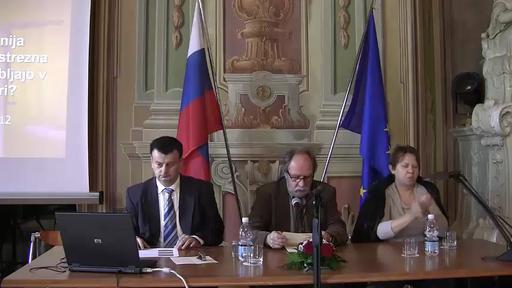
Repression against the Jewish Population at the Occupied Slovenian Territories During World War II
Files (1)
Description
The Jews were one of the first groups of the population subject to the systematic repression policy of the Nazi Germany, which finally culminated in the Holocaust. As the Nazi influence spread across Europe, the policy of repression against the Jewish population also spread. It was most evidently reflected in the Jewish refugees, also seeking refuge in the Slovenian territory. Finally in 1940 the Yugoslav state also adopted two anti-Jewish decrees. However, the decisive turning point in the attitude towards the Jewish population had not occurred until April 1941, when the Axis powers invaded Yugoslavia and divided it between them. At that moment the fate of the Jews in Slovenia depended primarily on which occupied territory they lived at. As early as in 1941 virtually all Jews fled towards Italy or were deported to Serbia and Croatia from the territories occupied by the Germans – the so-called Spodnja Štajerska and Gorenjska regions. At the territory occupied by the Italians – in the so-called Ljubljana Province – the Jews were mostly interned to Italy by the occupier, while the majority of those who were allowed to stay were later sent to concentration camps by the new German occupiers in 1944. The largest Slovenian Jewish community lived in the Prekmurje region, where they were dealt with by the Hungarian occupiers in complete accordance with their anti-Jewish policy. Thus in 1944 the Prekmurje Jews also ended up in the German concentration camps, where but a few of them returned from.In his contribution the author is not only going to present the most obvious forms of repression against the Jewish population like deportation, imprisonment and executions. He will also focus on the issues of confiscation of property, expropriation, and violation of human rights. He will also underline the differences and similarities between these processes at the various Slovenian occupied territories during World War II, place them into a wider context of the repression during World War II, and simultaneously compare them with the political repression and confiscation of property after World War II.
Metadata (9)
- identifierhttps://hdl.handle.net/11686/14263
- title
- Represija nad judovskim prebivalstvom okupiranih ozemelj Slovenije med drugo svetovno vojno
- Repression against the Jewish Population at the Occupied Slovenian Territories During World War II
- creator
- Andrej Pančur
- description
- The Jews were one of the first groups of the population subject to the systematic repression policy of the Nazi Germany, which finally culminated in the Holocaust. As the Nazi influence spread across Europe, the policy of repression against the Jewish population also spread. It was most evidently reflected in the Jewish refugees, also seeking refuge in the Slovenian territory. Finally in 1940 the Yugoslav state also adopted two anti-Jewish decrees. However, the decisive turning point in the attitude towards the Jewish population had not occurred until April 1941, when the Axis powers invaded Yugoslavia and divided it between them. At that moment the fate of the Jews in Slovenia depended primarily on which occupied territory they lived at. As early as in 1941 virtually all Jews fled towards Italy or were deported to Serbia and Croatia from the territories occupied by the Germans – the so-called Spodnja Štajerska and Gorenjska regions. At the territory occupied by the Italians – in the so-called Ljubljana Province – the Jews were mostly interned to Italy by the occupier, while the majority of those who were allowed to stay were later sent to concentration camps by the new German occupiers in 1944. The largest Slovenian Jewish community lived in the Prekmurje region, where they were dealt with by the Hungarian occupiers in complete accordance with their anti-Jewish policy. Thus in 1944 the Prekmurje Jews also ended up in the German concentration camps, where but a few of them returned from.In his contribution the author is not only going to present the most obvious forms of repression against the Jewish population like deportation, imprisonment and executions. He will also focus on the issues of confiscation of property, expropriation, and violation of human rights. He will also underline the differences and similarities between these processes at the various Slovenian occupied territories during World War II, place them into a wider context of the repression during World War II, and simultaneously compare them with the political repression and confiscation of property after World War II.
- Judje so bili ena prvih skupin prebivalstva, ki so bili podvrženi načrtni represivni politiki nacistične Nemčije, katera se je naposled končala s holokavstom. S širitvijo nacističnega vpliva po Evropi se je širila tudi represivna politika do judovskega prebivalstva. Najbolj očiten odraz te politike so bili judovski begunci, ki so se zatekli tudi na slovensko ozemlje. Naposled je leta 1940 tudi jugoslovanska država sprejela dve protijudovski uredbi. Toda do odločilnega preloma pri odnosu do judovskega prebivalstva je prišlo šele aprila 1941, ko so sile osi napadle Jugoslavijo in si jo med seboj razdelile. Usoda Judov iz Slovenije je bila tedaj v prvi vrsti odvisna od tega, na katerem okupacijskem ozemlju so živeli. Na nemških okupiranih ozemljih na t. i. Spodnjem Štajerskem in Gorenjskem so praktično vsi Judje že leta 1941 pobegnili proti Italiji ali pa so bili izgnani v Srbijo in na Hrvaško. Na italijanskem okupiranem ozemlju v t. i. Ljubljanski pokrajini jih je okupator večinoma interniral v Italijo, velik del tistih, ki so lahko ostali, pa je novi nemški okupator leta 1944 poslal v koncentracijska taborišča. Največja slovenska judovska skupnost je živela v Prekmurju, kjer jih je madžarski okupator obravnaval popolnoma v skladu s svojo protijudovsko politiko. Leta 1944 so tako tudi prekmurski Judje končali v nemških koncentracijskih taboriščih, od koder so se vrnili le redki.Avtor v svojem prispevku ne bo predstavil le najbolj očitnih oblik represije nad judovskim prebivalstvom kot je bilo izganjanje, zapiranje in pobijanje, temveč bo predstavil tudi problematiko zaplemb premoženja ter odvzemanje in kršenje državljanskih in človekovih pravic. Pri tem bo opozoril na razlike in podobnosti teh procesov na različnih okupiranih ozemljih Slovenije med drugo svetovno vojno, jih umestil v širši kontekst represije med drugo svetovno vojno, hkrati pa bo te procese primerjal s politično represijo in zaplembami premoženja po drugi svetovni vojni.
- publisher
- Inštitut za novejšo zgodovino/Institute of Contemporary History
- date
- 2012
- 07. 11. 2012
- type
- video
- language
- Slovenščina
- isPartOf