/
Events
/
Conferences
»There’s Not Enough Killing«: the Role of Repression in Introducing and Maintaining the »New Order« during the Occupation of Slovenia 1941–1945
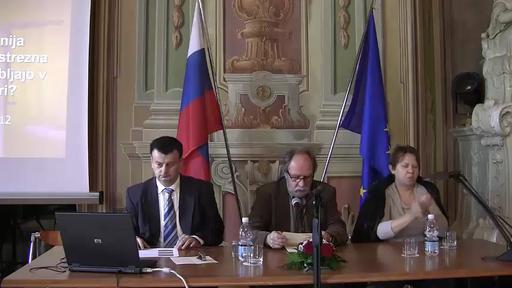
Author(s):Damijan Guštin
Leto:2012
Publisher(s):Inštitut za novejšo zgodovino/Institute of Contemporary History, Ljubljana
Language(s):slovenščina
Type(s) of material:moving image
Files (1)
Description
When during the short military campaign in April 1941 the invaders occupied the Kingdom of Yugoslavia – a state where the majority of Slovenians lived – the war violence and repression in Europe was already a widespread fact. Violence in its many forms was an integral part of military operations, while repression was the main means of maintaining the occupation regimes in the area from France to Poland and Greece.
However, the intentions of the occupiers with regard to the Slovenian population (and territory) were even more specific and far-reaching, the annexations already outlining the post-war system in Europe and paving the way for its smooth implementation. The systematic repression of this sort includes deportation of the population, denationalisation as the most evident measure of the ethnic destruction of the Slovenian nation and its transformation into an ethnic minority, confiscation and economic expropriation, integration into the war efforts of the occupying countries, abolishment of the local administrative and political structures, and later also forced citizenship of the occupying states and forced mobilisation into the German and Hungarian armies. When in the summer of 1941 the resistance movement was established, it was at least partly based precisely on the active and immediate resistance against this sort of violence.
Repression was central to the counter insurgency activities of the occupiers. The methods of repression intended to suppress or at least hinder the spreading of the resistance movement were practiced in very severe forms, from mass arrests, preventive and punitive internments, deportations into the concentration camps, mass executions of the members and supporters of the resistance by means of (quasi) judicial proceedings, as well as raw police and military violence against the population. Repression blended with warfare, which took place almost without any restrictions set out by the military and humanitarian law.
Involving a segment of the population in the counter insurgency activities resulted in the repression gaining new dimensions, since this strengthened the opposition to the resistance movement. The inclusion of the level of the civil war in the wartime violence, including interpersonal violence, even strengthened and enhanced the forms of repression carried out by both sides involved in the conflict.
The extremely complex causes and reasons for violence resulted in a high mortality rate among the population (6.5% of the population, or every fifteenth person), as well as in severe material and psychological damage suffered by the majority of the surviving Slovenian population.
Metadata (9)
- identifierhttps://hdl.handle.net/11686/14261
- title
- »Pobija se premalo« : vloga represije v uvajanju in vzdrževanju okupacijskega »novega reda« na Slovenskem 1941–1945
- »There’s Not Enough Killing«: the Role of Repression in Introducing and Maintaining the »New Order« during the Occupation of Slovenia 1941–1945
- creator
- Damijan Guštin
- description
- When during the short military campaign in April 1941 the invaders occupied the Kingdom of Yugoslavia – a state where the majority of Slovenians lived – the war violence and repression in Europe was already a widespread fact. Violence in its many forms was an integral part of military operations, while repression was the main means of maintaining the occupation regimes in the area from France to Poland and Greece. However, the intentions of the occupiers with regard to the Slovenian population (and territory) were even more specific and far-reaching, the annexations already outlining the post-war system in Europe and paving the way for its smooth implementation. The systematic repression of this sort includes deportation of the population, denationalisation as the most evident measure of the ethnic destruction of the Slovenian nation and its transformation into an ethnic minority, confiscation and economic expropriation, integration into the war efforts of the occupying countries, abolishment of the local administrative and political structures, and later also forced citizenship of the occupying states and forced mobilisation into the German and Hungarian armies. When in the summer of 1941 the resistance movement was established, it was at least partly based precisely on the active and immediate resistance against this sort of violence. Repression was central to the counter insurgency activities of the occupiers. The methods of repression intended to suppress or at least hinder the spreading of the resistance movement were practiced in very severe forms, from mass arrests, preventive and punitive internments, deportations into the concentration camps, mass executions of the members and supporters of the resistance by means of (quasi) judicial proceedings, as well as raw police and military violence against the population. Repression blended with warfare, which took place almost without any restrictions set out by the military and humanitarian law. Involving a segment of the population in the counter insurgency activities resulted in the repression gaining new dimensions, since this strengthened the opposition to the resistance movement. The inclusion of the level of the civil war in the wartime violence, including interpersonal violence, even strengthened and enhanced the forms of repression carried out by both sides involved in the conflict. The extremely complex causes and reasons for violence resulted in a high mortality rate among the population (6.5% of the population, or every fifteenth person), as well as in severe material and psychological damage suffered by the majority of the surviving Slovenian population.
- Ko so okupatorji v kratki vojni kampanji Kraljevino Jugoslavijo – državo, v kateri je živela večina Slovencev – okupirali aprila 1941, je bilo vojno nasilje in represija v Evropi že splošno razširjeno dejstvo. Nasilje je bilo v mnogih oblikah sestavni del vojaških operacij, represija pa glavno sredstvo vzdrževanja okupacijskih režimov na območju od Francije do Poljske in Grčije. Nameni okupatorjev s slovenskim prebivalstvom (in ozemljem) pa so bili še bolj daljnosežni, saj so z aneksijami in pripravljanjem razmer za njeno čim bolj tekočo izvedbo že določali povojno ureditev Evrope. V ta krog sistemske represije sodijo izgoni prebivalstva, raznarodovanje kot najbolj viden del etničnega uničenja slovenskega naroda in njegovo prevedbo v etnično manjšino, razlastitve in ekonomska ekspropriacija, vpetost v vojne napore držav okupatork in odstranitev lokalnih upravnih ter političnih struktur, pozneje še vsiljenje državljanstva okupiranih držav in prisilna mobilizacija v nemško in madžarsko vojsko. Ko je poleti 1941 nastopilo odporniško gibanje, se je vsaj deloma utemeljilo prav na aktivnem in takojšnjem boju zoper tovrstno nasilje. V proti odporniškem delovanju okupatorjev je represija dobila osrednje mesto. Metode represije, namenjene zatrtju ali vsaj omejitvi širjenja odporniškega gibanja, so bile zelo grobe, od množičnih aretacij, zaščitnih in kazenskih internacij, odvedb v koncentracijska taborišča, množičnega pobijanja odpornikov in njihovih podpornikov v (kvazi) sodnih oblikah ali kot golo nasilje nad prebivalstvom v policijskih in vojaških akcijah. Represija se je mešala z vojskovanjem, ki pa je potekalo skoraj brez omejitev, ki jih je določalo vojno in humanitarno pravo. Pritegnitev dela prebivalstva k sodelovanju v proti odporniškem delovanju je odprla nove razsežnosti represije, saj je okrepila opozicijo odporniškemu gibanju. Vključitev ravni državljanske vojne v vojno nasilje, vključno z interpersonalnim nasiljem, je povečala in razširila oblike represije na obeh v spopadu udeleženih straneh. Izjemno kompleksni vzroki in povodi nasilja so se med seboj prepletli v visoko smrtnost med prebivalstvom (6,5% prebivalstva, vsak petnajsti prebivalec), pa tudi močno gmotno in psihično prizadetost velikega dela preživelih prebivalcev Slovenije.
- publisher
- Inštitut za novejšo zgodovino/Institute of Contemporary History
- date
- 2012
- 07. 11. 2012
- type
- video
- language
- Slovenščina
- isPartOf