
/
Periodicals
/
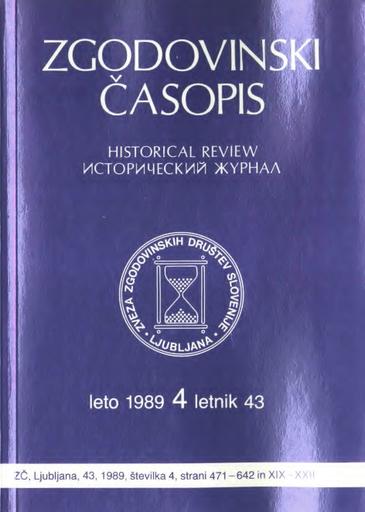
Zgodovinski časopis
Yugoslavia—Austria (1918-1938): Neighbourhood between Cooperation and Confrontation
Author(s):Arnold Suppan
Co-author(s):Vasilij Melik (odg. ur.)
Leto:1989
Publisher(s):Zveza zgodovinskih društev Slovenije, Ljubljana
Source(s):Zgodovinski časopis, 1989, št. 4
Language(s):slovenščina
Type(s) of material:text
Files (1)
Name:ZGODOVINSKI_CASOPIS_LETO_1989_LETNIK_43_STEVILKA_4.pdf
Size:9.69MB
Format:application/pdf
Permanent link:https://hdl.handle.net/11686/file133
Description
The Kingdom of Serbs, Croats and Slovenes and the Republic of Austria, which developed from the Habsburg Empire at the end of October 1918, should have brought about continued collaboration as a result of the centuries-old political, economic, social and cultural relations of their peoples. However, the fact that this cooperation between 1918 and 1938 was characterized by confrontation rather than cooperation had many reasons: Conflicts over the determination of borders in Southern Carinthia and Southern Styria; conflicts over the confiscation of property; competition in the international policy of alliances; the negative role of the minorities in the Yugoslav-Austrian relations; the question of restoration and »Anschluß«; the peiorative image of the neighbour in the public opinion.
Metadata (11)
- identifierhttps://hdl.handle.net/11686/14077
- title
- Jugoslavija—Avstrija (1918-1938): sosedstvo med sodelovanjem in konfrontacijo
- Yugoslavia—Austria (1918-1938): Neighbourhood between Cooperation and Confrontation
- creator
- Arnold Suppan
- contributor
- Vasilij Melik (odg. ur.)
- subject
- Avstrija
- mednarodni odnosi
- Jugoslavija
- 1918-1938
- description
- The Kingdom of Serbs, Croats and Slovenes and the Republic of Austria, which developed from the Habsburg Empire at the end of October 1918, should have brought about continued collaboration as a result of the centuries-old political, economic, social and cultural relations of their peoples. However, the fact that this cooperation between 1918 and 1938 was characterized by confrontation rather than cooperation had many reasons: Conflicts over the determination of borders in Southern Carinthia and Southern Styria; conflicts over the confiscation of property; competition in the international policy of alliances; the negative role of the minorities in the Yugoslav-Austrian relations; the question of restoration and »Anschluß«; the peiorative image of the neighbour in the public opinion.
- Kraljevina Srbov, Hrvatov in Slovencev in Republika Avstrija, ki je nastala iz Habsburškega imperija konec oktobra 1918, bi bili lahko nadaljevali stoletja dolge politične, ekonomske, družbene in kulturne medsebojne odnose. Da je v obdobju med 1918 in 1938 odnos med sosedama bolj konfrontacija kot kooperacija, je več razlogov: konflikti ob določanju meja na južnem Koroškem in južnem Štajerskem, zaplembe premoženj, tekmovanje v mednarodni politiki zavezništev, negativna vloga manjšin v jugoslovansko-avstrijskih odnosih, vprašanje obnovitve in »Anschluß«, podcenjevalno gledanje na sosedo v javnem mnenju.
- publisher
- Zveza zgodovinskih društev Slovenije
- date
- 1989
- type
- besedilo
- language
- Slovenščina
- isPartOf