/
Periodicals
/
Archives
Archives of associations in Germany: between past and present
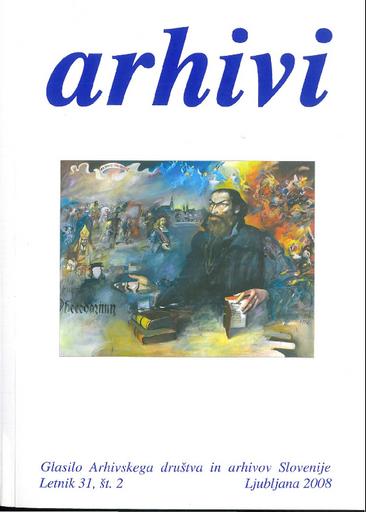
Author(s):Marjan Drnovšek
Co-author(s):Jure Volčjak (ur.)
Leto:2008
Publisher(s):Arhivsko društvo Slovenije, Ljubljana
Source(s):Arhivi, 2008, št. 2
Language(s):slovenščina
Type(s) of material:text
Keywords:slovenski izseljenci, izseljenska društva, arhivsko gradivo, Nemčija, Slovene emigrants, emigrants' associations, archival materials, Deutschland, Germany
Rights:
This work by Marjan Drnovšek is licensed under Creative Commons Attribution-NonCommercial-NoDerivs 4.0 International
Files (1)
Name:ARHIVI_2008-2.pdf
Size:51.97MB
Format:application/pdf
Permanent link:https://hdl.handle.net/11686/file574
Description
The position of the Slovene emigration associations in Germany bas changed considerably from the end of the 19th century till the present day. Between the period of the Slovene emigration flow to Westphalia and World War I, the activities of such associations were tied mostly to catholic organizations. Between world wars, the number of associations increased and catholic associations gained strength in addition to the laic ones. There was an ideological split among them after 1929 with strong presence of Yugoslavian unitarism. Following World War 2, associations were divided into those that were pro-Yugoslavia, church associations and organizations of political emigration. The State of preservation of archival records of such associations is catastrophic for the time before WW2. Post-war economic emigration associations began to appear in the beginning of the 70s of the past century and are still active today. The author carries out a sample analysis of the state of preservation of associations' archives and provides a thorough description of the state of preservation for three associations in particular, namely Slovenija Berlin, Sava Frankfurt and Triglav Stuttgart. Slovenija Berlin is used as a sample case for the rest of the Slovene associations in Germany, and detailed arrangement and description of its archives has been prepared.
Metadata (12)
- identifierhttps://hdl.handle.net/11686/11755
- title
- Društveni arhivi v Nemčiji : med preteklostjo in sedanjostjo
- Archives of associations in Germany: between past and present
- creator
- Marjan Drnovšek
- contributor
- Jure Volčjak (ur.)
- subject
- slovenski izseljenci
- izseljenska društva
- arhivsko gradivo
- Nemčija
- Slovene emigrants
- emigrants' associations
- archival materials
- Deutschland
- Germany
- description
- The position of the Slovene emigration associations in Germany bas changed considerably from the end of the 19th century till the present day. Between the period of the Slovene emigration flow to Westphalia and World War I, the activities of such associations were tied mostly to catholic organizations. Between world wars, the number of associations increased and catholic associations gained strength in addition to the laic ones. There was an ideological split among them after 1929 with strong presence of Yugoslavian unitarism. Following World War 2, associations were divided into those that were pro-Yugoslavia, church associations and organizations of political emigration. The State of preservation of archival records of such associations is catastrophic for the time before WW2. Post-war economic emigration associations began to appear in the beginning of the 70s of the past century and are still active today. The author carries out a sample analysis of the state of preservation of associations' archives and provides a thorough description of the state of preservation for three associations in particular, namely Slovenija Berlin, Sava Frankfurt and Triglav Stuttgart. Slovenija Berlin is used as a sample case for the rest of the Slovene associations in Germany, and detailed arrangement and description of its archives has been prepared.
- Razvoj slovenskih izseljenskih društev v Nemčiji od konca 19. stoletja do danes nam daje zanimivo podobo. V obdobju vestfalskih Slovencev do prve svetovne vojne je bilo društveno življenje vezano bolj na katoliške organizacije. Med svetovnima vojnama je bilo število društev večje. Poleg laičnih so bila močna tudi katoliška. Po letu 1929 so se razdelila po ideološkem ključu, močno pa je bil živ jugoslovanski unitarizem. Po drugi svetovni vojni so se delila na projugoslovanska in cerkvena društva ter organizacije politične emigracije. Ohranjenost arhivskega gradiva društev iz obdobja do druge svetovne vojne je porazno. Povojna društva ekonomske emigracije so nastajala na začetku sedemdesetih let 20. stoletja in še delujejo. Vzorčno je bilo analizirano stanje ohranjenosti društvenih arhivov. Konkretno je bilo ugotovljeno stanje pri društvih Slovenija Berlin, Sava Frankfurt in Triglav Stuttgart. Podrobna ureditev in popis sta bila opravljena pri društvu Slovenija Berlin, ki predstavlja vzorčni primer slovenskim društvom v Nemčiji.
- publisher
- Arhivsko društvo Slovenije
- date
- 2008
- type
- besedilo
- language
- Slovenščina
- isPartOf
- rights
- license: ccByNcNd