
/
Periodicals
/
Archives
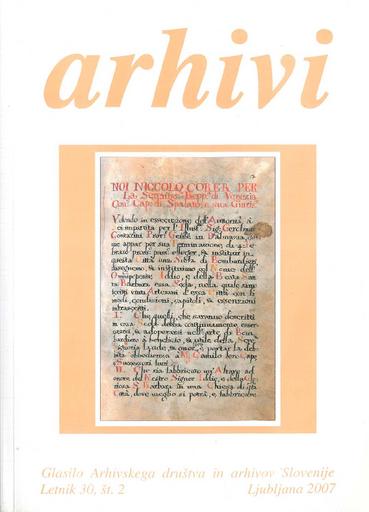
The statute (Meriegola) of the Fraternity of St. Barbara in Split and reports of Venice officials on the activities of the Fraternity of St. Barbara in Koper
Author(s):Zdenka Bonin
Co-author(s):Jure Volčjak (ur.)
Leto:2007
Publisher(s):Arhivsko društvo Slovenije, Ljubljana
Source(s):Arhivi, 2007, št. 2
Language(s):slovenščina
Type(s) of material:text
Keywords:bratovščina sv. Barbare, Split, Koper, bratovščine, topničarji, statuti bratovščin, Fraternity of St. Barbara, Split, Koper
Rights:
This work by Zdenka Bonin is licensed under Creative Commons Attribution-NonCommercial-NoDerivs 4.0 International
Files (1)
Name:ARHIVI_2007-2.pdf
Size:46.10MB
Format:application/pdf
Permanent link:https://hdl.handle.net/11686/file436
Description
The Venetian Republic had begun to exercise its political and economic influence over some of the eastern Adriatic towns even before it firmly established itself in Istria in the 13th century. Istria was heavily influenced due to the geographical proximity of Venice, but differences, particularly as far as legislation was concerned, became more apparent as the geographical disiance from the center increased (Dubrovnik, for example, managed to break free from the power of Venice). Turkish expansion in the lonic and the Aegean Sea caused the Venetians to lose some of their territories and respectively strengthen their influence in Dalmatia (the territories of Zadar, and Split in particular) where they founded the so-called Split port (splitska skala). The influence of Venice was present in all areas of economic, cultural and social life, and could be traced in the activities of fraternities as well.
As far as we known so far, no statute of a typically guild oriented fraternity in Koper has been preserved to this day. However, since there were similarly organized fraternities of bombardiers (bombardieri) of St. Barbara active in Split and Koper at about the same time, the author took the statute of the Split fraternity for the needed parallel. Some of the statute's decrees (terminazioni) were applied to the entire Venetian territory, thus being not only of local importance but also a s table ground for further understanding of the Koper fraternity activities. The statute of the fraternily of St. Barbara in Split is given additional importance by the fact that no such statute of the homonymous fraternity in Koper has so far been discovered. Considering the position that Koper enjoyed in the Venetian administration as the center of the Venetian Istria, the fraternity of St. Barbara in Koper, of which there is evidence in some of the documents preserved, had to be of greal importance, particularly as there was a considerable number of bombardiers involved in it (from 100 to 250) whom the chiefs (podesta) and captains in Koper regularly mentioned in their reports to the Venetian senate.
Metadata (12)
- identifierhttps://hdl.handle.net/11686/11698
- title
- Mariegola splitske bratovščine sv. Barbare in poročila beneških funkcionarjev o delovanju koprske bratovščine sv. Barbare
- The statute (Meriegola) of the Fraternity of St. Barbara in Split and reports of Venice officials on the activities of the Fraternity of St. Barbara in Koper
- creator
- Zdenka Bonin
- contributor
- Jure Volčjak (ur.)
- subject
- bratovščina sv. Barbare
- Split
- Koper
- bratovščine
- topničarji
- statuti bratovščin
- Fraternity of St. Barbara
- Split
- Koper
- description
- The Venetian Republic had begun to exercise its political and economic influence over some of the eastern Adriatic towns even before it firmly established itself in Istria in the 13th century. Istria was heavily influenced due to the geographical proximity of Venice, but differences, particularly as far as legislation was concerned, became more apparent as the geographical disiance from the center increased (Dubrovnik, for example, managed to break free from the power of Venice). Turkish expansion in the lonic and the Aegean Sea caused the Venetians to lose some of their territories and respectively strengthen their influence in Dalmatia (the territories of Zadar, and Split in particular) where they founded the so-called Split port (splitska skala). The influence of Venice was present in all areas of economic, cultural and social life, and could be traced in the activities of fraternities as well. As far as we known so far, no statute of a typically guild oriented fraternity in Koper has been preserved to this day. However, since there were similarly organized fraternities of bombardiers (bombardieri) of St. Barbara active in Split and Koper at about the same time, the author took the statute of the Split fraternity for the needed parallel. Some of the statute's decrees (terminazioni) were applied to the entire Venetian territory, thus being not only of local importance but also a s table ground for further understanding of the Koper fraternity activities. The statute of the fraternily of St. Barbara in Split is given additional importance by the fact that no such statute of the homonymous fraternity in Koper has so far been discovered. Considering the position that Koper enjoyed in the Venetian administration as the center of the Venetian Istria, the fraternity of St. Barbara in Koper, of which there is evidence in some of the documents preserved, had to be of greal importance, particularly as there was a considerable number of bombardiers involved in it (from 100 to 250) whom the chiefs (podesta) and captains in Koper regularly mentioned in their reports to the Venetian senate.
- Beneška republika je že pred 13. stoletjem, ko se je dokončno ustalila v Istri, skušala politično in gospodarsko vplivati na nekatera vzhodnojadranska mesta. Zaradi neposredne bližine Benetk je bil vpliv na istrska mesta bolj izrazit, z geografsko oddaljenostjo od centra pa so se razlike, plasti v zakonodaji, večale (npr. Dubrovniku se je uspelo rešiti beneškega pritiska). Kasneje je republika paradi turškega osvajanja v Jonskem in Egejskem morju in s tem izgube ozemelja povečala svoj vpliv tudi v Dalmaciji (območje Zadra, predvsem pa Splita), kjer je ustanovila t. i. splitsko skalo. Vpliv Benetk je bilo moč čutiti na vseh območjih gospodarskega, kulturnega in družbenega življenja, kaže pa se tudi v delovanju bratovščin. Ker po do sedaj gnanih podatkih ni ohranjenega statuta nobene značilno cehovsko organizirane koprske bratovščine, sta pa bih v Splitu in Kopru v istem obdobju stanovsko organizirani bratovščini topničarjev sv. Barbare, je bil za vzporednico vzet statut splitske bratovščine. Nekatera določila v njem zapisanih terminacij se nanašajo na celotno beneško ozemlje, zato njen statut nima le lokalnega pomena, temveč ga je moč uporabiti tudi za razumevanje delovanja bratovščine na koprskem območju. Statut je še toliko pomembnejši, ker (za zdaj) ni znan statut istoimenske koprske bratovščine. Bratovščina, kije sicer izpričana v nekaterih ohranjenih dokumentih, je glede na položaj Kopra v beneški upravi (center Beneške Istre) morala imeti velik pomen, nezanemarljivo pa je tudi razmeroma veliko število koprskih topničarjev (od 100 do celo 250), kijih v svojih poročilih senatu omenjajo vsakokratni koprski podestati in kapitani.
- publisher
- Arhivsko društvo Slovenije
- date
- 2007
- type
- besedilo
- language
- Slovenščina
- isPartOf
- rights
- license: ccByNcNd